
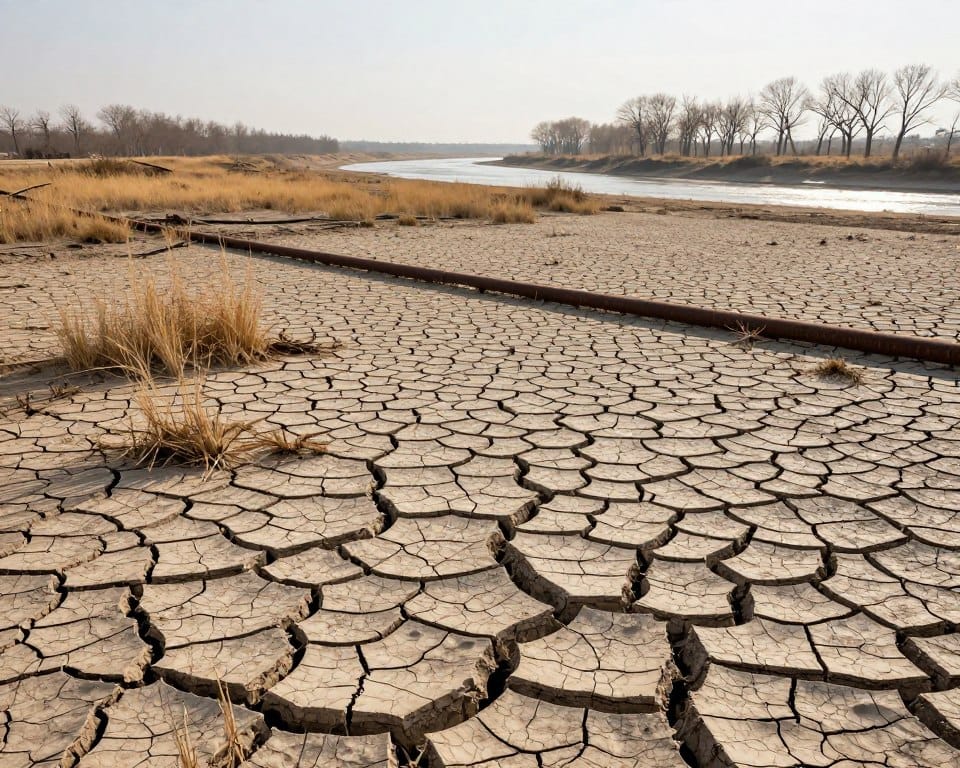
The record of historic drought events shows how past water deficits shaped economies, migration, and infrastructure choices.
Data-driven comparison helps decision-makers weigh risk and plan supply systems. Short, consistent indices such as SPI, SPEI, SSI and SGI and the operational D0–D4 U.S. Drought Monitor anchor cross-region analysis.
Notable examples include the 1934 episode that affected 65% of the contiguous U.S., multi-year strains in the 1950s, and 2011 when exceptional conditions covered more than 9% of the nation centered on Texas. Tree-ring evidence points to multi-decadal megadroughts in the Southwest from 900–1300 A.D.
La Niña-like patterns and persistent high pressure often drive widespread occurrence. Advances in monitoring and modeling now shift managers from crisis response toward proactive risk management and investment planning.
Key Takeaways
- Standard indices and the D0–D4 scheme make apples-to-apples comparisons possible.
- Major 20th and 21st examples show wide variation in duration and severity across regions.
- Climate drivers like ENSO influence occurrence but limit multi-season predictability.
- Hydrological impacts create recovery lags in rivers, reservoirs, and aquifers.
- Improved monitoring and autonomous tech enable proactive water and hazard management.
Why historic drought events still shape today’s water risks
Past episodes of intense dryness remain essential tools for testing modern water systems and policies.
Multi-decade records let utilities and planners calibrate thresholds for allocations, conservation, and environmental flow protection.
Since 2000, an average 26% of U.S. land saw at least D1 conditions each year. Exceptional coverage topped 9% in 2011 for Texas and exceeded 20% in August 2012. These observed patterns provide realistic scenarios for stress testing supply portfolios and contingency plans.
Known drivers such as La Niña link western drying to seasonal outlooks. That connection guides operational decisions even when prediction limits remain.
- Use past runs of low months to set staged demand management and pumping safeguards.
- Prioritize redundancy in surface and groundwater supply to reduce system-level risk.
- Coordinate across sectors because heat and wildfires compound impacts during long dry periods.
Autonomous monitoring reduces lag from detection to action. For more on climate links, see how climate change is increasing droughts.
| Year / Period | Peak Exceptional Coverage | Planning Implication |
|---|---|---|
| 2000–present (avg) | 26% area at ≥D1 annually | Routine stress tests for allocations |
| 2011 | >9% (Texas peak) | Reserve targeting and curtailment triggers |
| Aug 2012 | >20% extreme/exceptional | Cross-sector contingency and recovery windows |
What counts as drought vs. aridity, and why it matters for analysis
How analysts define dryness determines which indices and time frames guide water management decisions. Clear terms prevent confusing a baseline dry climate with a temporary shortfall. That distinction shapes monitoring, triggers, and public messaging.
From precipitation deficits to evapotranspiration: the basic water balance
Drought is a deficiency of precipitation over a season or longer relative to normal. Aridity is a persistent low-rainfall climate. Precipitation minus evapotranspiration and outflows equals available water.
Higher temperatures and wind raise evapotranspiration. The same rainfall deficit therefore produces greater stress in warm months or windy areas.
Meteorological, agricultural, and hydrological definitions
- Meteorological: a precipitation shortfall over weeks to months.
- Agricultural: soil moisture limits that affect crops in weeks to months.
- Hydrological: reduced streamflow and groundwater over seasons to years.
The U.S. Drought Monitor tags short-term “S” and long-term “L” to separate impact horizons. Two regions can share an index class yet have very different absolute rainfall because their normals differ. That reality guides which index and supply metric each sector should use.
| Feature | Short-term (S) | Long-term (L) |
|---|---|---|
| Typical response | Soil moisture, crops | Reservoirs, aquifers |
| Time scale | Days to months | Months to years |
| Operational use | Ag advisories, irrigation | Supply allocation, hazard planning |
How drought severity is measured: indices used in research and operations
Quantifiable indices turn raw observations into operational signals for water systems.
These metrics guide weekly maps, alerts, and planning. Choice of index depends on time scale and sector needs.
U.S. Drought Monitor categories and short/long tags
The U.S. Drought Monitor (D0–D4) blends multiple indicators and expert review to produce weekly national maps.
Each area can show S or L tags to flag short- or long-term impacts. That helps managers decide immediate actions versus supply measures.
SPI, SPEI, SSI and SGI: parsing rainfall, flow, and groundwater
SPI uses only precipitation. SPEI adds potential evapotranspiration to capture temperature-driven demand.
SSI standardizes streamflow. SGI standardizes groundwater levels. Use SPI to detect meteorological signal.
Then track SSI and SGI to confirm hydrological impacts and anticipate reservoir response.
Severity-Area-Duration (SAD) analysis
SAD quantifies event magnitude, spatial footprint, and duration. It is useful when comparing large episodes across regions.
| Index | Primary measure | Typical time scale | Operational use |
|---|---|---|---|
| SPI | Precipitation | 1–12 months | Meteorological signal, early warning |
| SPEI | Precipitation − PET | 1–12 months | Heat-sensitive deficits, crop risk |
| SSI | Streamflow | 3–24 months | River flow, reservoir inflow |
| SGI | Groundwater levels | 6–36 months | Aquifer stress, long-term supply |
Practical guidance: match index time scale to sector. Use 1–3 months for crops and 6–24 months for reservoirs and aquifers.
Combine indices to reduce false positives. Benchmark models and feed autonomous sensors into index updates for faster situational awareness.
Reading the drought record: what “record” and “return period” really mean
Statistical records and return periods are practical tools, not immutable truths.
A “record” marks the largest value in an observed series. It does not define a physical limit. New observations or longer reconstructions can change that label.
A return period summarizes how often an event might occur based on past data. The math assumes stationarity and independent years. Those assumptions break down when dry and wet years cluster or the climate shifts.
- Use scenario ranges and stress tests rather than a single 1-in-N period.
- Include paleoclimate reconstructions to capture low-frequency variability.
- Express risk as annual exceedance probability for clearer communication.
- Rebaseline indices regularly as normals shift and document uncertainty.
| Concept | Key assumption | Practical use |
|---|---|---|
| Record | Observed maximum | Contextual marker |
| Return period | Stationarity | Design guidance with ranges |
| Recommendation | Ensemble & reconstructions | Flexible contingency plans |
Precolonial megadroughts in North America: tree-ring evidence and lessons
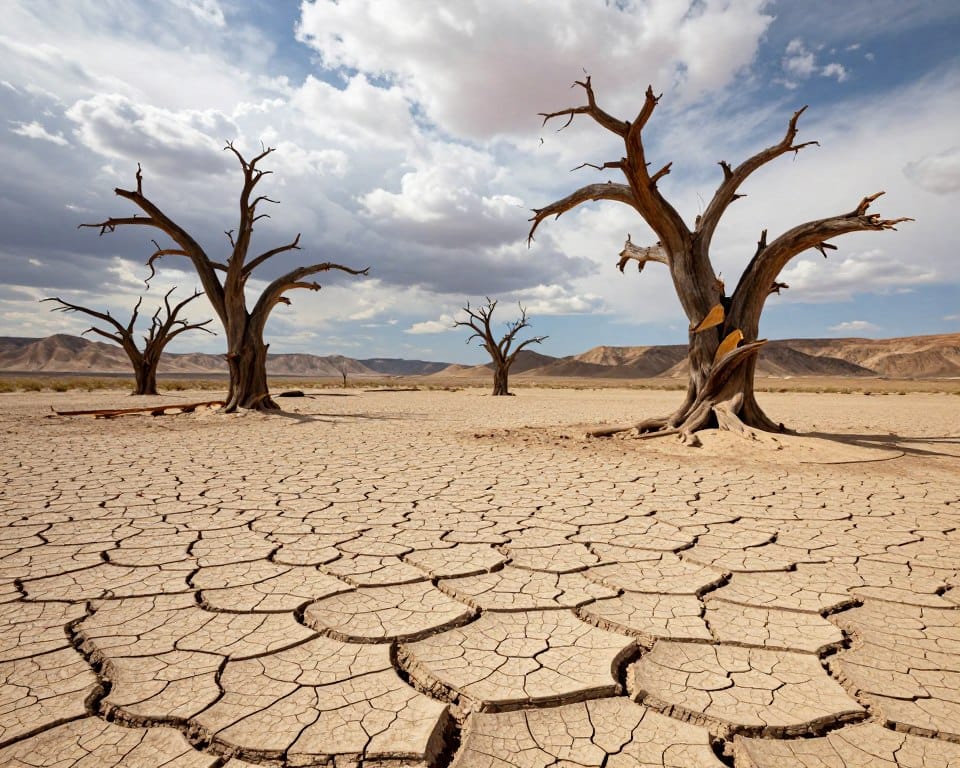
Tree-ring chronologies extend the water record and reveal multi-decade dry spells that outsize modern instrumental runs.
Tree-ring methods sample long-lived trees and crossdate ring widths to reconstruct annual moisture. This approach creates a multi-century record that captures rare, persistent deficit periods missing from gauges.
Southwest multi-decadal loss during 900–1300 A.D.
Reconstructions show sustained dry periods in the Southwest during the 11th–13th centuries. Those episodes exceeded post-1850 droughts in both duration and severity. Modeling links La Niña-like backgrounds to prolonged drying in the west.
Mississippi Valley impacts and societal change
Tree-ring studies identify severe dry periods in the 14th–16th centuries across the central and lower Mississippi Valley. Timing aligns with documented societal stress and migration in parts of the interior United States.
| Region | Centuries | Planning implication |
|---|---|---|
| Southwest | 10th–13th | Design storage for multi-decade deficits |
| Mississippi Valley | 14th–16th | Protect riverine ecosystems and migration corridors |
| National | Multi-century record | Integrate paleodata into risk baselines |
- Translate reconstructions into contingency plans that span multiple years.
- Prioritize durable storage, staged demand management, and environmental flow buffers.
- Expand monitoring to detect early shifts toward persistent deficits.
Twentieth-century standouts: Dust Bowl 1930s and the 1950s drought
Major 20th-century episodes tested supply systems and revealed vulnerabilities in land and water management. The period shows how coupled weather and human choices amplify risk.
1934 peak extent and nationwide economic disruption
In 1934 roughly 65% of the contiguous United States experienced severe to extreme drought. Crop failures, mass migration, and sharp income losses followed. Soil tillage and removal of native grasses increased wind erosion and dust exposure. That land-use feedback raised the severity of the dry period and deepened social harm.
River basin impacts, including the Colorado system
The 1930s and the 1950s produced prolonged low flows in major western rivers. The Colorado River saw reduced runoff that strained allocations, hydropower production, and ecosystems. Low reservoir levels forced tradeoffs among agriculture, urban supply, and environmental flows.
- Quantified peak extent: 1934 at about 65% national coverage.
- Land-use practices worsened soil loss and exposure to wind erosion.
- 1950s episode provided a second benchmark for long duration and multi-basin stress.
- Colorado River shortages highlighted allocation and reservoir management limits.
- Persistent high pressure patterns sustained deficits over months and years.
- Planning lessons: storage operations, interbasin transfers, and contingency agreements.
| Feature | 1934 | 1950s |
|---|---|---|
| National extent | ~65% | Widespread, multi-year |
| Primary impacts | Agriculture, migration | Rivers, reservoirs |
| Basin focus | Central and Plains | West and multi-basin |
These past periods remain instructive. Measuring both severity and spatial footprint helps gauge systemic risk and guide basin-level coordination.
Historic drought events since 2000: extent, intensity, and duration
Post-2000 episodes show how rapid onset and slow recovery combine to create compound water hazards. Each case links intensity categories to real-world impacts and operational action.
2011 Texas exceptional episode
Exceptional (D4) coverage exceeded 9% nationally from June to October 2011. The center of impact was Texas. That level of severity triggered emergency curtailments and reserve releases.
August 2012 Central U.S. expansion
In August 2012 extreme and exceptional conditions covered over 20% of the nation. Rapid spread hit agricultural areas and pushed market prices. Short-term S signals led to immediate irrigation cutbacks.
2012–2016 California cumulative deficits
California’s multi-year deficits drove reservoir drawdown and increased groundwater pumping. The sustained period produced ecological stress and long recovery lags for aquifers and rivers.
- USDM categories mapped to triggers: allocations, curtailments, and emergency declarations.
- Heat amplified evapotranspiration and deepened soil moisture deficits.
- Short-term “S” impacts were often quickly visible; long-term “L” effects required months to years to reverse.
- Severity-Area-Duration metrics help compare scale and duration beyond headlines.
- Near-real-time monitoring proved essential for adaptive operations and clearer communications.
| Case | Peak coverage | Operational outcome |
|---|---|---|
| 2011 Texas | >9% national D4 | Emergency releases, curtailments |
| Aug 2012 Central U.S. | >20% extreme/exceptional | Agricultural cutbacks, market impacts |
| 2012–2016 California | Multi-year cumulative deficit | Reservoir drawdown, groundwater overdraft |
Lessons: activate staged plans early, communicate thresholds, and plan for hydrological recovery lags after the meteorological end.
Drivers of severe drought: ENSO, teleconnections, and persistent high pressure
Ocean and atmospheric patterns often set the background for extended dry periods. Ocean-atmosphere coupling and stationary highs frequently cooperate to produce multi-month water shortfalls across the West.
La Niña-like Pacific patterns and Western U.S. drying
Cooler-than-average sea surface temperatures in the eastern tropical Pacific tend to shift the jet stream north. That reduces storm delivery to parts of the west. The result is a higher chance of lower precipitation and soil moisture deficits for several months.
Why multi-season prediction remains limited
Forecast skill drops beyond one to two seasons. Chaotic atmospheric dynamics, uncertain land states, and interacting teleconnections limit predictability. Teleconnections can still link distant areas so that multiple regions show concurrent dryness.
- Persistent high pressure causes subsidence and fewer clouds, lengthening the deficit.
- Use probabilistic outlooks to stage readiness without overcommitting to one signal.
- Blend ocean signals with local snowpack and soil moisture to refine risk estimates.
| Driver | Lead time | Planning use |
|---|---|---|
| La Niña-like SSTs | Seasonal (1–3 months) | Probabilistic supply alerts |
| Blocking highs | Weeks–months | Short-term operations, curtailment triggers |
| Land feedbacks | Months–years | Recovery planning, groundwater monitoring |
Hydrological drought: when rivers, reservoirs, and aquifers run low
Hydrologic signals integrate months of catchment behavior and show when operations must change. This section focuses on measurable low flows and falling storage that define hydrological stress for supply systems and ecosystems.
Streamflow deficits and standardized streamflow indices
Hydrological drought means sustained low flows and depressed storage in surface and subsurface systems. The standardized streamflow index (SSI) compares current flow to historical norms. Managers use SSI to trigger releases, curtailments, and emergency actions.
Groundwater level responses and recovery lags
Groundwater responds slowly. Groundwater level deficits often persist months to years after rainfall returns. Refill requires surplus inflows above normal, not merely average precipitation.
- Rivers show seasonal dependencies and integrated catchment response.
- Multi-model hydrologic ensembles bracket future states for risk-based allocations.
- Winter recharge is critical for snowmelt-driven systems.
- Low flows raise temperature and concentration risks; integrate water quality metrics.
- Autonomous gauging and telemetry cut latency between observation and action.
| Metric | Typical lead | Operational use |
|---|---|---|
| SSI (streamflow) | Weeks–months | Flow triggers, reservoir ops |
| SGI (groundwater) | Months–years | Supply reliability, pumping caps |
| Ensembles | Seasonal | Allocation scenarios |
Regional variability across the United States: the same deficit, different outcomes
Regional baselines turn identical rainfall totals into very different operational signals across the United States.
In early 2012 Augusta, GA and Colorado Springs, CO both reported severe drought conditions. Augusta’s January–June normal is about 22.2 inches. Colorado Springs averages roughly 7.63 inches. The same measured rainfall can represent very different percentages of normal.
Soils, vegetation, storage, and demand patterns mediate impacts. Agricultural harm often peaks in growing-season months. Hydropower and municipal supply effects can lag by seasons or years.
- Use region-specific thresholds to avoid over- or under-reacting to standardized classes.
- Blend meteorological, agricultural, and hydrological indicators for local triggers.
- Account for snowpack in western basins and rainfall timing in eastern basins.
- Benchmark Severity-Area-Duration and recovery times across regions to learn resilience lessons.
- Communicate using local normals so communities understand risk and act quickly.
| Feature | Augusta, GA | Colorado Springs, CO |
|---|---|---|
| Jan–Jun normal (in) | 22.2 | 7.63 |
| Primary seasonal driver | Rainfall timing | Snowpack and melt |
| Operational focus | Irrigation, soil moisture | Reservoir inflow, spring runoff |
Evidence from international studies that sharpen U.S. context
Long-term records from Europe and the UK offer transferable lessons on persistence and recovery that matter for U.S. water planning.
European reconstructions since the 19th century
Gridded reconstructions using SPI, SSI and SGI reach back to the late 1800s. They document multi-annual deficits and clustered dry periods that exceed single-season expectations.
These analyses show model skill limits and highlight when hydrological indices better match operational stress than precipitation-only signals.
What UK inventories teach about clustering and variability
UK drought inventories benchmark indicators against observed impacts. They reveal clustered occurrences and asymmetric recovery. Termination often lags onset and needs surplus inflows to restore rivers and aquifers.
- Validate indices locally; combine SPI with SSI/SGI for operational triggers.
- Use SAD case studies and ensembles to test multi-year scenarios.
- Share methods and teleconnection analyses across basins to improve outlooks.
| Feature | European finding | U.S. implication |
|---|---|---|
| Clustering | Dry/wet runs cluster multi-year | Stress tests must use nonstationary scenarios |
| Indicator match | Hydrological indices often align with impacts | Prioritize SSI/SGI for supply ops |
| Recovery | Termination is asymmetric | Plan for longer refill windows |
For broader climate links and operational guidance see how climate change is increasing droughts.
Water resources impacts: supply systems, reliability, and cascading hazards
Water systems face cascading hazards when storage falls and linked risks like heat and wildfire increase. Low reservoirs and reduced streamflow force immediate operational choices. Managers must weigh human uses against ecological needs.
Declining storage triggers staged curtailments. Allocations for irrigation, navigation, energy, recreation, and fish and wildlife are cut in sequence. Environmental flow tradeoffs often require legal and ecological review before reductions.
Low storage, curtailments, and environmental flow tradeoffs
Utilities use reliability metrics such as days of storage and probability of failure. Under stress they tighten demand management, shift to alternate sources, and defer maintenance to protect supply. Conjunctive use of surface and groundwater smooths shortfalls.
- Staged curtailments follow predefined triggers tied to reservoir percent full and SSI/SGI signals.
- Tradeoffs force reductions in consumptive withdrawals to preserve minimum flows for ecosystems.
- Diversified portfolios — conservation, reuse, interconnects — reduce single-point failures.
Water quality, wildfire, and heat compounding during long dry periods
Low flows and higher temperatures degrade water quality. Reduced lake exchange increases algal bloom risk and raises treatment costs. Blue-green algal advisories in parts of Oklahoma and Texas during 2011–2012 illustrate the threat.
Dry periods also elevate wildfire and heat hazards. Fires damage infrastructure and raise sediment loads. Heat waves increase demand and stress distribution systems. These combined impacts shorten the margin for reliable supply.
| Operational challenge | Typical mitigation | Outcome |
|---|---|---|
| Low reservoir storage | Staged curtailments, interconnections | Maintains critical supplies |
| Water quality degradation | Enhanced monitoring, treatment adjustments | Protects public health |
| Wildfire and heat impacts | Cross-sector contingency, infrastructure hardening | Reduces service interruptions |
Recommended practices include clear triggers, coordinated communications, and post-event reviews to refine thresholds. Deploy autonomous sensors for storage, temperature, and algal toxins to speed decisions. Integrate reuse and groundwater strategies to boost resilience.
Advances in drought monitoring and modeling that improve mitigation
Gridded observations and ensemble analysis strengthen the evidence base for risk-based drought planning. New climate grids provide consistent spatial context for comparing past deficits and current conditions. That clarity improves detection and reconstruction of long dry periods across basins.
Multi-model hydrologic ensembles quantify uncertainty. Utilities use ensembles to stress-test reservoirs and supply portfolios under synthetic multi-year sequences. Benchmarking studies then assess prediction skill and guide operational use.
Standardized indices let agencies compare results across nations and studies. UK and European programs show how gridded datasets, reproducible methods, and open data speed learning. Wilhite-style planning shifts organizations from crisis response to routine risk management.
| Advance | Practical benefit | Operational use |
|---|---|---|
| Gridded climate datasets | Spatially consistent detection | Historical reconstruction, local triggers |
| Ensemble hydrologic models | Quantified uncertainty | Stress tests, allocation scenarios |
| Benchmarking & open data | Evaluated skill and trust | Tool adoption, reproducible planning |
- Embed drought planning into regular governance and ops.
- Invest in autonomous monitoring to cut latency and cost.
- Use continuous improvement cycles to align data, models, and management.
Putting drought in context with floods and climate variability
Water managers face a broad hydroclimate spectrum that runs from prolonged dry spells to intense floods. Planning must account for variability and rapid switches between low flow and high runoff.
Wet and dry periods often cluster. Studies show sequences can flip a basin from scarcity to surplus in months. That pattern complicates return period assumptions and raises stress on reservoirs, levees, and supply systems.
Integrated risk frameworks couple analysis of moisture deficits and flood precursors. Ensembles that span both tails give better guidance for timing investments and operations. Communicate thresholds so stakeholders expect quick transitions.
- Manage storage for scarcity and flood safety within the same year.
- Use index portfolios that track deficits and flood signals together.
- Adopt flexible operating rules that switch modes when thresholds cross.
- Factor teleconnection phases into seasonal assessments and communications.
| Challenge | Practical action | Outcome |
|---|---|---|
| Rapid alternation of extremes | Ensemble scenarios for both tails | Better timing of releases and holds |
| Storage for flood and scarcity | Flexible rule curves and real-time telemetry | Reduced failure risk |
| Changing seasonal risk | Ongoing calibration and stakeholder alerts | Improved resilience |
For links between climate shifts and operational risk see how climate change is increasing droughts.
Method notes: selecting a drought index and making apples-to-apples comparisons
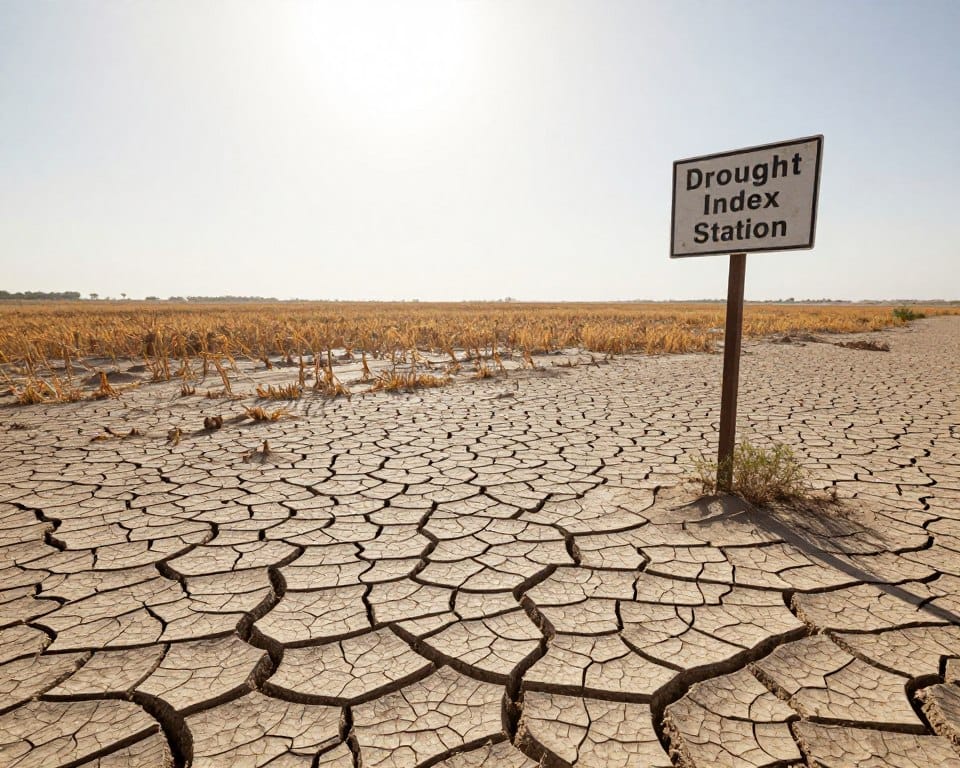
Practical index selection links sector needs to measurable thresholds and timely action. Choices determine how analysts interpret duration, severity, and recovery. A clear method reduces miscommunication across agencies and regions.
Choosing time scales by sector
Match index time scale to the operational use. SPI and SPEI capture short meteorological signals useful for crops and irrigation planning.
- SPI/SPEI — 1–3 months for crops and planting decisions.
- SPI/SPEI — 3–6 months for soil moisture and wildfire risk.
- SSI/SGI — 6–24 months for reservoirs, aquifers, and ecosystem supply planning.
SPEI can outperform SPI in heat-amplified seasons because it includes evapotranspiration. SSI and SGI lag meteorological change and should inform recovery criteria.
Avoiding pitfalls with return periods and clustered dry periods
Do not apply naive return period math when dry years cluster. Validate statistical distributions to local precipitation and flow regimes.
- Standardize baselines and document normal periods for comparability.
- Use multi-index dashboards to reduce blind spots.
- Report uncertainty and sensitivity tests with every index value.
- Benchmark indices against observed impacts and automate data ingestion to update alerts fast.
| Need | Index | Practical use |
|---|---|---|
| Crop decisions | SPI / SPEI | 1–3 month alerts for planting and irrigation |
| Storage & supply | SSI / SGI | 6–24 month triggers for releases and pumping |
| Heat-amplified seasons | SPEI | Captures evapotranspiration-driven deficit |
Conclusion
Linking long records with real-time sensors turns historical perspective into operational advantage. Planners can use multi-index monitoring and matched time scales to set clear triggers for supply actions.
The Dust Bowl, the 1950s, and post-2000 examples provide credible stress scenarios. ENSO phases and blocking highs are key climate drivers to watch within a probabilistic planning frame.
Hydrological lags mean recovery is not a single wet day. Recovery must be measured by restored storage and flows. Integrated plans that span dry and wet extremes reduce volatility across regions.
Invest in autonomous, high-resolution monitoring, open benchmarked models, and clear communication about uncertainty. Iterative plans that evolve with new evidence can transform water management and build durable public trust.
.