

The cultural significance of rivers in Africa guides daily life and seasonal plans for many communities across the continent. This living link shapes rites, food systems, and local rules that keep people and ecosystems resilient.
Water is often seen as an active presence. Communities treat springs and groves as places that need care, and rituals map to flood and dry seasons. That practical reverence protects shorelines, supports fisheries, and reduces erosion.
Examples span the Oshun Grove and lake shrines to delta flood rites and island monasteries. Indigenous stewardship now pairs with monitoring tools to improve data for planners and build trust with local stewards. A systems view shows how ritual protection helps biodiversity and long-term monitoring.
Key Takeaways
- Rituals and rules align with hydrology to sustain livelihoods.
- Viewing water as animate drives concrete conservation actions.
- Heritage practices reduce erosion and improve water quality.
- Combining local knowledge with tech boosts monitoring and trust.
- Policy design needs cultural baselines to be equitable and effective.
- See related research on water symbolism here.
Why rivers shape culture, memory, and daily life across the continent
Seasonal flows set a clear role for communities along waterways. Rising and falling levels time planting, harvests, and fishing seasons. In the Okavango Delta, flood pulses dictate when fields are sown and when mokoro travel is safest.
People keep river memory alive through songs, proverbs, and blessing rites. Lake Victoria communities perform spirit appeasement before long voyages and heavy fishing. The Nile’s Hapi lore and Nubian blessings show a long thread from ancient practice to modern rites.
- Flows set calendars that govern access, transport, and food security.
- Oral memory helps forecast fish runs and plan collective work today.
- Settlements and markets align with dependable currents and landing spots.
- Taboos and ceremonies function as informal rules that protect spawning grounds.
- Wetlands purify water, buffer storms, and sustain wildlife that supports tourism and livelihoods across the world.
Integrating cultural calendars with hydrological data improves planning for fisheries, tourism, and disaster response. For more on how water carries meaning across art and history see water symbolism.
The cultural significance of rivers in Africa
Across river basins, music, prayer, and work follow the water’s pulse.
Spiritual lifeways: sacred waters, deities, and rites of passage
Communities treat springs and groves as sacred sites for initiation, healing, and fertility rites. Oshun worship at Osogbo uses ritual bathing and offerings that mark life stages and align care with seasonal flow.
Mami Wata ceremonies use mirrors and music for healing and petitions for wealth. Nile-linked rites that once honored Hapi tied flood timing to food planning and safety rules.
Social cohesion: festivals, taboos, and community stewardship
Festivals and taboos act as informal governance. Okavango fishing restrictions during sacred periods protect spawning grounds and lower conflict over catches.
Elders serve as custodians who arbitrate disputes and organize labor for levee repair, channel clearing, and grove care. Collective ceremonies create social insurance and shared maintenance.
Sustenance and trade: fishing, farming, and riverine economies
River markets and boat traffic support regional trade in fish, crops, salt, and crafts. Lake Victoria fishers recite prayers before sailing and time nets to avoid nursery zones.
Rites of passage teach children safe crossing points and flood signs. These practices form part of resilient water governance that complements formal law where enforcement is weak.
| Function | Concrete Example | Management Outcome |
|---|---|---|
| Spiritual regulation | Oshun bathing and Mami Wata healing rituals | Reduced disturbance at shrines; protected groves |
| Social governance | Okavango fishing taboos; festival labor pools | Coordinated harvests; lower resource conflict |
| Economic timing | Lake Victoria prayer-led departures; flood-recession planting | Optimized yields; sustained market routes |
| Knowledge transfer | Rites teaching children safe behavior and signs | Local ecological literacy; safer communities |
Regional traditions that bring sacred waters to life
Local rites and shrine guardians turn certain lakes and streams into managed commons with living rules.
In the city of Osogbo the Oshun Grove preserves primary high forest and sacred architecture. The UNESCO-listed site holds about 40 shrines and continuous worship across years. Offerings of honey and flowers, ritual bathing, and processions mark the river as sacred waters and drive grove conservation by local people.
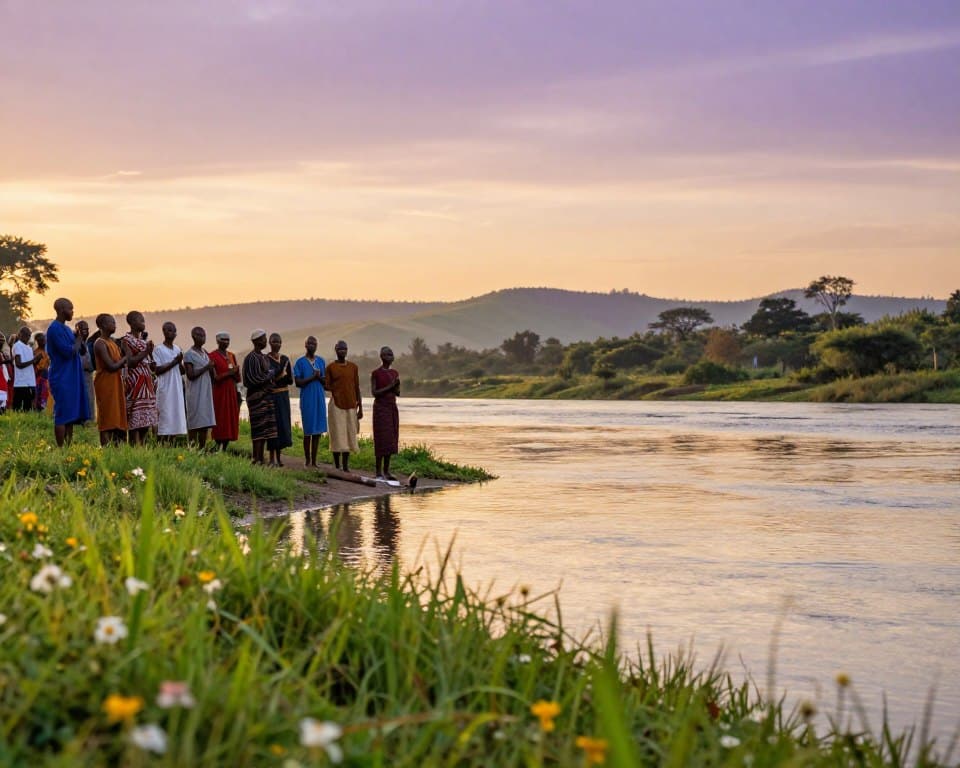
West and Central practices
Mami Wata appears across countries such as Nigeria, Ghana, Cameroon, Benin, and Congo. Possession dances, mirrors, and perfumes are common. Ceremonies also organize community care for landing sites and shore maintenance.
Southern and lake guardians
Lake Fundudzi’s Venda custodians enforce taboos that forbid removal of water, wood, or artifacts. The result is clearer water and stable shorelines. Around Lake Victoria, the Ssese Islands host Baganda ceremonies timed by lunar cycles. Timing guides fishing and travel decisions.
| Site | Practice | Region | Management outcome |
|---|---|---|---|
| Oshun Grove | Offerings, bathing, processions | Osogbo city, Nigeria | Forest protection; shrine stewardship |
| Mami Wata shrines | Possession dances, mirrors | Multiple countries | Community care for landing sites |
| Lake Fundudzi | Custodial taboos | Venda region, South Africa | Shoreline integrity; water clarity |
| Ssese Islands | Lunar-timed ceremonies | Lake Victoria | Seasonal closures; safe travel rules |
Drumming, dress, and dance vary by place but share rules. Woman-centered symbolism shapes norms around fertility and resource sharing. Shrine custodians, fishers, and elders work together and document chants, boundaries, and shrine inventories. This cross-border continuity supports heritage tourism and method exchange across the world and links to broader studies of water symbolism.
Southern Africa’s river stories: from Okavango blessings to Nyami Nyami of the Zambezi
Communities in Southern Africa pair flood knowledge with hands-on craft and clear rules. This mix guides subsistence, risk planning, and visitor engagement.
Okavango Delta: flood blessings, fishing taboos, and mokoro rituals
The delta receives floodwaters in May–June. Communities perform cleansing rites then. These ceremonies pause fishing during breeding peaks. The result is lower pressure on nursery zones and improved catches later.
Mokoro builders hold tree-selection rites before felling. That practice protects riverbank forests and keeps channels navigable. Seasonal access limits also drive lightweight monitoring and local guide networks for data collection.
Nyami Nyami: Tonga cosmology and dam-era impacts
Nyami Nyami frames extreme events for Tonga people. Floods in the 1950s delayed Kariba dam work and caused fatalities. That history shapes caution around siting and flow alteration during development.
Carvings and ritual objects carry heritage and tourism value. Participatory planning that consults custodians improves project legitimacy and long-term outcomes.
| Case | Practice | Function |
|---|---|---|
| Okavango Delta | May–June cleansing, fishing taboos, mokoro rites | Protects spawning grounds; stable channels; seasonal monitoring |
| Zambezi / Kariba | Nyami Nyami narratives, heritage carvings | Risk framing; site caution; tourism-linked stewardship |
| Cross-cutting | Evacuation routes, raised storage, custodian consultation | Practical risk reduction; better development outcomes |
Nile and Ethiopian highlands: faith, pilgrimage, and enduring heritage
Lake Tana is the source of the Blue Nile. The lake links upland monastic calendars to downstream flow needs across three countries. Upstream conditions shape timing for irrigation, flood risk, and transboundary management.
The Nile keeps Hapi’s legacy alive in Upper Egypt. Nubian blessings still treat the river as a living presence. Rituals at the Sacred Lake at Karnak, near the city of Luxor, show ancient water architecture and purification practice.
In Ethiopia, monasteries such as Ura Kidane Mehret and Tana Qirqos hold manuscripts and relics. Timket processions stage boat parades and holy water immersion. Pilgrimage seasons change transport timetables, fishing windows, and hospitality demand around the source and downstream.
- Align monitoring with festival calendars to limit disruption and build trust.
- Use source-to-sea planning to balance sacred time with irrigation needs.
- Coordinate boat safety and shoreline management during Timket and shrine events.
| Feature | Site | Season / Time | Management implication |
|---|---|---|---|
| Blue Nile source | Lake Tana, Ethiopia | Rain-fed floods, annual cycle | Upstream conditions affect downstream flow allocation |
| Ritual reservoir | Sacred Lake, Karnak (Luxor) | Year-round rites; festival peaks | Historic purification; informs modern access points |
| Pilgrimage | Timket processions | January (Epiphany) and related dates | Requires boat safety, health messaging, adjusted transport |
Shared heritage across Ethiopia, Sudan, and Egypt supports cultural diplomacy. Professionals can map ritual calendars to improve sampling, flow decisions, and community-led stewardship. For related work on water meaning and art see water symbolism.
Water and worship: Islamic and Christian practices along Africa’s rivers
Riverbank worship blends formal rites with local safety habits and simple stewardship practices.
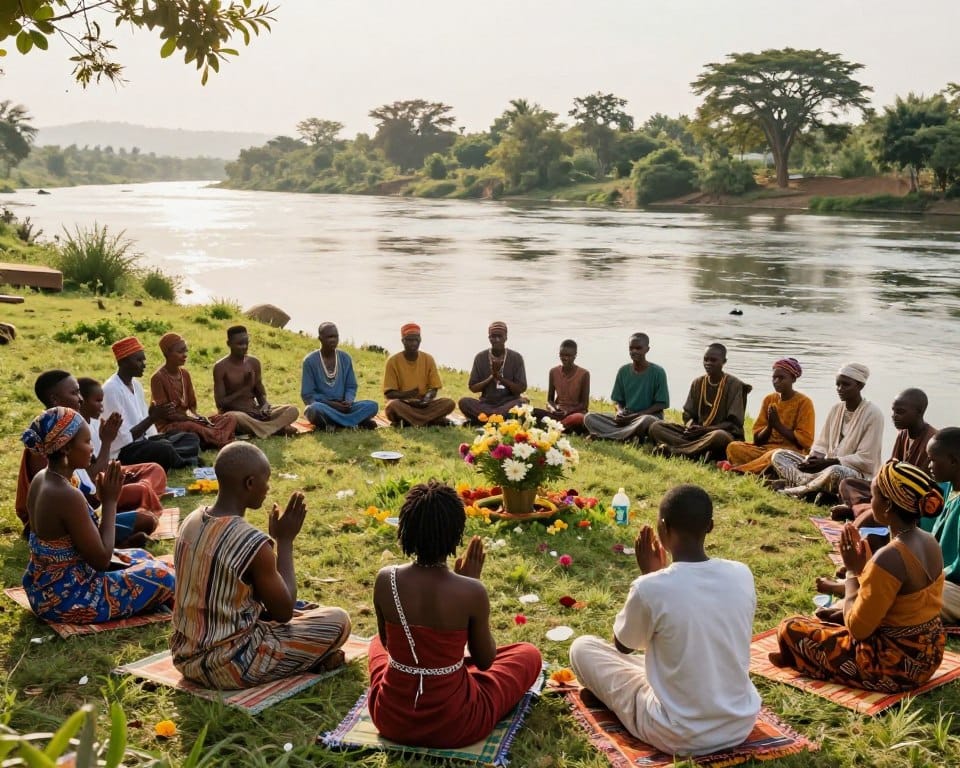
Islamic ablutions and riverbank devotion
Wudu and ghusl require clean water. Sites are chosen for clear flow and low turbidity.
Simple settling basins or cloth filtration reduce sediment risk before ablution. Community leaders should test clarity with a cheap turbidity kit prior to large gatherings.
Christian baptisms and lakeside rites
Baptism logistics need a safe entry, trained supervisors, and a warming area after immersion.
Portable blankets, thermoses for warm drinks, and post-immersion robes cut hypothermia risk. Marked pathways limit erosion and keep banks stable.
Shared sacred spaces and oral tradition
Scheduling, signage, and brief interfaith etiquette prevent crowding and ceremony overlap. Councils can publish seasonal calendars to avoid conflict.
Hymns and zikr serve as oral codes. They teach stewardship, hygiene, and flood awareness across generations and help clerics relay short safety messages.
| Practice | Practical step | Safety & environment |
|---|---|---|
| Wudu / ghusl | Choose clear-flow site; use settling cloth | Lower pathogen load; protect intake points |
| Baptism | Designate shallow entry; have supervisors | Reduce slips; prevent hypothermia |
| Large revivals | Temporary walkways; portable toilets | Prevent erosion; control waste |
| Interfaith plans | Shared calendars; joint upkeep teams | Less conflict; coordinated shoreline care |
Women often organize logistics, manage garments, and care for children during rites. Their role is central to safe, dignified ceremonies. Collaboration between clerics and water stewards ensures messages on drought, flood escape routes, and disease prevention reach people before events.
Wetlands, heritage sites, and conservation grounded in indigenous knowledge
UNESCO-listed waterscapes link local practice with measurable ecosystem outcomes. Sites such as Okavango, Djoudj, Banc d’Arguin, iSimangaliso and Ichkeul provide nutrient retention, groundwater recharge, and nursery habitat that stabilize flows into connected rivers.
Why wetlands matter today
Wetlands filter pollutants and reduce flood peaks. That lowers treatment and levee costs. Restored marshes can cut sediment loads and avoid expensive recovery after storms.
Indigenous stewardship in practice
Folklore and taboos create no-take zones and closed seasons. Elders verify seasonal signs and trigger reed cutting, channel clearing, or harvesting bans at the right time. These rules act as low-cost monitoring that boosts compliance and cuts enforcement spending.
Modern threats and scalable solutions
- Dams and urban runoff increase sediment and fragment habitat; this raises maintenance and biodiversity loss risks tied to development.
- Combine citizen water testing, riparian planting, and sacred-grove legal recognition to align eco-spiritual action with science.
- Use simple mobile apps for reporting fish kills, turbidity spikes, and illegal dumping to speed responses by people and agencies.
| Site | Core service | Management outcome |
|---|---|---|
| Okavango | Flood buffering, tourism | Stable channels; livelihoods |
| Banc d’Arguin | Bird nursery, nutrient cycling | Biodiversity protection; fisheries |
| iSimangaliso | Coastal storm mitigation | Reduced erosion; visitor economies |
Rivers, identity, and Black heritage today
Where waters meet land, stories of dignity and enterprise endure and guide modern stewardship.
Reclaiming narratives: great rivers as sources of dignity, economy, and memory
Rivers have anchored heritage across the continent. The Niger, Congo, and Zambezi link trade, leadership, and communal pride.
Historic figures such as HRM Obi Ossai and Omu Okwei Opene show how river trade created political power and social mobility before colonial expropriation. Material culture—from boat designs to market signals—encodes seafaring experience and safe navigation techniques.
Children learn responsibility at the water. Mentors teach fishing ethics, swimming safety, and shrine etiquette. These lessons pass stewardship to new generations and strengthen community monitoring.
- Rivers as identity anchors: place names and clan histories that carry heritage.
- Heritage tourism and market festivals that fund sanitation and docks.
- Archiving oral histories to protect sacred sites during development.
| Feature | Example | Outcome |
|---|---|---|
| Commerce & Leadership | Niger trade, HRM Obi Ossai, Omu Okwei Opene | Local wealth; political influence |
| Learning & Transmission | Riverbank mentorship | Safe skills; intergenerational stewardship |
| Heritage Action | Festivals, archives, inclusive planning | Funding for restoration; reduced conflict |
Reclaiming these stories today strengthens conservation alliances and honors diaspora ties. It turns memory into practical care and a shared path forward.
Conclusion
Living waters act as local partners, guiding harvests, festivals, and safety practices across basins.
Treat rivers as both infrastructure and heritage. Align ritual calendars with hydrological data to improve governance and reduce conflict.
Adopt site protocols that respect custodians, record rites, and set monitoring windows to avoid disruption. Build low-impact access like boardwalks and marked entry points to protect banks while preserving visitor experience.
Map sacred sites, seasonal closures, and safe bathing areas with local people. Fund programs that link heritage branding, crafts, and science for long-term water quality tracking.
Teach children water safety, oral history, and simple sampling. Cross-border cooperation from source to sea will protect fisheries, rites, and transport over years.
Act with grace at river home. Caring for these waters makes communities stronger and secures the part rivers play in shared memory and future resilience.