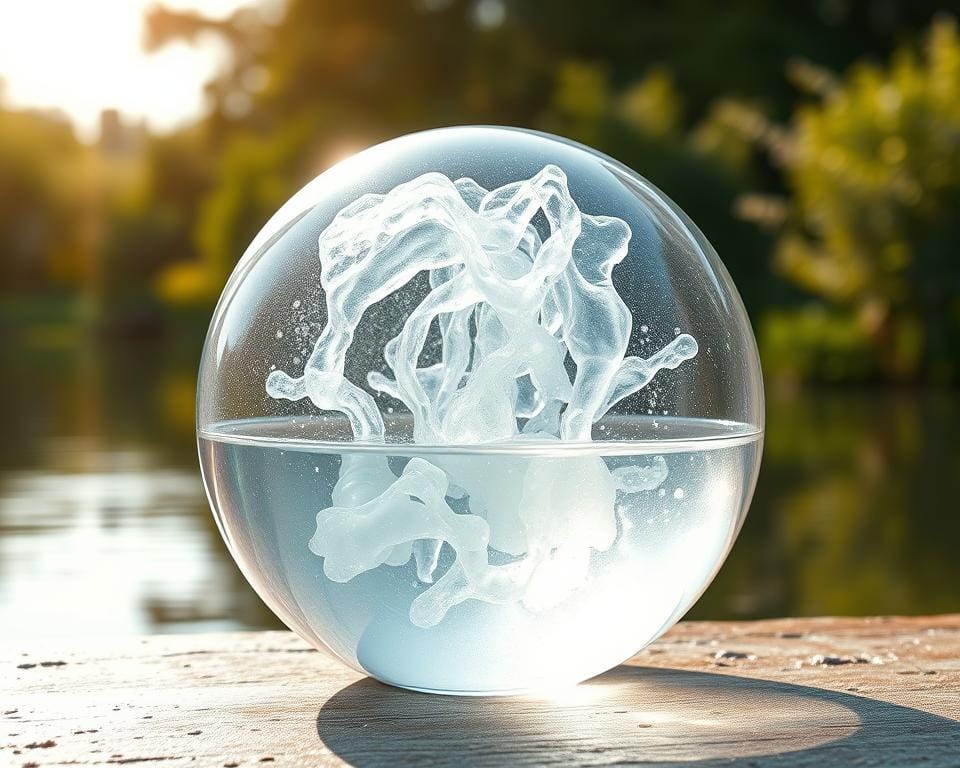
Water conservation technology just got a groundbreaking upgrade with hydrogel technology for water storage. These microscopic polymers can absorb up to 500 times their weight in water. That’s like discovering a secret weapon against drought and water scarcity.
Hydrogels offer an extraordinary solution for managing water resources in challenging environments. Scientists Wichterle and Lím developed them in 1960. These three-dimensional polymer networks act like intelligent sponges, capturing and releasing water precisely when needed.
This material could transform how we approach water management in agriculture, landscaping, and emergency preparedness. These innovative water conservation technologies are practical, scalable solutions. They’re ready to address real-world water challenges.
Key Takeaways
- Hydrogels can absorb up to 500 times their weight in water
- Technology originated in 1960 with pioneering polymer research
- Applicable across agriculture, environmental management, and emergency resources
- Provides sustainable water storage solution for water-scarce regions
- Represents cutting-edge water conservation technology
Understanding Hydrogel Technology for Water Storage
Water retention polymers represent a fascinating breakthrough in materials science. These incredible substances can transform how we manage and store water across multiple applications. Superabsorbent hydrogels are like microscopic water reservoirs that dramatically change our approach to moisture management.
Imagine a material that can absorb hundreds of times its own weight in water. That’s exactly what polymer water absorption technology delivers. These remarkable materials work through a unique three-dimensional network structure that captures and stores water molecules.
What Are Hydrogels?
Hydrogels are hydrophilic polymeric networks with some truly extraordinary properties. They’re essentially molecular sponges with a “memory” for water. Think of them like a sophisticated fishing net designed to trap water molecules.
- Composed of crosslinked polymer chains
- Capable of absorbing massive water volumes
- Adaptable to various environmental conditions
The Science of Water Absorption
The magic of superabsorbent hydrogels lies in their unique molecular structure. Something remarkable happens when water contacts these polymers. The hydrophilic groups attract and bind water molecules through complex interactions.
This process isn’t just simple absorption. It’s a sophisticated dance of molecular attraction.
Water within these hydrogels exists in three distinct states:
- Free water (easily released)
- Bound water (tightly held by polymer chains)
- Intermediate water (partially retained)
The crosslinking density determines how much water these polymers can hold and release. More crosslinks mean stronger structure but less water capacity. Less crosslinks allow for greater water storage but reduce mechanical strength.
Types of Hydrogels Used in Water Storage Applications
Agricultural water storage solutions have changed how we manage water in farming. Hydrogels come in different types with unique water retention abilities.
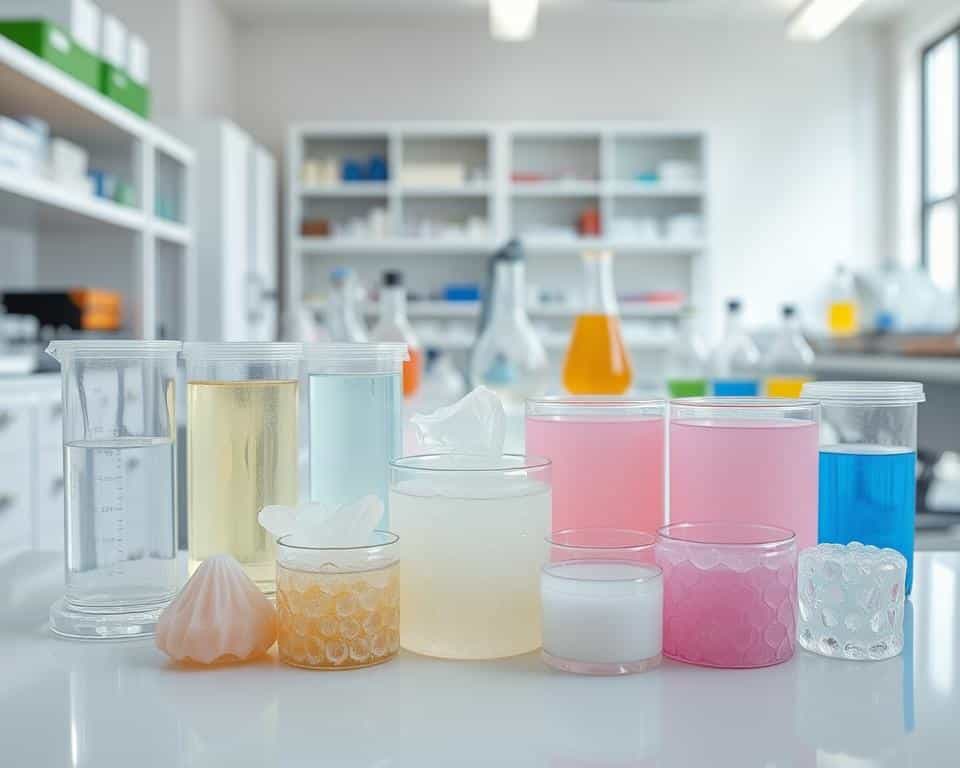
Three main categories of hydrogels are changing how farms manage water:
- Natural Hydrogels: Derived from biological materials like cellulose and chitosan
- Synthetic Hydrogels: Engineered polymers with enhanced water absorption
- Hybrid Hydrogels: Combining natural and synthetic polymers for optimal performance
Natural hydrogels offer great environmental benefits. They come from materials like alginate and starch. These biodegradable options provide eco-friendly water storage for farms.
Their main advantage is sustainability. However, they hold less water than synthetic versions.
Synthetic hydrogels are powerful water management tools. Materials like polyacrylamide and polyvinyl alcohol absorb water exceptionally well. These smart hydrogels work great in tough farming environments.
Hybrid hydrogels combine natural and synthetic materials. Researchers created hydrogels with better water retention and mechanical strength. They also work better with the environment.
Knowing these hydrogel types helps farmers choose the right water storage technology. The future of farm water management keeps improving with these innovative materials.
Key Properties That Make Hydrogels Effective for Long-Term Storage
Hydrogel technology represents a groundbreaking approach to soil moisture management and drought mitigation technology. These remarkable materials possess unique characteristics that transform water storage strategies. They revolutionize how we approach plant hydration in challenging environments.
Understanding the core properties of hydrogels reveals their exceptional potential for agricultural applications. The complex molecular structure enables these innovative materials to revolutionize water conservation techniques.
Water Absorption Capacity and Swelling Behavior
Water absorption is the defining feature of hydrogel technology. These remarkable polymers can absorb up to 500 times their original weight in water. This creates an extraordinary reservoir for moisture retention.
- Absorption depends on polymer chain structure
- Crosslinking density determines water retention capacity
- Gradual water release maintains consistent soil moisture
Mechanical Strength and Durability Over Time
The durability of hydrogels plays a critical role in long-term soil moisture management. Different hydrogel formulations offer varying levels of mechanical stability. Each type provides unique performance characteristics for specific needs.
| Hydrogel Type | Mechanical Strength | Water Storage Capacity | Estimated Lifespan |
|---|---|---|---|
| Synthetic High-Crosslink | High | Low | 3-5 years |
| Natural Low-Crosslink | Low | High | 1 growing season |
| Hybrid Formulation | Medium | Medium | 2-3 years |
Selecting the right hydrogel depends on specific environmental conditions and drought mitigation technology requirements. Researchers continue developing advanced formulations that balance water retention and mechanical strength. These innovations also prioritize ecological sustainability for long-term environmental health.
Agricultural and Environmental Applications of Hydrogel Water Storage
Hydrogel technology is changing sustainable irrigation systems. These water-absorbing polymers transform how we manage soil moisture in farming. They help crops survive in areas with drought and water scarcity.
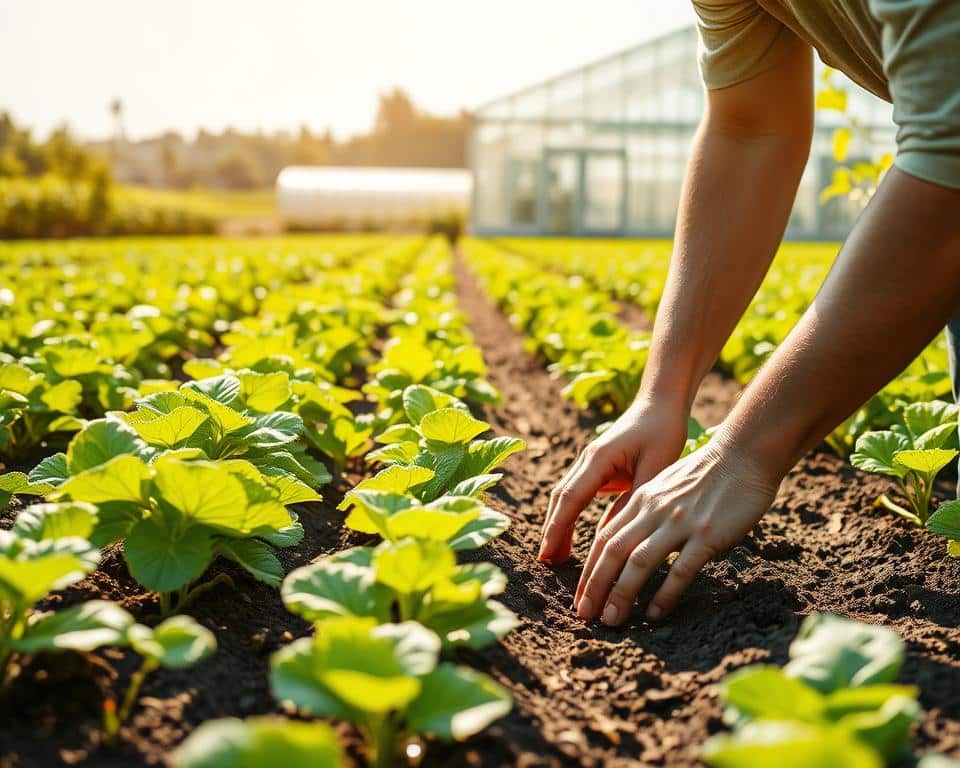
Farmers now use these advanced materials to create stronger growing environments. Hydrogels offer many benefits for modern agriculture.
The key benefits include:
- Enhanced water retention in sandy and coarse-textured soils
- Reduced irrigation frequency by up to 40%
- Improved crop survival during water-stressed conditions
- Controlled nutrient release mechanism
California almond growers use hydrogel technologies for young trees. These materials help trees develop stronger root systems. Arizona cotton farmers report better water management with hydrogels in their soil.
| Crop Type | Water Savings | Yield Improvement |
|---|---|---|
| Almonds | 30-35% | 25% increase |
| Cotton | 35-40% | 20% increase |
| Vegetables | 25-30% | 15% increase |
Hydrogels also help with environmental restoration projects. They support erosion control and assist in revegetation of disturbed lands. The technology helps manage stormwater runoff and stabilizes soil moisture for ecological recovery.
Advantages and Limitations of Hydrogel-Based Water Storage Systems
Water conservation technology continues to evolve with exciting new solutions. Hydrogel systems are emerging as a promising way to manage water resources. These innovative materials work well in agricultural and environmental settings.
These systems offer unique approaches to drought mitigation technology. They can transform how we think about water management. Understanding hydrogel water storage systems requires examining their strengths and challenges.
Benefits for Drought Mitigation and Soil Moisture Management
Hydrogel technologies provide several critical benefits for water conservation:
- Reduces irrigation water consumption by 20-50%
- Improves crop survival rates during drought periods
- Enhances soil structure and nutrient retention
- Minimizes soil erosion
Farmers can extend time between irrigations with these systems. Plants maintain productivity even during extended dry spells. The water retention capabilities create a buffer against water stress.
Cost Considerations and Environmental Impact
Hydrogel technologies come with important considerations to review. Synthetic hydrogels can cost between $2-5 per pound. Application rates of 50-100 pounds per acre represent a significant investment.
Small-scale farmers may find these costs prohibitive. Environmental concerns also emerge with synthetic hydrogels derived from petrochemicals. Researchers are developing biodegradable alternatives using natural polymers like cellulose and chitosan.
Key limitations include:
- Higher upfront costs for implementation
- Performance variability across different soil types
- Potential long-term environmental impacts of synthetic materials
Hydrogel systems represent an innovative approach to drought mitigation technology. Careful evaluation of their benefits and limitations is crucial. Successful implementation across diverse agricultural landscapes depends on thorough assessment.
Conclusion
Hydrogel technology offers amazing potential for farming and protecting our environment. These materials do more than showcase scientific progress. They provide real solutions to water shortages and climate challenges.
Hydrogels work best in specific farming situations. They shine in nursery production, erosion control, and improving sandy soil. Researchers are creating smarter versions that break down naturally and respond to changing conditions.
Hydrogels aren’t perfect for every situation. However, they help build stronger farming systems. Scientists keep improving these materials through ongoing research.
Better manufacturing will make hydrogels more affordable. They will work better in different soil types. Combining them with precision farming tools will boost their use.
Farmers and land managers should stay hopeful but careful about hydrogels. Ask tough questions about how they perform in your area. Learn about your local soil and set realistic goals.
Water is becoming more precious every day. Technologies like hydrogels will be vital for managing resources wisely.