
Water recycling is a critical solution happening now in communities across America. Community-level systems transform wastewater into a valuable resource for multiple purposes. Only 0.5% of Earth’s water is readily available for human use.
These innovative water reuse systems represent our most promising strategy for sustainable water management.
Modern water recycling systems use complex networks of advanced purification technologies. They transform what we consider “waste” into clean, usable water. This water works for irrigation, industrial processes, and even drinking.
Communities from urban centers to small towns are adopting these systems. They address mounting challenges of water scarcity and growing demands. Climate change pressures make these solutions more critical than ever.
Key Takeaways
- Community water recycling systems can transform wastewater into safe, reusable water
- Only 0.5% of Earth’s water is readily available for human consumption
- Advanced purification technologies make water recycling increasingly reliable
- Water reuse systems address both environmental and practical water management challenges
- Localized water recycling is becoming a critical strategy for sustainable water resources
Understanding the Growing Need for Water Reuse in American Communities
Sustainable water management has become urgent in the United States. Our communities face unprecedented environmental pressures today. Urban water conservation is now a critical necessity, not a choice.
Water is our most precious resource, yet its availability is shrinking. Consider these critical facts about our water landscape:
- Only 3% of Earth’s water is freshwater
- Merely 0.5% of global water is readily accessible
- Climate change continues to disrupt traditional water cycles
Climate Change and Freshwater Scarcity
Rising temperatures are transforming our water ecosystems dramatically. Irregular rainfall patterns and increased evaporation rates create unprecedented challenges. Melting glaciers add to these water management problems.
Western states are experiencing chronic water shortages. These conditions demand innovative solutions now.
Population Growth and Water Demand Pressures
Growing urban populations are intensifying water resource challenges. Texas anticipates 51 million residents by 2070. Traditional water sources cannot sustain these expanding communities.
Water recycling infrastructure is a critical investment. It ensures future resilience for our growing cities.
Climate change and population growth have transformed water recycling. It has shifted from a futuristic concept to an immediate necessity. Communities must embrace sustainable strategies to ensure water security.
The Science Behind Wastewater Treatment and Recycling
Decentralized wastewater treatment represents a revolutionary approach to water purification science. Water recycling is far more complex than simply filtering out visible dirt. Modern treatment processes involve sophisticated multi-stage technologies that transform contaminated water into safe, reusable resources.
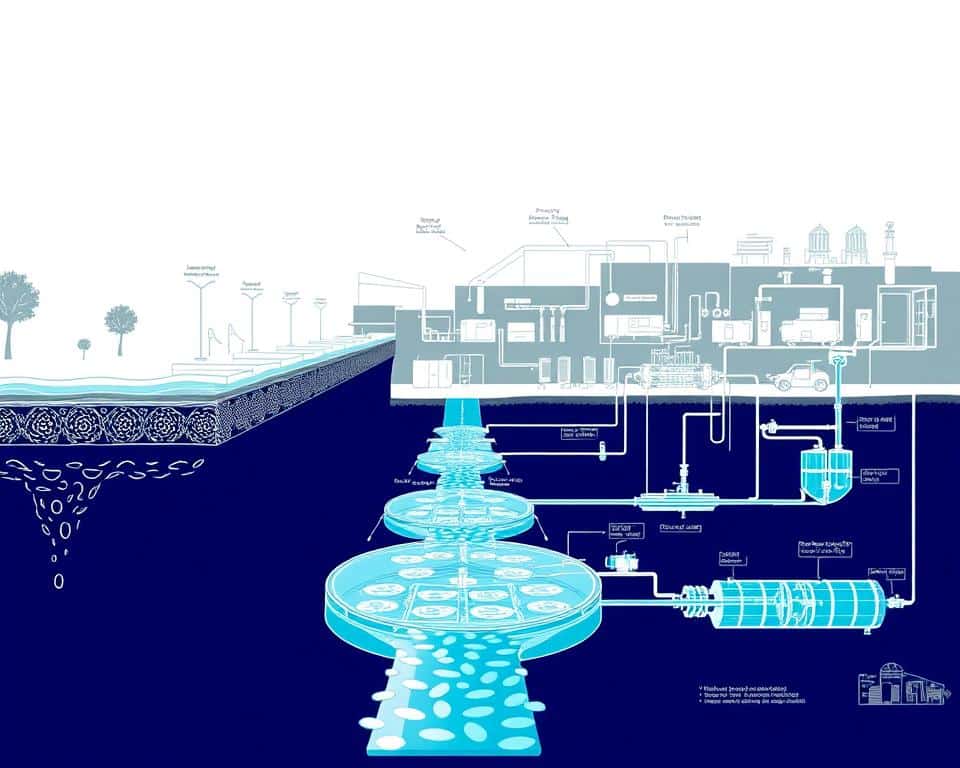
The core of water purification science involves several critical stages. These stages work together to eliminate contaminants effectively.
- Membrane Filtration: Removes microscopic particles and bacteria
- Reverse Osmosis: Eliminates dissolved salts and minerals
- Advanced Oxidation Processes: Breaks down organic compounds
- UV Sterilization: Neutralizes harmful microorganisms
Each wastewater treatment process targets specific contaminants at different scales. Multiple layers of filtration work in sequence to progressively purify water. It functions like a precision cleaning system.
| Treatment Stage | Primary Function | Contaminants Removed |
|---|---|---|
| Membrane Filtration | Microscopic Particle Removal | Suspended solids, bacteria |
| Reverse Osmosis | Dissolved Salt Elimination | Minerals, salts, heavy metals |
| Advanced Oxidation | Organic Compound Breakdown | Chemical pollutants, pharmaceuticals |
| UV Sterilization | Microorganism Neutralization | Viruses, bacteria, parasites |
Decentralized wastewater treatment transforms seemingly unusable water into a valuable resource. Understanding these intricate purification processes helps communities develop sustainable water management strategies.
How Community-Level Water Recycling Systems Operate
Water recycling has transformed how communities manage their most precious resource. Local water reuse infrastructure represents a critical innovation in sustainable water management. These systems turn wastewater into a valuable community asset.
Understanding how these systems work reveals an intricate process. The technology protects public health while conserving water resources.
Community water systems rely on sophisticated collection and treatment technologies. These networks transform wastewater into reusable water. The journey begins with careful collection and preliminary processing.
Collection and Primary Treatment Processes
Wastewater enters localized water recycling technologies through underground pipe networks. These pipes collect water from:
- Residential homes
- Commercial buildings
- Industrial facilities
- Municipal infrastructure
Primary treatment involves removing large solids and initial contaminants. Screening mechanisms filter out debris from the water. Settling tanks separate heavier particles from liquid waste.
Advanced Purification Technologies
Advanced purification technologies transform wastewater into high-quality recycled water. These cutting-edge processes ensure complete water safety and reusability.
| Purification Technology | Purpose | Effectiveness |
|---|---|---|
| Membrane Filtration | Remove microscopic contaminants | 99.9% particle removal |
| Reverse Osmosis | Eliminate dissolved chemicals | 95-99% chemical reduction |
| UV Sterilization | Neutralize biological pathogens | 99.99% microorganism elimination |
These sophisticated localized water recycling technologies show remarkable results. Communities can transform wastewater into a sustainable water resource. The process protects both environmental and public health.
Potable vs. Non-Potable Water Reuse Applications
Water recycling has changed how communities handle water conservation. The difference between potable and non-potable water reuse is a major step forward. Neighborhood greywater systems offer real solutions to water scarcity problems nationwide.
Potable water reuse uses intensive treatment to turn wastewater into safe drinking water. Two main methods exist:
- Indirect potable reuse: Treated water is filtered through natural water systems
- Direct potable reuse: Advanced treatment allows immediate integration into drinking water supply
Non-potable water applications provide an easier path to graywater recycling. These systems reuse water for tasks that don’t need drinking water standards:
- Landscape irrigation
- Industrial processes
- Toilet flushing
- Cooling systems
Graywater recycling creates great opportunities for homeowners and communities. Systems capture water from sinks, showers, and washing machines. Neighborhoods can cut their water use significantly.
Understanding which water sources work best matters most. Blackwater from toilets needs extensive treatment. Graywater often needs only minimal processing, making neighborhood systems more efficient and affordable.
Real-World Success Stories: Water Recycling Across the United States
Water recycling has grown from a test idea to a real solution. Communities facing water shortages now rely on these programs. Across America, smart water recycling projects prove they work.
California’s Large-Scale Wastewater Recycling Programs
Los Angeles County Sanitation Districts lead in water reclamation success. Their system serves over 5 million people every day. They run 14 stormwater projects that capture 439,000 gallons on rainy days.
California shows strong commitment with a $73.5 million budget. This money supports recycled water projects in 2024-2025.
Texas Leading Direct Potable Reuse Innovation
Texas has led water innovation for many years. Big Spring made history in 2013 with America’s first direct potable reuse project. The plant produces 1.5 million gallons daily.
McAllen takes community water reuse to new heights. The city supplies 3.5 million gallons of recycled water to Hidalgo Energy Center. This shows how water recycling programs work in real life.
Southwest Regional Water Reuse Initiatives
The Southwest region pioneers water conservation strategies. Utah’s Washington County received a $20.5 million grant for regional water reuse. New Mexico’s 50-Year Water Action Plan calls water reuse a critical solution.
Florida stands out with a remarkable 34% water reuse rate. This beats the national average of 7% by far.
- Los Angeles: 14 stormwater diversion projects
- Big Spring, Texas: First direct potable reuse plant
- McAllen, Texas: 3.5 million gallons daily recycled water
- Utah: $20.5 million water reuse grant
- Florida: 34% water reuse rate
These success stories show water recycling works beyond theory. The solution is practical and can grow for communities nationwide.
Environmental and Economic Benefits of Local Water Reclamation

Community-based water purification offers remarkable advantages. These benefits extend far beyond simple water conservation. Local ecosystems and economic landscapes experience transformative impacts.
Recycling water delivers multiple critical environmental advantages. Local water reclamation systems prevent pollution from entering sensitive ecosystems. These innovative approaches treat and reuse wastewater effectively.
These systems help:
- Restore wetland habitats
- Reduce flood risks
- Supplement dried stream ecosystems
- Protect wildlife habitats
Economic water conservation through community water recycling generates substantial financial benefits. Communities can significantly reduce operational costs. New job opportunities emerge in water treatment technologies.
The economic impact of water recycling extends across multiple sectors:
- Decreased freshwater extraction expenses
- Reduced long-distance water transportation costs
- Enhanced agricultural irrigation efficiency
- Improved drought resilience
Onsite water reuse directly cuts carbon emissions. It eliminates the need for extensive water transportation infrastructure. Water treatment facilities create skilled technical jobs.
These facilities support local workforce development and economic growth. Water recycling represents a smart, sustainable solution. It delivers tangible environmental protection and economic advantages for communities nationwide.
Key Technologies Enabling Neighborhood Water Recycling Systems
Water recycling technology has changed how communities manage water resources. Modern water treatment systems use many advanced technologies. They transform wastewater into clean, reusable water.
Membrane Filtration and Reverse Osmosis: Precision Purification
Membrane filtration systems represent a breakthrough in water treatment. These advanced technologies work like microscopic filters. They remove suspended particles, bacteria, and contaminants at a very fine scale.
Reverse osmosis water treatment takes purification even further. It pushes water through an ultrafine semi-permeable membrane.
- Removes microscopic contaminants
- Eliminates dissolved salts and minerals
- Provides near-molecular level filtration
UV Sterilization: Chemical-Free Water Disinfection
UV sterilization stands out as a game-changing technology in water recycling. Unlike traditional chemical treatments, this method uses ultraviolet light. It neutralizes harmful microorganisms without adding chemicals.
The process disrupts the DNA of bacteria, viruses, and parasites. This renders them harmless without altering water’s taste. It also avoids introducing chemical byproducts.
These cutting-edge water recycling technologies work together. They transform wastewater into safe, clean water for various uses. Membrane filtration, reverse osmosis, and UV sterilization are reshaping water resource management.
Conclusion
Community water recycling offers a powerful solution to pressing water challenges. These innovative systems are more than technology—they’re a lifeline for communities. Water scarcity and environmental pressures demand immediate action.
Sustainable water solutions are now an immediate necessity. California’s wastewater recycling programs prove water reuse works. Texas’s direct potable reuse initiatives show how communities transform water management.
Multi-stage purification technologies make these systems effective and safe. Membrane filtration removes contaminants efficiently. Reverse osmosis and UV sterilization ensure water quality.
Community water recycling addresses multiple critical challenges at once. These systems reduce waste and conserve freshwater resources. They provide economic benefits while building climate resilience.
Local-level water reuse systems will become increasingly essential. Population growth and climate change intensify water challenges. These systems maintain water security and environmental sustainability.
The future of water management is happening now in neighborhoods across America. Communities investing in water recycling technologies secure a sustainable future. Water-resilient systems benefit generations to come.