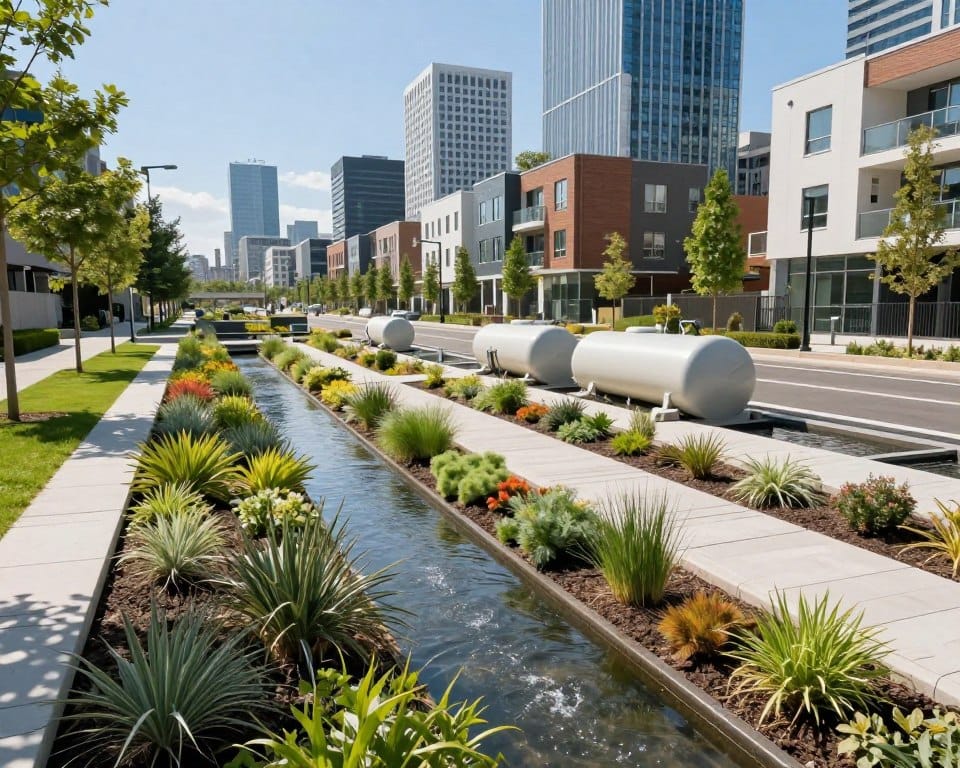
What if the rain falling on a city’s streets could become its most valuable resource? This question challenges the conventional view of precipitation as a problem to be managed. In reality, a fundamental shift is occurring in municipal water security.
Landscapes transform rainfall into a management challenge. Precipitation flows off hard surfaces, carrying pollutants toward drainage systems instead of replenishing natural sources. Redirecting this runoff transforms waste into a valuable commodity.
This practice provides a resilient local water supply. It reduces strain on sewers, prevents flooding, and creates jobs. It often costs less than other water sources while solving multiple infrastructure challenges. Communities across the United States are implementing sophisticated collection systems.
These systems operate at multiple scales, from residential rain barrels to neighborhood cistern networks. This convergence of necessity and innovation addresses flooding and scarcity. It uses integrated systems that mimic natural water cycles.
The economic benefits extend beyond lower water bills. They include decreased maintenance costs and enhanced property values. Understanding these water harvesting methods requires examining built environments, natural cycles, and regulatory frameworks.
Key Takeaways
- Rainwater runoff is being reimagined as a valuable resource rather than a waste product.
- Collecting and reusing this water creates a more resilient local supply.
- These systems help reduce flooding and lessen the burden on sewer infrastructure.
- Implementation occurs at various scales, from individual properties to entire neighborhoods.
- Economic advantages include lower costs and increased property values.
- The approach mimics natural hydrological processes for greater effectiveness.
- Successful implementation depends on the relationship between infrastructure, nature, and regulation.
Effective Urban Stormwater Capture Methods
A quiet revolution in water stewardship is unfolding across American cityscapes. Communities and businesses now employ diverse approaches to transform precipitation into a reliable resource. These techniques address multiple needs, including supply security, flood mitigation, and regulatory compliance.
Selection depends on specific site conditions like soil type, available space, and drainage patterns. The intended application for collected water also guides technology choices. Successful implementation requires integrating various components within comprehensive management plans.
Key Strategies for Urban Water Conservation
Modern conservation recognizes that single solutions rarely suffice. Instead, multiple interventions work together across residential, commercial, and public spaces. This integrated approach represents a philosophical shift from traditional gray infrastructure toward green alternatives.
Green infrastructure slows, filters, and infiltrates precipitation naturally. Practical application demands attention to maintenance needs and long-term performance monitoring. Adaptive protocols allow these systems to respond to changing climate conditions and community requirements.
Foundations of Stormwater Management in Urban Landscapes
Contemporary landscapes, paved and built, fundamentally reshape the journey of rain from sky to soil. This alteration creates a central challenge for municipal water resource planning. The relationship between hard surfaces and precipitation defines the core principles of effective management.
Understanding Runoff and Water Quality Challenges
Impermeable materials like asphalt and concrete prevent natural water absorption. Rainfall becomes rapid surface flow instead of gradual groundwater recharge. This concentrated flow gathers pollutants from streets and rooftops.
These contaminants threaten ecosystem health and public water supplies. Managing this runoff is crucial for protecting environmental quality. It addresses the root cause of degraded water conditions in developed watersheds.
Environmental and Economic Benefits
Redirecting precipitation offers significant advantages beyond simple containment. It creates a local, resilient supply for non-potable uses. This approach reduces pressure on traditional drainage and treatment facilities.
The economic benefits are multi-faceted and substantial. They include lower infrastructure costs and reduced flood damage expenses. Property values often increase in areas with advanced water management systems.
| Feature | Conventional Approach | Modern Integrated Management |
|---|---|---|
| Primary Goal | Rapid Water Removal | Water Capture and Reuse |
| Impact on Water Quality | Often Degrades Quality | Actively Improves Quality |
| Economic Focus | Construction Cost Only | Long-Term Value & Savings |
| Environmental Result | Downstream Flooding | Local Groundwater Recharge |
Communities gain resilience against climate extremes by implementing these systems. Understanding these foundational concepts is the first step toward effective rainwater harvesting systems. The integration of natural cycles with engineered solutions yields profound benefits for both people and the environment.
Infiltration Solutions: Basins, Trenches, and Dry Wells
The silent journey of water through subsurface pathways represents a sophisticated approach to restoring natural hydrological cycles. These engineered systems work beneath the surface to redirect precipitation back into aquifers.
Designing for Groundwater Recharge
Infiltration basins create shallow depressions that temporarily hold runoff. They allow gradual percolation into underlying soils. This process effectively reverses hydrological disruption from development.
Trenches serve similar purposes in constrained spaces. They use narrow excavations filled with aggregate material. This design maximizes contact between water and permeable soils.
Dry wells manage concentrated roof drainage effectively. They intercept high-volume flows at strategic collection points. Underground pipes convey water to excavated pits for infiltration.
| Feature | Infiltration Basins | Infiltration Trenches | Dry Wells |
|---|---|---|---|
| Primary Function | Temporary surface ponding | Subsurface storage | Roof runoff management |
| Space Requirements | Large surface area | Linear footprint | Compact vertical design |
| Ideal Applications | Parks, open spaces | Parking lot islands | Residential downspouts |
| Recharge Efficiency | High volume capacity | Moderate infiltration | Targeted point sources |
Practical Examples from Municipal Codes
Local regulations typically specify maximum ponding durations. Many codes require complete drainage within 72 hours. This prevents vector breeding and maintains capacity.
Residential developments often incorporate dry wells at each downspout. Commercial sites use trenches along landscape islands. Public parks feature basins that serve dual recreational functions.
Long-term performance depends on proper sediment removal. Regular inspection protocols ensure continued effectiveness. Strategic placement considers soil conditions verified through testing.
Rain Barrels and Rain Gardens Strategies
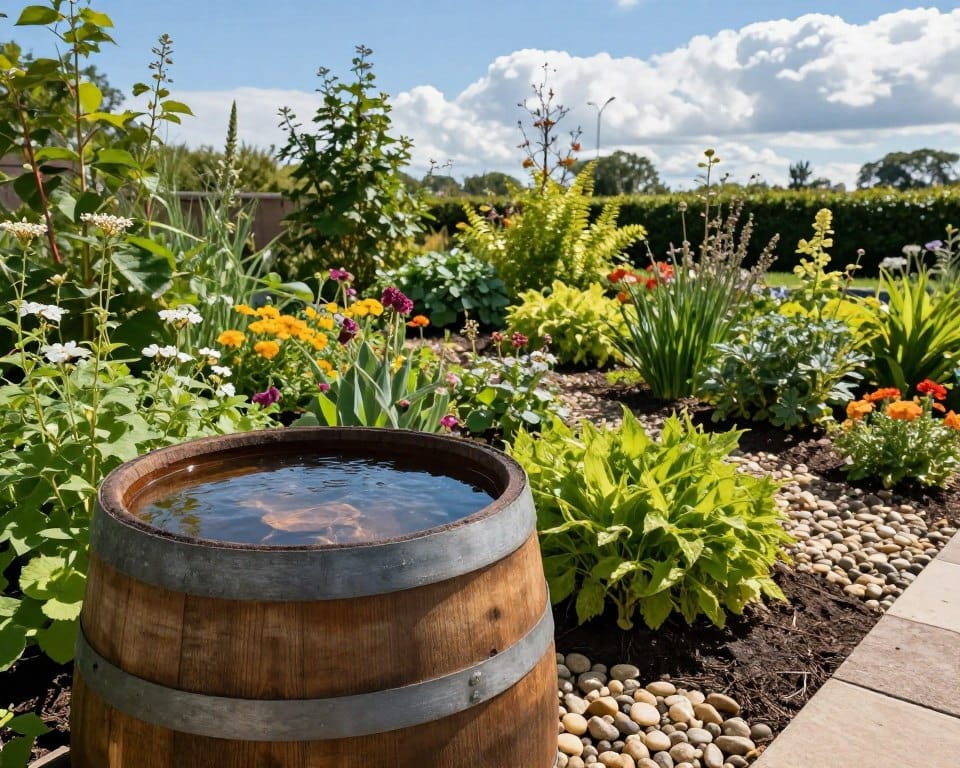
A simple barrel placed beneath a downspout transforms a household’s relationship with precipitation. These residential-scale approaches offer a direct path to water conservation. They turn rainfall into a resource for the landscape.
DIY Rain Collection Systems
Installing a rain barrel is a straightforward project. It connects roof drainage to a storage container for immediate reuse. This collected water is perfect for outdoor tasks.
The benefits of this simple system are significant.
- It reduces the volume of runoff entering drainage systems.
- Homeowners can lower their water bills by using free rain for irrigation.
- It provides a visible example of sustainable water use.
Enhancing Local Watershed Awareness
Rain gardens create attractive planted depressions in the landscape. They allow water from hard surfaces to soak slowly into the ground. This process mimics natural absorption, improving local water cycles.
These features serve as living classrooms. They stimulate conversations about stewardship and demonstrate practical conservation. Many communities even offer support for residents to install these beneficial systems.
Pervious Pavements and Subsurface Infiltration Beds
Pervious materials challenge conventional assumptions about hardscapes, revealing how infrastructure can work in harmony with natural cycles. These innovative surfaces transform traditional pavement into functional hydrological components that maintain structural integrity while allowing vertical water movement.
Three primary technologies dominate this field: porous asphalt, pervious concrete, and permeable pavers. Each achieves permeability through distinct engineering approaches while supporting vehicular loads. The common principle involves creating interconnected void spaces that facilitate rapid infiltration.
Controlling Stormwater Peak Flow
Beneath these permeable surfaces lies the critical storage component—subsurface infiltration beds. These engineered reservoirs consist of stone-filled chambers wrapped in geotextile fabric. They provide temporary detention volume that gradually releases water into native soils.
The system’s layered composition ensures effective peak flow control. A permeable surface layer allows immediate water entry into an aggregate storage zone below. This configuration intercepts runoff at its source, preventing concentrated flows that overwhelm drainage infrastructure.
Proper maintenance sustains long-term performance. Regular vacuum sweeping removes sediment that could clog surface pores. Periodic infiltration rate testing ensures the system continues to function as designed, protecting downstream channels from erosive damage.
These integrated systems demonstrate how engineered solutions can mimic natural water absorption processes. They represent a sophisticated approach to managing precipitation where it falls, reducing flooding risks while replenishing groundwater supplies.
Vegetated Swales, Filter Strips, and Constructed Filters
Vegetated corridors and engineered filters represent a biological approach to water purification that mimics natural ecosystems. These systems leverage the inherent capabilities of plants and soils to treat runoff through multiple physical and biological mechanisms.
They create treatment pathways where water interacts with vegetation and specialized media. This interaction removes contaminants before water enters sensitive aquatic environments.
Improving Water Quality with Native Vegetation
Vegetated swales function as linear treatment corridors. Their broad, shallow design promotes sheet flow that maximizes contact time between water and plant surfaces. Dense vegetation and soil microbes work together to filter pollutants through physical and biological processes.
Filter strips serve as protective buffers between pollution sources and water bodies. Established vegetation intercepts overland flow, allowing sedimentation and infiltration. Native plants prove particularly effective due to their adaptation to local conditions.
Constructed filters employ engineered media tailored for specific contaminant removal. These systems can address particular water quality concerns prevalent in different contexts. The media selection determines their effectiveness against various pollutants.
| System Type | Primary Function | Pollutant Removal Mechanism | Space Requirements |
|---|---|---|---|
| Vegetated Swales | Linear treatment and flow attenuation | Filtration, adsorption, biological uptake | Moderate linear space |
| Filter Strips | Buffer zone protection | Sedimentation, infiltration, plant uptake | Wide area needed |
| Constructed Filters | Targeted contaminant removal | Media-specific filtration | Compact design options |
Check dams within swale systems enhance treatment by creating temporary ponding zones. This extends water residence time, improving sedimentation and infiltration. The combined physical, chemical, and biological processes achieve superior water quality results.
Berms, Retentive Grading, and Landscape Adaptations
The gentle curve of an earthen ridge, strategically placed, holds the power to rewrite the hydrological story of a piece of land. These subtle interventions, known as infiltration berms, work in concert with existing slopes rather than against them.
Positioned along contour lines, they interrupt the downslope journey of runoff. This simple action redirects flow into temporary detention areas where gradual infiltration can occur.
Techniques for Slowing Down Runoff
Retentive grading complements berms by creating micro-topographic variations across a site. Shallow depressions and gentle swales create distributed storage capacity without dedicated structures.
This approach transforms sloped terrain from an accelerator of erosive flows into a series of infiltration opportunities. The cumulative effect across a watershed can rival larger, centralized facilities.
Implementation demands careful analysis of soil conditions and drainage patterns. Proper design ensures created depressions drain adequately between events while allowing sufficient time for meaningful water quality improvement.
These landscape adaptations offer secondary benefits, including enhanced moisture retention for plants and increased visual interest. They represent a sophisticated, distributed approach to managing precipitation where it lands.
The Role of Vegetated Roofs in Urban Water Reuse
Above the bustling streets, a quiet transformation unfolds where rooftops become living ecosystems that drink the rain. These green installations fundamentally alter how buildings interact with precipitation, turning conventional surfaces into spongelike landscapes.

Managing Roof Runoff with Green Installations
Vegetated roof systems consist of carefully engineered layers that mimic natural ground cover. A waterproof membrane protects the building, while specialized growing media supports drought-tolerant plants. This layered architecture intercepts rainfall where it first contacts the structure.
The primary hydrological function involves significant volume reduction through absorption and evapotranspiration. Rather than rushing off the surface as immediate roof runoff, water enters the growing media. Plants then gradually release moisture back to the atmosphere, completing a natural cycle.
Multiple Benefits Beyond Stormwater Control
These installations offer remarkable advantages extending far beyond water management. The same system that reduces runoff volume also moderates building temperatures through natural insulation. This dual functionality creates energy savings while managing precipitation.
Additional benefits include extended roof membrane lifespan and habitat creation for urban wildlife. The growing media filters pollutants from rainwater, improving water quality before it enters drainage systems. These multifaceted advantages make vegetated roofs valuable components in sustainable rainwater harvesting systems.
From shallow residential installations to deep commercial gardens, these systems demonstrate versatility across building types. They represent an innovative approach where architecture and ecology merge to create smarter water reuse solutions.
Systems for Runoff Capture and Groundwater Recharge
The strategic containment of rainfall represents a sophisticated approach to water security that bridges the gap between natural cycles and human needs. These engineered solutions address the fundamental mismatch between precipitation events and consumption patterns.
Temporary Storage and Volume Reduction
Storage capacity forms the cornerstone of effective water reuse systems. From residential rain barrels holding 50-100 gallons to massive underground cisterns storing hundreds of thousands of gallons, these solutions demonstrate remarkable scalability.
The primary benefit involves significant volume reduction during critical storm periods. By intercepting runoff at its source, these systems prevent overwhelming drainage infrastructure while creating valuable water resources.
Groundwater recharge represents another vital application. Collected water can be directed into aquifer systems during appropriate conditions, replenishing underground resources that support stream flows and long-term security.
Real-World Case Studies Demonstrating Effectiveness
Washington DC’s Canal Park exemplifies neighborhood-scale innovation. A 60,000-gallon underground cistern supplies 95% of the park’s needs, including irrigation and ice rink operations, saving 1.5 million gallons annually.
The Minnesota United FC stadium showcases technological integration. A 675,000-gallon subsurface tank uses weather-responsive controls to optimize storage capacity. Treated water serves stadium toilets, laundry, and irrigation needs.
These documented examples demonstrate how sophisticated capture and reuse systems simultaneously address flooding concerns, water supply challenges, and regulatory requirements while creating economic value.
Constructed Wetlands, Ponds, and Retention Basins
In the intersection of engineering and ecology, constructed wetlands demonstrate how human design can emulate natural purification. These engineered aquatic systems provide sophisticated stormwater management while creating valuable habitat areas.
Designing Multi-Use Aquatic Habitats
Effective design considers both hydraulic function and ecological value. Shallow water depths support emergent vegetation that filters pollutants through natural processes.
Native plant selection creates diverse habitat niches while tolerating variable water levels. This approach transforms functional infrastructure into living ecosystems.
Linking Stormwater Management to Wildlife Benefits
These systems offer significant wildlife benefits beyond water quality improvement. They provide breeding grounds for amphibians and foraging areas for birds.
The permanent water features create refuge for species displaced by development. This ecological function enhances local biodiversity in surrounding areas.
| System Type | Primary Function | Habitat Value | Maintenance Level |
|---|---|---|---|
| Constructed Wetlands | Pollutant removal & volume reduction | High biodiversity support | Moderate vegetation care |
| Wet Ponds | Peak flow control & settling | Aquatic habitat creation | Sediment management |
| Retention Basins | Temporary storage & infiltration | Seasonal habitat benefits | Periodic inspection needed |
The Rio Salado project in Phoenix restored five miles of stream corridor with native wetlands. This regional-scale approach demonstrates how stormwater management can integrate ecological restoration.
Integrating Stormwater Capture with HVAC and Cooling Systems
Buildings generate their own hidden water supply through the very processes designed to maintain indoor comfort and temperature regulation. This integration represents an evolving frontier where mechanical systems and water management converge.
Cooling operations constitute significant water demands in commercial facilities. Approximately 15% of total water use in these settings serves heat rejection equipment.
Using Condensate as a Reliable Water Source
Air conditioning condensate provides a consistent onsite water supply. As humid air passes over chilled evaporator coils, water condenses naturally.
This source scales proportionally with cooling loads. Generation peaks during summer months when irrigation demands are highest.
The Barclays Center in Brooklyn demonstrates large-scale integration. It utilizes harvested stormwater as the primary source for cooling tower operations.
Water quality requires careful consideration. Potential heavy metal contamination from system components necessitates appropriate treatment approaches.
Building-scale water budgets achieve substantial supply diversification. They reduce vulnerability to drought restrictions while lowering utility costs.
Landscape Irrigation Using Stormwater and Graywater
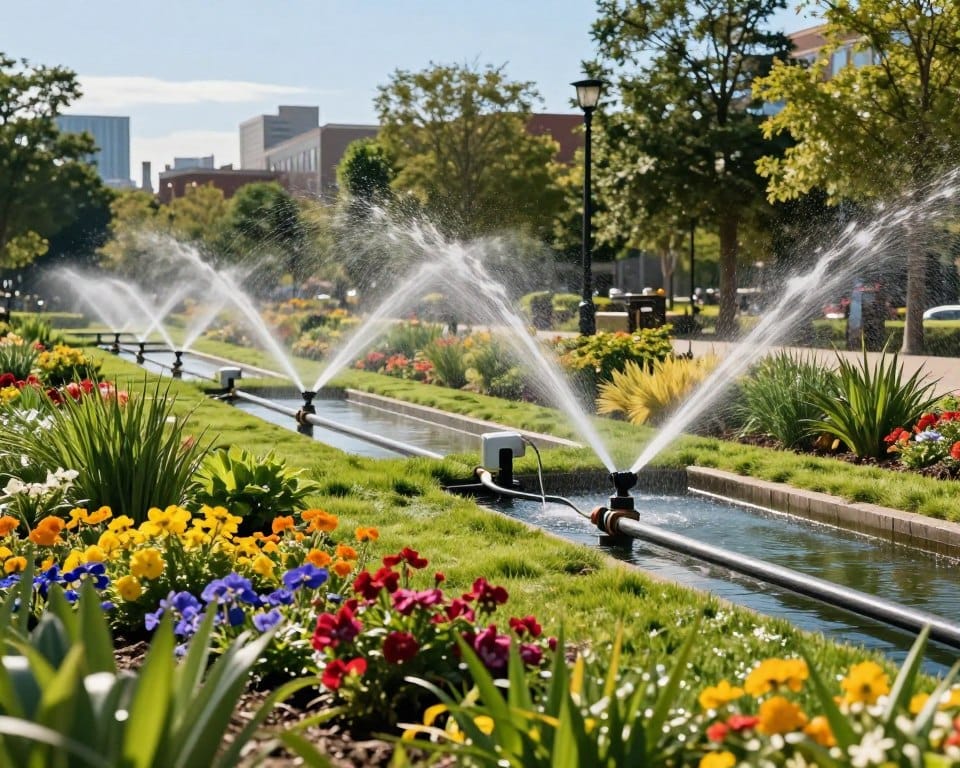
Across residential yards and public spaces, alternative water sources are transforming how we maintain green areas. This approach recognizes that outdoor watering represents a substantial portion of total consumption, particularly during growing seasons. The strategic application of non-potable supplies to vegetation demonstrates sophisticated resource management.
Efficient Irrigation Methods for Urban Settings
Three primary distribution approaches serve different safety and efficiency needs. Subsurface systems deliver water directly to root zones through buried lines, minimizing human contact. This method offers the highest protection for graywater applications.
Surface drip irrigation provides visible operation monitoring while maintaining efficiency. Spray systems using sprinklers cover large turf areas effectively but create exposure concerns. Many jurisdictions restrict spray application for graywater due to aerosol risks.
Water quality considerations differ significantly between sources. Graywater typically contains elevated sodium and chloride from cleaning products. Collected precipitation may carry deicing salts and petroleum residues requiring source control.
Municipal rebate programs encourage residential implementation nationwide. These initiatives recognize the system-wide benefits of distributed water reuse. The National Mall project demonstrates large-scale success, using local runoff for iconic landscape irrigation.
Regulatory and Policy Considerations Across the United States
The legal frameworks governing precipitation management reveal a complex tapestry of jurisdictional approaches across the United States. These policies balance innovation encouragement with public health protection through diverse mechanisms.
Washington DC demonstrates progressive regulatory evolution. The district moved from basic retention standards in 2013 to sophisticated log reduction targets by 2020.
Navigating Local, State, and Federal Guidelines
Financial incentives create powerful drivers for implementation. New York City offers substantial rate discounts for properties adopting reuse systems.
Florida established water reuse as a state objective in 1989. This long-standing commitment supports approximately 820 million gallons daily of reclaimed water use.
California’s Title 22 regulations provide detailed technical standards. These rules govern non-potable applications, groundwater recharge, and reservoir augmentation.
Colorado’s 2022 direct potable reuse rule represents cutting-edge policy development. This framework allows treated wastewater to enter drinking water systems under strict monitoring requirements.
The patchwork of state regulations creates challenges for cross-jurisdictional projects. Practitioners must carefully navigate varying treatment standards and permissible uses.
Technological Advances and Innovative Designs
Technological innovation is quietly transforming how we interact with precipitation, turning passive infrastructure into responsive ecological partners. These emerging tools represent a significant evolution in water management philosophy, where digital intelligence enhances traditional hydrological principles.
Emerging Tools and Smart Systems for Water Reuse
Smart monitoring technologies now augment collection systems with remarkable precision. They utilize weather forecasting data and soil moisture sensors to optimize storage capacity. Adaptive algorithms can preemptively adjust water levels before predicted precipitation events.
The Minnesota United FC stadium demonstrates this evolution with its “smart hub” technology. This system dynamically manages stored water based on meteorological predictions. It maximizes capture during storms while ensuring adequate supply for dry periods.
Advanced treatment technologies enable expanded applications for collected water. Membrane filtration and ultraviolet disinfection processes meet stringent quality requirements. These systems bridge the gap between simple irrigation and more demanding indoor uses.
Modular components reduce installation challenges across development projects. Manufacturers create standardized treatment packages configurable for specific site conditions. This approach streamlines construction while maintaining performance standards.
Chicago’s Green Infrastructure Plan exemplifies systems-level thinking at metropolitan scale. It establishes ambitious goals for distributed management that enhance regional resilience. The plan transforms approaches from centralized infrastructure to networked interventions.
Community Benefits and Economic Impact of Stormwater Reuse
When communities reimagine rainfall as an asset rather than a liability, they unlock cascading benefits across social and economic dimensions. This paradigm shift transforms precipitation management from a technical challenge into a community development opportunity.
The distributed nature of these systems creates multiple entry points for local economic participation. Small businesses and contractors find new markets in design, installation, and maintenance services.
Job Creation and Cost Savings for Local Infrastructure
Workforce development programs create pathways for residents in underserved neighborhoods. These initiatives build skills while addressing local flooding concerns through practical projects.
Municipalities realize substantial savings through reduced infrastructure strain. Flood damage repair costs decrease while water treatment expenses decline significantly.
Enhancing Urban Resilience and Social Equity
Priority investments in historically marginalized areas address disproportionate flooding impacts. These targeted approaches combine environmental improvement with social justice objectives.
Tools like San Diego County’s benefit calculator help quantify multiple value streams. They translate abstract environmental gains into concrete economic metrics for decision-makers.
Chicago’s Green Infrastructure Plan demonstrates how regional approaches create recreational amenities. These projects enhance neighborhood livability while building climate resilience.
Conclusion
As communities confront the dual challenges of water scarcity and climate variability, integrated approaches to rainfall management emerge as essential strategies. This represents a fundamental rethinking of how we value and utilize precipitation.
Successful implementation requires recognizing the interconnected nature of water systems. These approaches bridge traditional divisions between supply, treatment, and environmental protection.
The available solutions span remarkable scales, from simple residential installations to sophisticated regional networks. This flexibility allows adaptation to diverse community needs and site conditions.
Looking forward, these integrated water reuse systems will become foundational components of resilient communities. They position municipalities for enhanced environmental outcomes and economic competitiveness in an era of accelerating change.