

Water sampling used to be complex and resource-intensive. It demanded significant human effort, boats, crews, fuel, time, and money. Autonomous robots are now changing how we monitor the environment.
These intelligent machines collect critical data from aquatic environments. They work with unprecedented precision and efficiency. Traditional methods are being transformed by this technology.
The Monterey Bay Aquarium Research Institute (MBARI) has led the way. They’ve deployed sophisticated environmental sample processors for over two decades. Robotic water sampling is reshaping scientific research today.
These autonomous robots navigate complex underwater environments with ease. They collect samples and data in locations once impossible to access. Human limitations no longer restrict ocean exploration.
This technology represents a quantum leap forward. We can now better understand our planet’s most critical ecosystems. Scientists have new tools to protect aquatic environments.
Key Takeaways
- Autonomous robots eliminate traditional water sampling constraints
- Advanced technologies enable comprehensive environmental monitoring
- Robotic systems can access remote and challenging aquatic environments
- Reduced human intervention leads to more consistent data collection
- Cutting-edge research is transforming marine scientific methodologies
How Autonomous Water Sampling Robots Are Transforming Environmental Monitoring
A scientist in California receives toxin measurements from a robot swimming in Lake Erie while sipping morning coffee. This isn’t science fiction—it’s the reality of marine data collection automation. Modern underwater robots are revolutionizing environmental monitoring with unprecedented precision and efficiency.
Marine data collection has dramatically transformed through cutting-edge technological innovations. Autonomous underwater vehicles now provide real-time environmental insights without traditional research limitations.
Real-Time Data Collection Without Human Oversight
The Monterey Bay Aquarium Research Institute’s Environmental Sample Processor represents a breakthrough in wireless data transmission. These sophisticated robots eliminate extensive delays associated with traditional sampling methods.
- Transmitting data wirelessly from remote locations
- Reducing sample processing time from weeks to minutes
- Enabling continuous environmental monitoring
Cost-Effective Alternatives to Traditional Sampling Methods
Water sampling historically required expensive boat charters, crew salaries, and significant time investments. Resource managers now recognize autonomous alternatives as game-changing solutions. Take the Denmark wind farm example: monitoring 13+ offshore locations became prohibitively expensive using traditional methods.
Cost-effectiveness in robotic water sampling means:
- Lower operational expenses
- Simultaneous multi-location sampling
- Continuous environmental tracking
- Reduced human personnel risks
The dramatic efficiency gains surprised researchers most. These robots are transforming environmental research economics by delivering unprecedented data collection capabilities.
The Technology Behind Underwater Drones for Water Collection
These sophisticated water sampling devices don’t look like traditional research equipment. Some are torpedo-shaped LRAUVs that glide through deep water. Others are surface vessels skimming across lakes.
At the University of Michigan’s testing facility, these robots undergo rigorous testing. They’re substantial machines tested in massive 10,000-gallon tanks. The facility uses cutting-edge motion capture systems to track their movements.
The smart water sampling technology is truly remarkable. These robots use sophisticated algorithms to “decide” where to sample. They detect chemical signatures in the water.
- Chlorophyll concentrations indicating algal blooms
- pH levels
- Specific environmental toxins
The sampling mechanism is particularly ingenious. MBARI’s Environmental Sample Processor (ESP) features a rotating carousel. It holds 60 individual cartridges, each capturing unique water samples.
The robots are equipped with an impressive array of sensors:
- Underwater stereo cameras for precise navigation
- Acoustic sensors for underwater communication
- Chemical sensors for detecting environmental changes
Think of these robots as incredibly smart underwater vacuum cleaners. They know exactly where to collect critical environmental data. They’re revolutionizing how we understand and monitor aquatic ecosystems.
Autonomous Water Sampling Robots in Marine and Freshwater Ecosystems
Water sampling has entered a new era of technological innovation. Autonomous robots are changing how we monitor aquatic environments. These sophisticated machines transform our ability to collect critical environmental data.
Environmental Sample Processors (ESP) have dramatically expanded our research capabilities. Second-generation ESP conducts stationary, autonomous sampling with remarkable precision. It enables real-time algal toxin detection and eDNA collection in challenging underwater environments.
Long-Range Autonomous Underwater Vehicles for Ocean Health
Long-range underwater vehicles represent a quantum leap in marine research. These robotic systems navigate vast ocean territories for weeks. They collect comprehensive environmental data and operate in extreme conditions.
- Navigate vast ocean territories for weeks
- Collect comprehensive environmental data
- Operate in extreme conditions
- Transmit real-time information
Environmental Sample Processors for Remote Aquatic Environments
Third-generation ESP is a highly portable system carried by autonomous robots. These advanced processors enable unprecedented flexibility in scientific research. They can be deployed in deep ocean trenches, remote freshwater ecosystems, and challenging river environments.
- Deep ocean trenches
- Remote freshwater ecosystems
- Challenging river environments
Scientists can now gather critical ecological data from previously inaccessible locations. This dramatically expands our understanding of aquatic life and environmental dynamics.
Detecting Harmful Algal Blooms with Robotic Aquatic Monitoring Systems
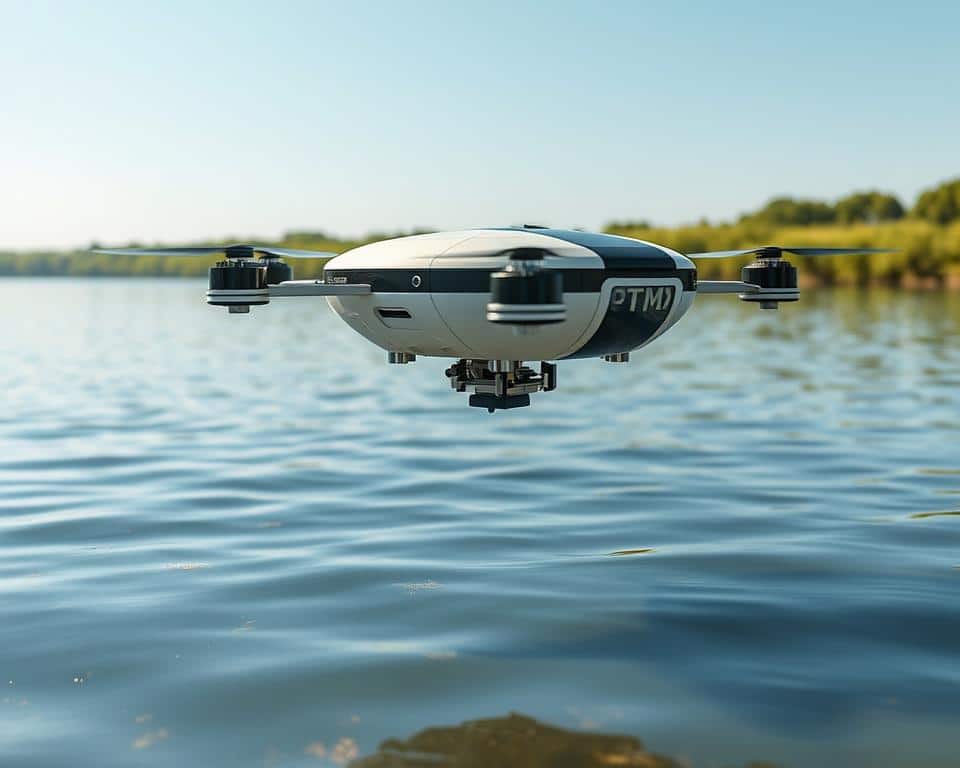
I discovered something remarkable about technology battling microscopic bacteria. These organisms multiply rapidly in warm, nutrient-rich water. They produce toxins that cause serious illness and death in humans and wildlife.
The Lake Erie robotic monitoring system represents a groundbreaking approach to environmental protection. From 2017 to 2024, the technological progression has been incredible.
Here’s how the system evolved:
- 2017: Stationary 2G Environmental Sample Processor (ESP) units deployed
- 2018: Mobile Long-Range Autonomous Underwater Vehicles (LRAUV) introduced
- 2023-2024: Autonomous surface vehicles accessing shallow water zones
The technical sophistication of these robots fascinates me most. They don’t just randomly collect water samples. Instead, they use advanced algorithms to detect specific bloom signatures.
These signatures include:
- Chlorophyll concentration changes
- Water color variations
- Targeted navigation toward bloom-dense areas
Surface plasmon resonance technology plays a crucial role in this monitoring system. It’s an optical sensor that detects specific toxin molecules in minutes. This is a massive improvement over traditional testing methods that took days.
The real-world impact is profound. Resource managers now receive real-time toxin data. This enables immediate actions like beach closures, drinking water advisories, and fishing restrictions.
This technology doesn’t just collect data. It protects public health with unprecedented speed and accuracy.
Advanced Sensing Capabilities in Self-Navigating Water Quality Robots
Water sampling technology has transformed environmental research by revealing hidden ecological insights. Living organisms constantly shed genetic material through skin cells, scales, waste, and mucus. These create invisible DNA breadcrumbs floating in aquatic environments.
Modern water sampling robots deliver unprecedented precision to biodiversity monitoring. These sophisticated machines capture microscopic genetic traces without disturbing delicate ecosystems.
Environmental DNA Collection and Preservation
The Environmental Sample Processor (ESP) represents a breakthrough in genetic tracking. Its innovative carousel system contains 60 individual cartridges designed to:
- Filter water samples
- Preserve genetic material
- Prepare samples for laboratory analysis
The McCloud River salmon project demonstrates this technology’s power. Researchers now collect water samples that reveal precise salmon migration patterns through DNA sequencing. This method replaces stressful fish counting techniques.
Surface Plasmon Resonance Technology for Toxin Detection
Surface plasmon resonance (SPR) provides real-time molecular detection. This technology acts like a molecular-scale alarm system. Light interactions with specialized sensor surfaces reveal critical environmental information.
Lake Erie deployments showcase SPR’s potential: toxin data transmits to shore within minutes. This enables rapid public health responses. The technology transforms how we understand and protect aquatic ecosystems.
Real-World Applications of Automated Oceanographic Sampling
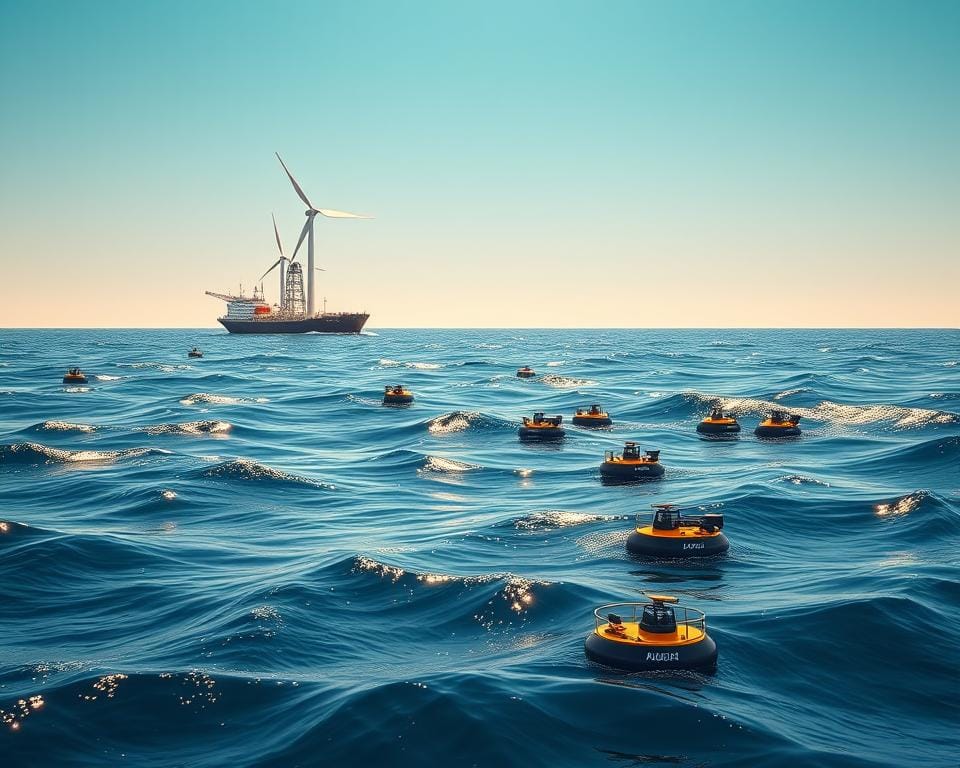
Marine research robots are changing how we study water ecosystems. These smart systems solve tough environmental problems in different places. They work without constant human control.
One exciting use involves watching offshore wind farms in Denmark. Governments need to build clean energy while keeping ocean life safe. Old ship surveys were costly and gave limited information.
- The June 2024 Long-Range Autonomous Underwater Vehicle (LRAUV) deployment changed everything
- Enabled simultaneous surveys inside and outside wind farm zones
- Gathered comparative environmental DNA (eDNA) data to measure biological impact
Another major project focused on saving endangered fish in the McCloud River. The Monterey Bay Aquarium Research Institute (MBARI) worked with UC Davis, NOAA, and the Winnemem Wintu Tribe. They tracked winter-run Chinook salmon without disturbing their home.
The Environmental Sample Processor (ESP) collected 130 genetic samples. It tracked salmon movement during times when physical monitoring was impossible. This method supports salmon recovery and respects indigenous ecological knowledge.
Finding invasive species is another key use. The United States Geological Survey (USGS) uses eDNA technology to:
- Catch invasive species before they establish populations
- Detect pathogens threatening fish populations
- Monitor potential parasitic invasions
These tools solve real problems in smart ways. They cut monitoring costs and protect endangered species. They also guard water resources through intelligent marine data collection.
Challenges and Solutions in Deploying Smart Water Sampling Technology
Underwater environments present unique obstacles for robotic exploration. Researchers face significant challenges when developing autonomous water sampling technologies. These technologies must operate in complex aquatic ecosystems.
The most critical hurdles involve communication, navigation, and environmental adaptation.
Underwater environments are among the most challenging for robots to sense and communicate in. Communication delays and missing data create substantial technical barriers for researchers.
Radio waves simply don’t work underwater. Acoustic sensors become the primary communication method instead.
Communication Challenges in Underwater Environments
MBARI researchers have navigated unexpected challenges during deployment. They protect devices from curious wildlife and weatherproof sensitive instrumentation against extreme conditions.
The key communication obstacles include:
- Signal transmission limitations
- Reduced data transfer rates
- Environmental interference
| Challenge | Technical Solution |
|---|---|
| Radio Wave Ineffectiveness | Acoustic Sensor Communication |
| Wildlife Interference | Robust Protective Housing |
| Environmental Conditions | Thermal Management Systems |
Engineers have developed innovative strategies to overcome these communication barriers. Pre-programmed autonomous decision-making algorithms allow robots to operate independently.
Periodic satellite data transmission helps maintain critical communication links. Advanced acoustic modems also support operations in challenging underwater environments.
Conclusion
Autonomous water sampling robots have evolved from experimental prototypes to essential operational tools. These advanced technologies now protect public health in Lake Erie. They help conserve endangered species in the McCloud River.
The robots also support renewable energy policy development in Denmark’s wind farm zones.
The National Aquatic eDNA Strategy marks a turning point in environmental management. Researchers now establish standardized benchmarks and create comprehensive monitoring systems. The November 2024 experiment at Monterey Bay Aquarium showed remarkable progress in instrument calibration.
Emerging applications continue expanding our understanding of aquatic ecosystems. The FIDO sampler detects invasive species with impressive accuracy. These robots monitor offshore wind farms and conduct climate change research.
They extend human scientific capabilities by maintaining persistent presence in remote locations. The robots generate continuous data streams that replace traditional periodic snapshots.
These technologies empower human scientists rather than replacing them. Autonomous water sampling robots deliver deeper insights into aquatic environments. They have become essential tools in environmental stewardship.
Their potential to monitor and protect water resources represents a significant advancement. These robots enhance our ability to understand and preserve critical ecosystems.