
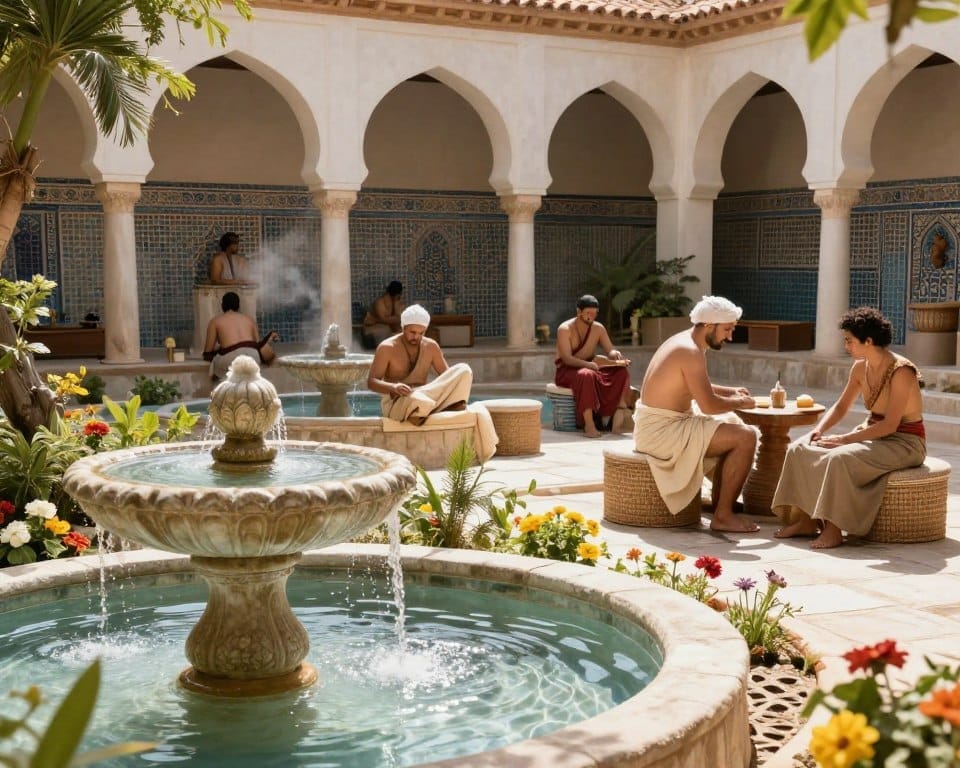
Ancient bathhouse traditions startle with scale and daily presence in urban life. Bathing shaped public health, civic design, and social rituals across empires.
Rome offers a clear case. Communal baths ran like civic centers. A fourth-century list named 952 baths in the city. Large thermae combined libraries, gardens, and exercise courts and served thousands.
Greek reverence for healing springs informed Roman practice. Public complexes spread across Europe and North Africa as early civic infrastructure in newly governed towns. The technical systems — hypocaust heating and managed water supply — explain how comfort met engineering.
Readers will gain a practical frame for comparison. The section defines core components from heated rooms to plunge pools. It also separates small local balnea from monumental thermae so readers can judge scale, access, and social use.
Key Takeaways
- Shared bathing influenced public health and urban design across the ancient world.
- Core components—heated chambers, plunge pools, and massage—appear in many regions.
- Scale mattered: balnea served locals while thermae functioned as large civic hubs.
- Communal routines synced with daily life and promoted social ties.
- Engineering like hypocausts and water management underpinned comfort and hygiene.
Why communal bathing shaped daily life, health, and culture in the past
Communal bathing shaped daily life by combining hygiene, therapy, and social exchange in a single public routine. Romans and Greeks treated warm water and steam as practical medicine. Oils were rubbed on the body and scraped off with strigils to clear pores.
From hygiene to healing: water, steam, and oils as everyday medicine
Heat opened pores and steam encouraged sweat. Cold plunges then restored circulation and muscle tone. Mineral springs were prized for healing; dissolved compounds eased joint pain and helped skin conditions.
Social glue: spaces to meet friends, do business, and relax
Bath complexes combined exercise courts, massage, food stalls, and libraries. People met patrons, negotiated deals, and exchanged news in predictable times of day. Shared nudity and routines reduced status markers and made encounters more direct.
- Routine practice: warm room, steam, oil-and-strigil cleansing — a repeatable hygiene ritual.
- Therapeutic effect: contrast bathing and minerals aided recovery and skin health.
- Social effect: integrated services and schedules turned baths into civic spaces for relaxation and commerce.
Inside the Roman baths: public baths, rooms, and ritual from warm to cold
A Roman bath complex guided visitors through a clear sequence of rooms that shaped care and social life.
The flow: apodyterium, tepidarium, caldarium, frigidarium, and laconicum
The typical visit began in the apodyterium where clothing was stored. Visitors moved into a warm room to acclimate. The caldarium followed for steam and intense heat. Hypocausts heated floors and walls there. Cold basins in the caldarium allowed quick cooling without leaving the hot zone. Many finished with a plunge in the frigidarium. Some sites added a laconicum, a dry super-heated room for extra sweating.
Architecture and scale
Thermae could span several city blocks. The Baths of Diocletian held up to 3,000 people. Local balnea served neighborhoods. Complexes often included palaestrae for exercise, libraries, gardens, and stalls. Decorative mosaics and statuary framed the experience and signaled civic pride.
Public life, mixed use, and care
Men and women used baths with variable rules by era and site. Fees were low and elites sometimes sponsored free days. After sweating, attendants applied oils and scraped skin with a strigil in the tepidarium. The practice combined hygiene, therapy, and daytime social exchange.
For related water engineering that supplied these facilities, see the role of aqueducts in city supply and maintenance at
famous historic aqueducts.
East Asian bathing cultures: Japanese onsen and Korean jimjilbangs
In East Asia, public bathing evolved into distinct systems that balance geology, health, and social life.
Onsen waters and minerals: natural hot springs for skin, sleep, and recovery
Japan hosts over 27,000 hot spring sources. Geothermal water delivers sulfur, iron, calcium, and magnesium.
These minerals link to clearer skin, improved sleep, and faster recovery after exertion. Onsen visits center on soaking and low-stress pacing.
Jjimjilbang experiences today: charcoal-heated saunas, jade rooms, and body scrubs
Korean jimjilbangs operate around the clock and combine wet zones with large dry saunas.
Materials such as jade or baked clay shape heat profiles. Attendants use mitts with milk and water for vigorous scrubs.
Iconic example: Dragon Hill Spa’s multi-story facilities and mixed social spaces
Dragon Hill Spa in Seoul spans seven stories and pairs seawater baths with a charcoal-fired main sauna and many amenities.
- Multiple-temperature baths and contrast rinses
- Themed dry rooms and family-friendly common floors
- 24/7 lodging, food, and quiet-rest areas for longer stays
| Feature | Japan (Onsen) | Korea (Jimjilbang) |
|---|---|---|
| Primary heat source | Geothermal springs | Kiln or charcoal-fired saunas |
| Typical services | Soaking, simple bathing rituals | Saunas, scrubs, entertainment, sleep areas |
| Health claims | Mineral-driven skin and recovery benefits | Detox, joint comfort (jade), circulation |
Turkish hammams: cleansing rituals, architecture, and women’s social worlds
The Turkish hammam combined engineered heat with public life in a distinct social form. It drew on Roman thermal models and adapted them to Islamic ablution practice. The result balanced steam, marble, and flowing water in a concise ritual.
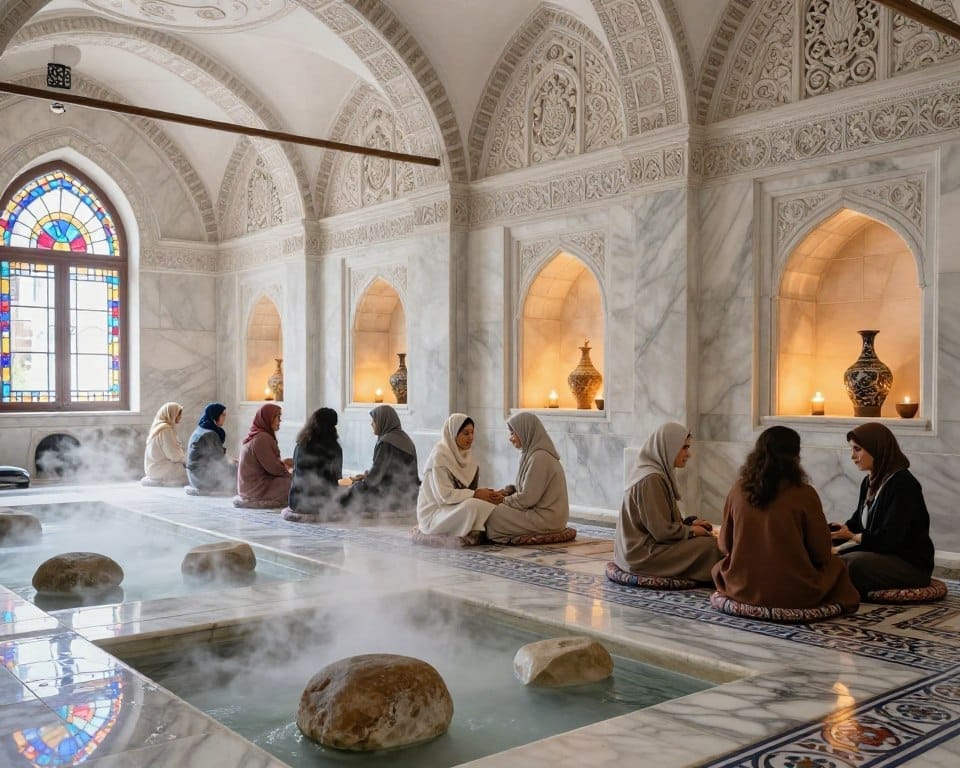
Visitors sat on heated marble platforms inside domed rooms. Steam pooled under curved ceilings. Taps and basins replaced large soaking pools. Attendants or guests poured warm water over the body between scrubs.
- Sequence: warm room, heated marble, steam, rinse, scrub with mitts, finish with fragrant soaps and oils.
- Architecture: domes with star apertures, marble benches, mosaic floors, courtyards, and fountains.
- Social role: women’s sessions served as one of the few public places for gathering, celebration, and news exchange.
Hammams worked on schedules tied to prayer and markets. Staff controlled heat and water flow to protect privacy and hygiene. The bathhouse persisted because it fused sanitation with social belonging across the country.
The Russian banya: heat, venik massages, and community traditions
The banya blends high humidity, staged cooling, and communal care into a clear ritual. It functions like a sauna but centers on leafy venik work and social exchange.
Birch and oak veniks: circulation, essential oils, and rinsing rituals
Veniks are bundles of birch, oak, or other branches. They are soaked, then used to tap and sweep the skin. This releases aromatic oils and boosts microcirculation across the body.
After a venik round, the infusion is poured as a rinse for hair and skin. Alternating hot and cold follows. Bench areas let users choose higher heat or milder air before plunges.
Myth and meaning: the bannik spirit and life events honored in the banya
Families and friends often attend together. Historically, women gave birth in these rooms and grooms carried brides over thresholds. Men and women followed customs that tied major life events to the steam space.
- Cycle: hot steam, venik massage, cold exposure, rest for circulation and relaxation.
- Practical steps: soak venik 10–15 minutes, start on lower bench, progress to higher benches, douse to control steam.
- Social practice: venik exchange with friends; attendants guide pacing and hydration in humid areas.
Folklore about the bannik encouraged respectful conduct and offerings. The banya persists because it combines simple materials with repeatable steps that people keep using for health and communal relief.
Spiritual heat: Native American sweat lodge ceremonies
Participants enter a low dome where heated stones, song, and breath shape a guided ceremony. The space is dark, warm, and held by clear roles. A leader manages timing and safety.
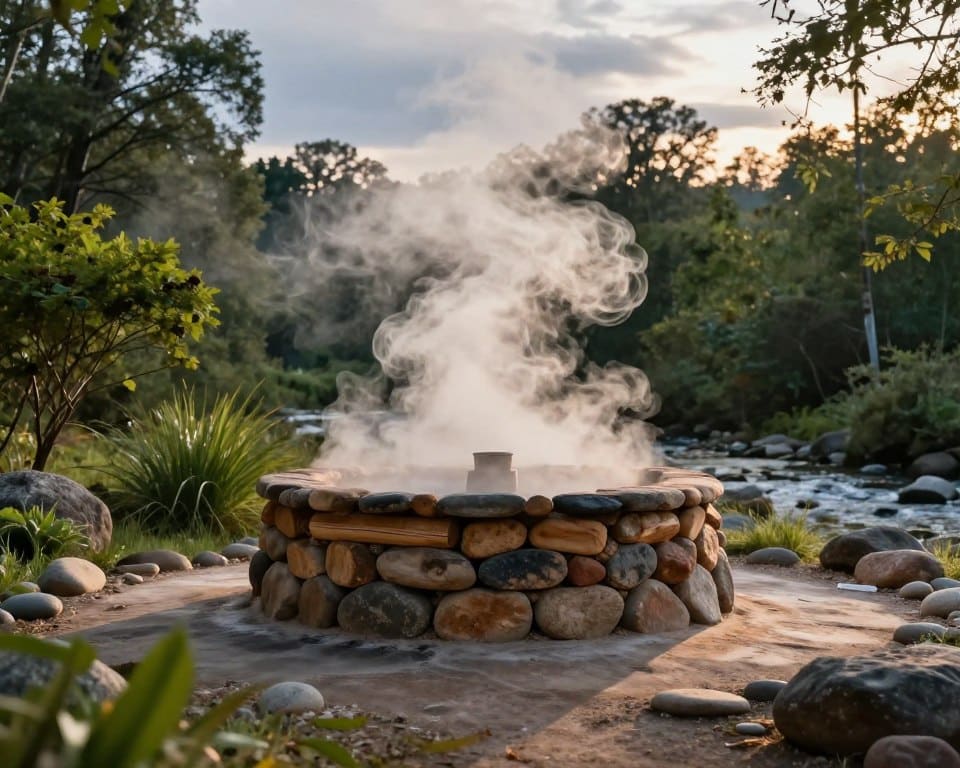
Ceremony structure: heated rocks, steam rounds, prayer, and song
The lodge is a low, enclosed place built to retain heat and focus attention. Heated stones sit in a central pit. Water is poured in measured amounts to release steam and mark the start of each round.
Rounds commonly run about thirty minutes. Between rounds the door opens for air, water, and a group check. A designated leader sets prayers and songs and keeps people safe.
Purpose and endurance: purification, renewal, and communal strength
People enter seeking clarity and healing. The ritual treats body and spirit together. Offerings, language, and protocols vary by community and carry deep cultural meaning.
Ceremonies can last several hours in multiple cycles. Pacing, hydration, and awareness of heat tolerance are essential. The form persists through careful transmission as a place of shared renewal and disciplined experience.
Ancient bathhouse traditions across Egypt and North Africa
Regional bathing networks in Egypt combined steam exposure, contrast rinses, and targeted skin treatments.
Steam rooms, contrast bathing, and topical care
Rasul and rhassoul spaces centered on stone steam rooms in two-story buildings. Thick walls held heat and separated treatment areas from rest areas.
Visitors moved from a heated enclosure to a plunge pool for contrast baths. The sequence toned vessels and eased the nervous system. Gyms attached to many complexes encouraged light exercise before thermal therapy.
- Beeswax blended with water served as a cleansing and protective medium for skin instead of alkaline soap.
- Aromatic oils and fresh flowers scented the routine and added a ritual dimension.
- Public access was usual; some sites scheduled separate times or sections for men and women.
| Feature | Egyptian rasul/rhassoul | North African (Roman-influenced) |
|---|---|---|
| Building type | Two-story stone with thick walls | Adapted Roman layout with domes and pools |
| Water source | Managed cisterns and heated basins | Thermal springs reduced fuel needs |
| Treatments | Beeswax-water cleanses, aromatic oils | Steam, scrubs, mineral soaks |
| Social use | Gym plus public bathing; gender scheduling | Civic facilities integrated into city life |
Records note continuity into the late antique century and show how climate and geology shaped local designs. For technical notes on steam and hot water effects see steam and hot water effects.
Conclusion
Heat, water, and social space formed repeating patterns in bathing sites across the world. These patterns link practical design with public life. They show how rooms and flows shaped hygiene, healing, and relaxation.
Key takeaways guide readers evaluating ruins or active sites. Look for heat sources, room sequencing, and drainage to read use over time. Note how roman baths and public baths integrated exercise, reading, and rest into one campus.
Respect local rules as a modern visitor. Observe schedules, give people space, and use each place as intended. Doing so preserves the experience and the cultural value for the next century.