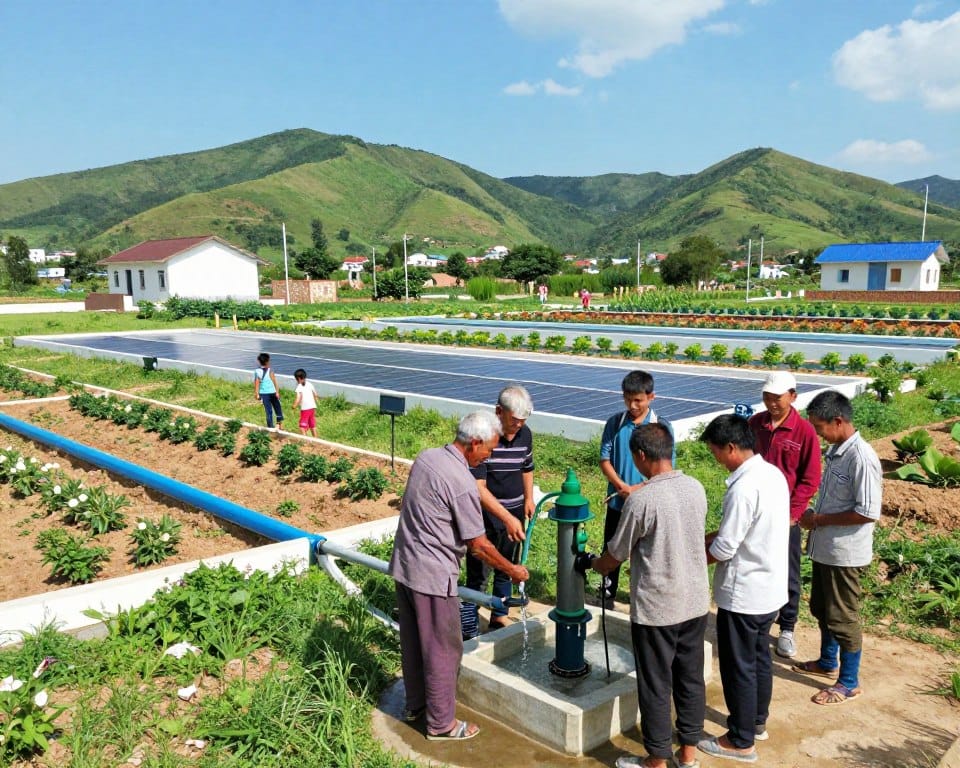
What if the most advanced solution for delivering a fundamental human need isn’t a complex network of pipes, but a blend of ancient wisdom and modern ingenuity? For millions living outside city limits, conventional water infrastructure is often an impossible dream.
Homes scattered across vast, challenging landscapes make centralized systems economically unfeasible. This reality leaves many communities grappling with a daily struggle for a basic resource.
The landscape of water access reflects a profound challenge where isolation and limited resources meet. True progress emerges from integrated systems. These approaches combine solar power, smart filtration, and deep community involvement.
They address not just the technical problem but the human and geographical context. Understanding the common issues with rural water supply is the first step toward crafting these effective, lasting solutions.
Key Takeaways
- Geographical isolation and economic constraints create unique hurdles for water delivery in non-urban areas.
- Successful initiatives harmonize technology with community participation and local capacity.
- An estimated 785 million people globally lack basic drinking water services, with a majority in rural regions.
- Effective solutions must be affordable, technically feasible, and well-matched to the local environment.
- Integrated systems using solar power and filtration are transforming access and empowering local populations.
Exploring the Current Challenges in Rural Water Access
Beyond the reach of municipal grids, communities face a dual challenge: the land’s formidable shape and the prohibitive expense of conventional systems. These foundational obstacles create a context where simple solutions often fall short, demanding a deeper understanding of the specific barriers to safe, reliable hydration.
Geographical and Financial Constraints in Rural Areas
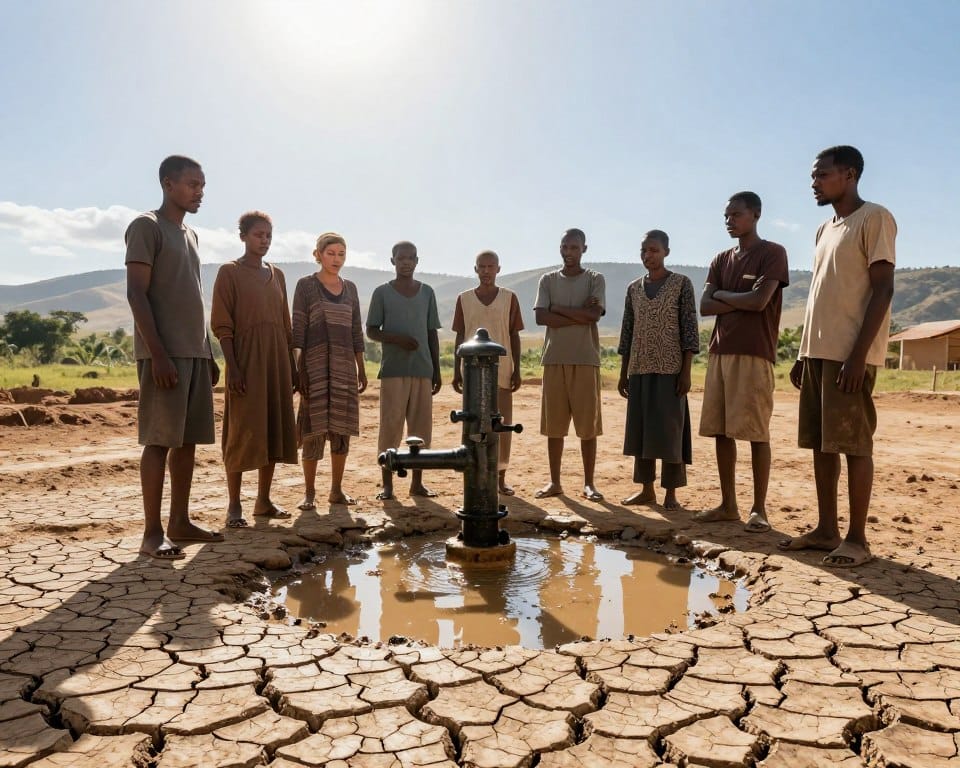
Topography dictates possibility. In non-urban settings, homes scattered across mountains, valleys, and plains make underground piping networks logistically impractical. The initial investment required for such extensive infrastructure is often beyond the means of local governments and residents.
These financial constraints are compounded by distance. Transporting materials and skilled labor to remote locations drives up costs significantly. This leaves many populations reliant on nearby, often unprotected, sources like rivers and shallow wells.
Impact on Public Health and Community Development
The consequences of these constraints are profound. Reliance on unimproved sources directly threatens public health. Contaminated drinking water is a primary vector for diseases like cholera and typhoid, disproportionately affecting children.
This daily struggle for a basic resource also hinders broader community development. Time spent collecting water limits educational and economic opportunities, particularly for women and girls. It constrains agricultural output and can perpetuate cycles of poverty, demonstrating how water access is inextricably linked to human vitality and progress.
Harnessing Portable Filtration Systems for Clean Drinking Water
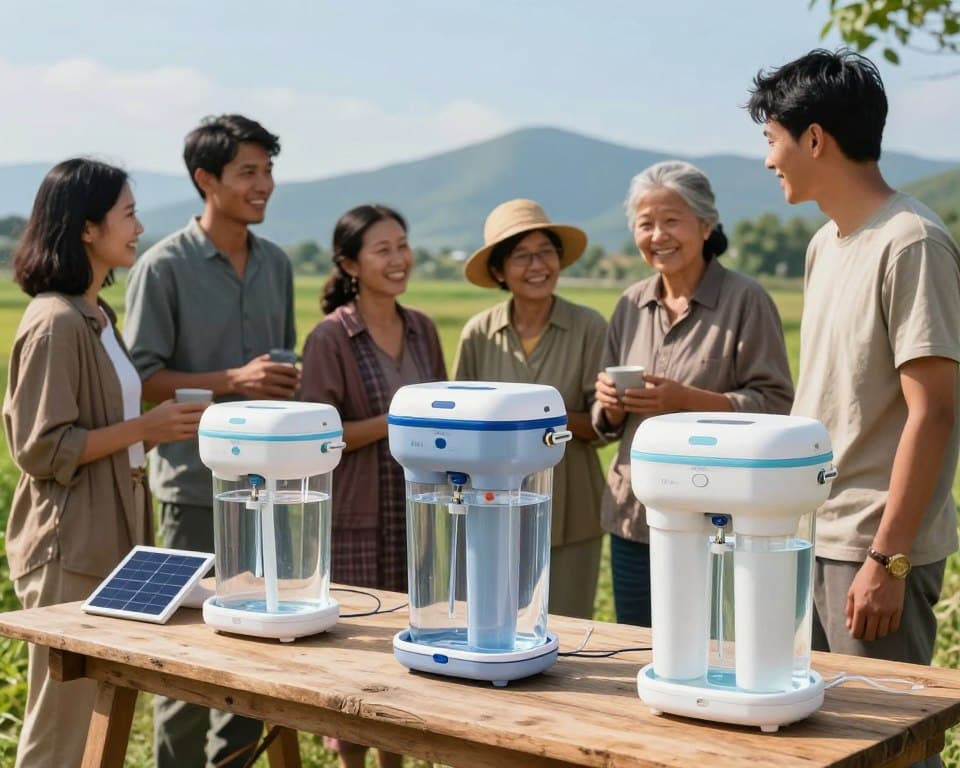
The journey from questionable sources to safe hydration finds its most immediate bridge in the compact efficiency of portable filtration devices. These mobile purification units bypass the need for permanent infrastructure, delivering immediate results where traditional systems cannot reach.
Effective Technologies and Their Practical Use
Contemporary filtration systems employ sophisticated mechanisms to address diverse water quality challenges. Membrane technologies, with precisely engineered pore sizes, capture contaminants across multiple scales from visible particles to microscopic threats.
Activated carbon and ceramic barriers provide additional layers of protection. These multi-stage approaches ensure comprehensive treatment without requiring complex operational knowledge from users.
| Filtration Technology | Primary Mechanism | Contaminants Removed | Typical Applications |
|---|---|---|---|
| Membrane Filtration | Physical barrier with microscopic pores | Bacteria, viruses, sediments | Community-level systems, emergency response |
| Activated Carbon | Chemical adsorption | Organic compounds, chemicals, odors | Household units, taste improvement |
| Ceramic Filters | Microporous barrier | Pathogens, turbidity | Individual household use, schools |
| Multi-stage Systems | Combined mechanisms | Comprehensive contaminant removal | High-risk areas, diverse source waters |
Real-World Case Studies and Success Stories
Organizations like Water Mission demonstrate the transformative potential of these solutions. Their deployments in Honduras, Uganda, and India have provided reliable access to thousands while reducing waterborne diseases.
The LifeStraw Community filter exemplifies successful technology transfer. Its widespread adoption in development contexts shows how appropriate design balances effectiveness with practical usability for diverse populations.
Solar-Powered Water Pumps: A Sustainable, Renewable Solution
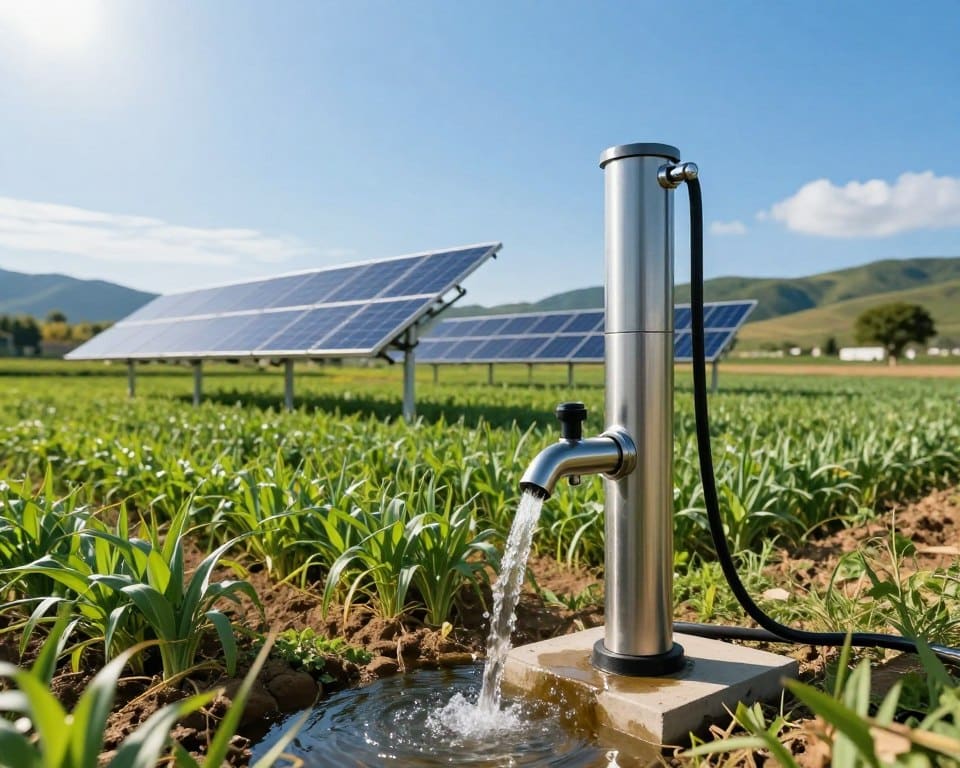
Where conventional power grids fall silent, the sun speaks a universal language of energy, transforming arid landscapes into oases of possibility. These solar-powered water systems represent a fundamental reimagining of resource access, particularly in geographically dispersed settlements where traditional infrastructure proves impractical.
Benefits of Solar Energy in Water Extraction
Photovoltaic technology converts abundant solar irradiation directly into mechanical action, driving pumps that draw from aquifers and surface sources. This direct energy conversion eliminates transmission losses and grid dependencies, creating self-sufficient water solutions.
The technical architecture integrates panels, controllers, and motors sized according to local hydrological conditions and consumption patterns. Organizations like Water4 demonstrate how these solar-powered water pumps can scale from household units to community-wide installations.
Reducing Operational Costs and Enhancing Reliability
While initial investment exceeds diesel alternatives, solar pumps eliminate recurring fuel expenses and minimize maintenance through simplified mechanics. India’s Solar Pumping Programme illustrates how long-term cost-effectiveness justifies upfront financing through community investment models.
These systems operate silently without emissions, aligning environmental stewardship with practical needs. Projects in Uganda and Peru show how reliability increases when systems escape fuel supply chain vulnerabilities and grid instability.
Economic analyses confirm superior lifetime value, as solar solutions liberate communities from volatile energy markets while providing consistent water access for agriculture and domestic use.
Community-Based Purification Initiatives Driving Local Success
When communities become the architects of their own solutions, a fundamental shift occurs in how water quality challenges are addressed and sustained. This participatory approach moves beyond technical delivery to cultivate genuine stewardship among local populations.
Empowering Communities Through Ownership
The methodology begins with collaborative assessments that engage community members as decision-makers. They identify specific contamination issues and evaluate local capacities.
This process fosters collective responsibility for water resource management. Members develop technical skills in system operation and maintenance scheduling.
Lessons Learned from International Projects
Bangladesh’s Community-Led Total Sanitation approach demonstrates how local mobilization reduces waterborne diseases. Communities build and maintain filtration systems with measurable health improvements.
In Kenya, the Maji ni Maisha project shows biosand filters managed by community-based organizations. This ensures sustained operation and access to clean drinking water.
India’s Swachh Bharat Mission supports decentralized purification units tailored to local contexts. These initiatives prove that community ownership creates durable accountability mechanisms.
Innovative Rural Water Supply Projects Transforming Communities
Digital intelligence now flows alongside water, creating responsive networks where data informs every drop. These advanced systems transform traditional infrastructure into intelligent assets capable of real-time performance tracking and predictive maintenance.
Integrating Digital Monitoring and IoT Systems
Smart meters represent foundational technology for modern water management. They enable precise consumption tracking that supports conservation while facilitating accurate billing.
These devices eliminate manual reading in remote locations, reducing operational costs significantly. Digital payment systems further enhance efficiency through mobile platforms and self-service kiosks.
| Technology Type | Primary Function | Key Benefits | Implementation Scale |
|---|---|---|---|
| Smart Water Meters | Usage monitoring & remote communication | Accurate billing, leak detection | Household to community |
| IoT Sensor Networks | System performance monitoring | Early fault detection, quality assurance | Distribution networks |
| Digital Payment Platforms | Transaction processing | Cost reduction, flexibility | Community-wide |
| Cloud Management Dashboards | Data aggregation & analysis | Remote oversight, predictive analytics | Regional systems |
IoT applications extend to construction quality assurance, as seen in China’s Dongying City project. QR code tracking provides complete component traceability from manufacturing through installation.
Leveraging Local Expertise for Sustainable Outcomes
Successful technology integration requires developing local capacity for system operation and maintenance. This ensures sophisticated systems remain functional after external support concludes.
Community involvement in data interpretation and troubleshooting creates genuine ownership. These approaches mirror principles seen in smart irrigation systems where local adaptation proves crucial.
Technology design must reflect rather than ignore local conditions and priorities. This alignment determines whether digital solutions achieve lasting impact in challenging environments.
Integrating Technologies and Tailored Solutions for Rural Settings
Factory-produced components and digital coordination tools are revolutionizing water system implementation in hard-to-reach locations. These approaches recognize that isolated communities require specialized strategies beyond conventional infrastructure models.
Prefabrication, BIM, and Modern Construction Techniques
Prefabrication technologies enable standardized component manufacturing in controlled factory environments. This ensures consistent quality while reducing on-site construction time significantly.
Building Information Modeling (BIM) creates comprehensive digital representations of entire systems. It allows engineers to coordinate design, procurement, and construction phases with precision.
China’s recent infrastructure initiative demonstrates this approach’s scale. The country plans to renovate nearly 600,000 kilometers of pipelines over five years.
Addressing Logistical Challenges in Remote Areas
Mountainous terrain and limited road access create substantial obstacles. Modular prefabrication reduces the need for extensive on-site work in these challenging environments.
The “one village, one policy” approach exemplifies context-sensitive planning. It tailors solutions to each community’s specific geographical and economic conditions.
Advanced manufacturing techniques like 3D printing enable custom component production. This allows for precise fitting to local terrain and water quality requirements.
| Construction Approach | Primary Advantage | Implementation Time | Cost Efficiency | Suitable Terrain |
|---|---|---|---|---|
| Traditional On-site | Custom fit to location | Extended timeline | Higher labor costs | Accessible areas |
| Modular Prefabrication | Quality control | Reduced significantly | Lower overall expense | Remote locations |
| BIM-Coordinated | Error reduction | Optimized scheduling | Resource efficiency | Complex projects |
| Hybrid Methods | Flexibility | Variable | Balanced investment | Diverse settings |
These integrated methodologies represent a comprehensive response to infrastructure challenges. They combine technical precision with practical adaptability for sustainable outcomes.
Conclusion
Across diverse landscapes, the synthesis of appropriate technologies and community wisdom demonstrates that sustainable water access is an achievable goal. The journey toward clean water security requires multidimensional approaches that address both technical and social dimensions simultaneously.
Successful initiatives integrate portable filtration, solar power, and digital monitoring with local capacity building. This holistic framework ensures solutions remain functional and relevant long after initial implementation. Community ownership transforms external assistance into internal resilience.
The path forward demands continued collaboration among governments, organizations, and local populations. By aligning technological innovation with cultural context and environmental stewardship, we can ensure safe drinking water becomes a universal reality, supporting health and dignity for all people.