
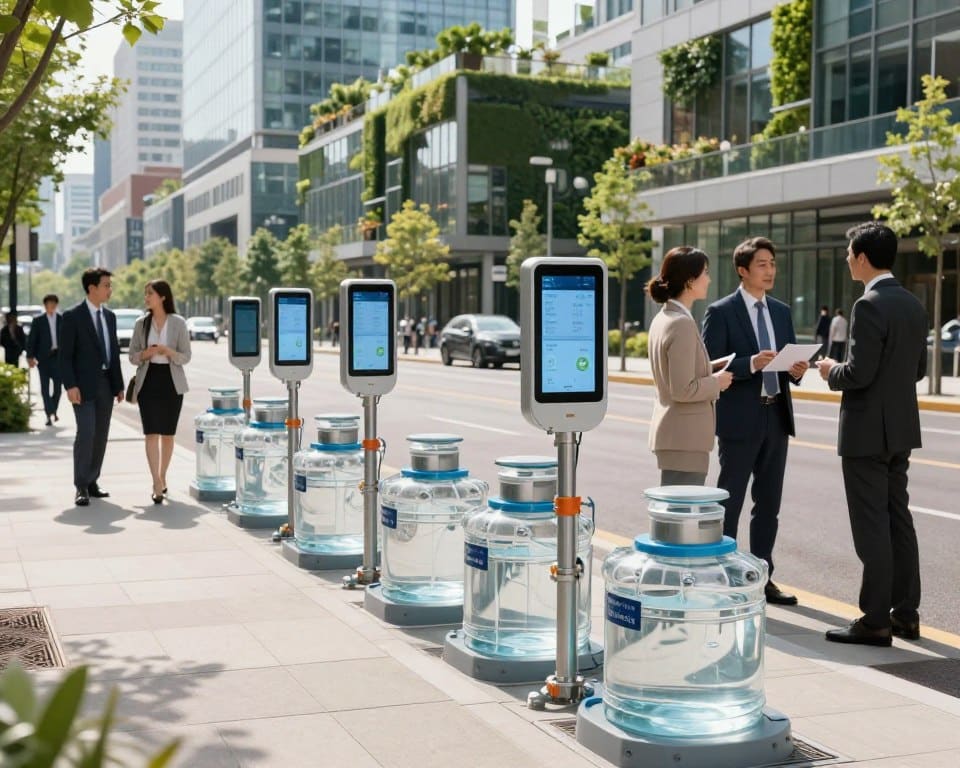
This question moved from hypothetical to harsh reality for millions in 2024. Major urban centers, once symbols of endless resource access, confronted a fundamental shift.
Bogotá, Colombia, saw its primary reservoir system drop to critical levels. Authorities implemented a rotating schedule, cutting off neighborhoods for 24-hour periods. A similar crisis unfolded in Mexico City, where reservoir levels hit historic lows.
These events are not isolated. A global study revealed that over half of the world’s large lakes are shrinking. This trend signals a new era for municipal management.
Understanding the mechanics behind these responses is crucial. It involves complex infrastructure, policy, and profound behavioral adaptation. Exploring rainwater harvesting systems represents one key adaptive strategy emerging from this scarcity.
Key Takeaways
- Major cities like Bogotá and Mexico City implemented strict distribution measures in 2024 due to critically low reservoir levels.
- Water scarcity is a global issue, with research showing significant storage declines in lakes worldwide since 1992.
- Urban rationing involves rotating schedules that temporarily cut off supply to different zones of a city.
- These measures represent a shift from emergency protocols to recurring urban conditions.
- Understanding these systems requires examining infrastructure, policy, and human adaptation.
- The crisis highlights the vulnerability of assumptions about perpetual resource availability.
The Evolution of Urban Water Management
A retrospective glance at municipal resource strategies reveals a profound transformation in philosophy and practice. This journey began with an era of hydraulic confidence, where engineering marvels promised endless abundance.
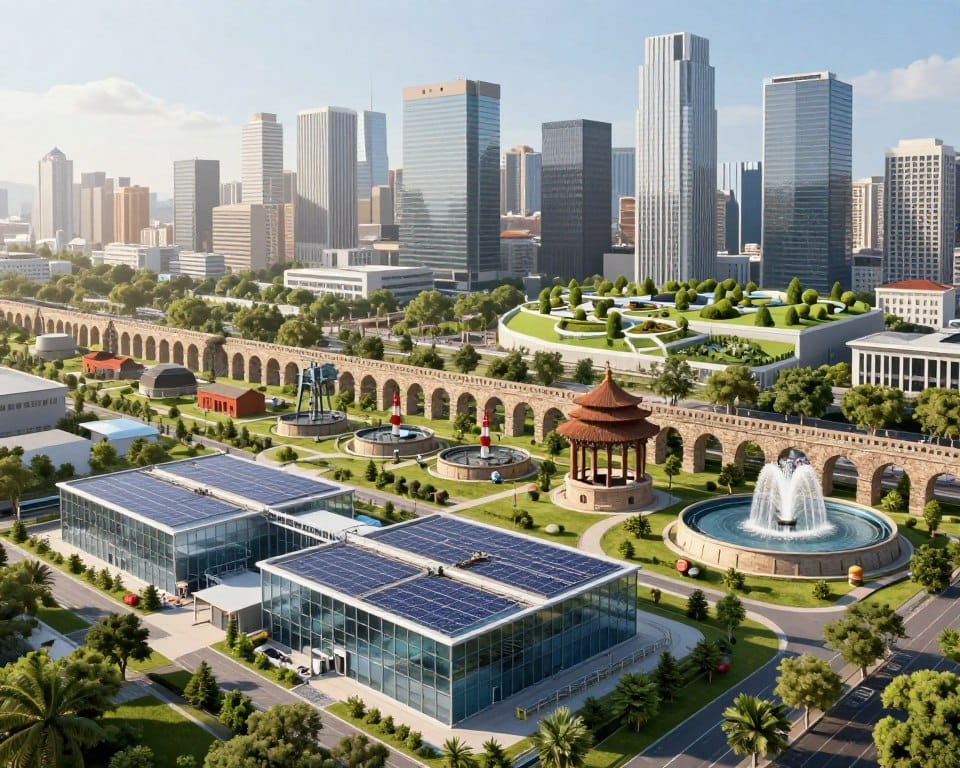
This paradigm was built on expanding supply to meet growing demand. It assumed perpetual availability from natural sources.
Historical Perspectives on Water Use
For decades, the primary management goal was infrastructure expansion. Cities built vast networks to transport the resource over great distances. This approach solved immediate needs but often ignored long-term sustainability.
Temporary restrictions emerged as a low-cost tool during dry periods. They aimed to bridge gaps between supply and demand without major new construction. The effectiveness of these measures, however, depended entirely on lasting behavioral change.
| Era | Primary Focus | Key Strategy | Underlying Assumption |
|---|---|---|---|
| Historical (19th-20th Century) | Supply Augmentation | Infrastructure Expansion | Perpetual Abundance |
| Contemporary | Demand Management & Resilience | Integrated Governance | Finite, Cyclical Resources |
Lessons Learned from Past Crises
History shows a clear pattern following a drought. Consumption often rebounds once restrictions lift. This cycle leaves populations vulnerable to the next, often more severe, crisis.
The critical lesson is that short-term measures must be part of a comprehensive, long-term framework. Successful governance integrates conservation into cultural practice, not just emergency policy. This builds true resilience for the people who depend on these managed resources.
Understanding Water Rationing Systems in Cities
The regulatory toolkit for managing dwindling freshwater availability encompasses two primary instruments with distinct operational logics and societal impacts. Grasping this difference is key to understanding municipal crisis response.
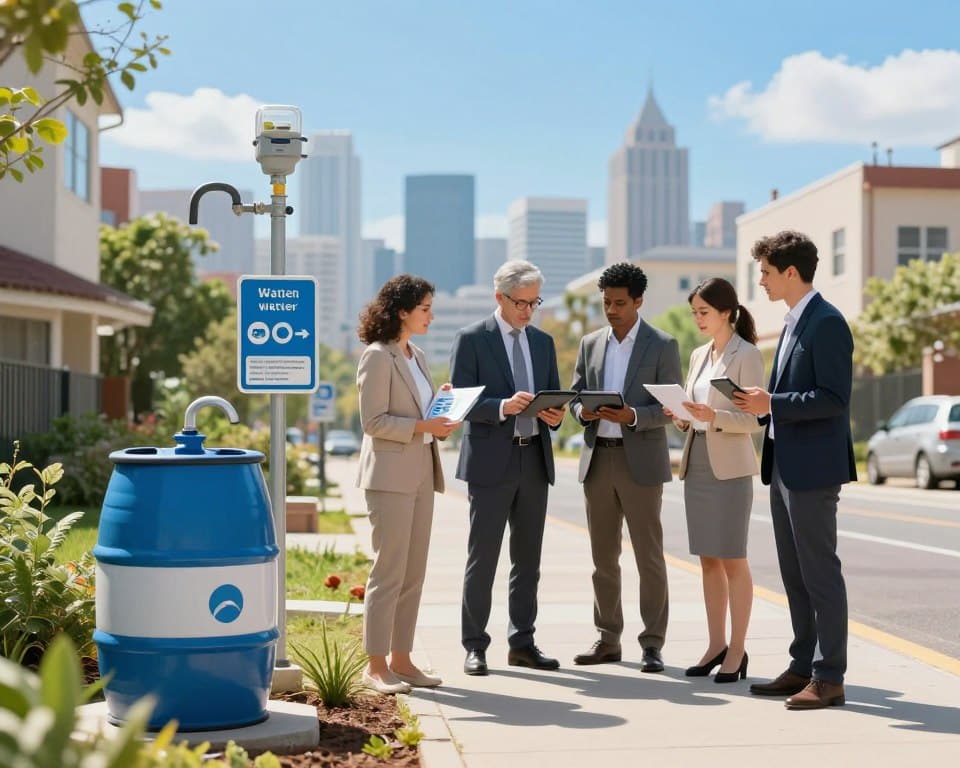
Restrictions represent the initial, targeted phase. They prohibit or limit specific, often outdoor, uses. This includes lawn irrigation, car washing, and filling pools.
The goal is demand reduction without full service interruption. Supply for essential needs like cooking and sanitation remains protected.
Defining Water Rationing and Restrictions
When scarcity intensifies, more severe measures become necessary. Rationing involves temporary, full suspensions of service or significant pressure reductions.
This approach affects all users in a designated zone for a set period. It ensures the remaining limited resource is distributed equitably.
The fundamental purposes of these measures differ significantly:
- Restrictions aim to lower overall consumption by curtailing discretionary use, preserving the flow for critical daily functions.
- Rationing focuses on preventing a total system collapse by guaranteeing every resident receives a minimum, life-sustaining allocation.
Prioritization schemes are central to this framework. Drinking water supply is invariably the highest priority, followed by sanitation and medical needs. This hierarchy guides distribution during the most critical shortages.
Mechanisms Behind Modern Water Rationing
Modern scarcity management operates through a delicate balance of hardware innovation and governance architecture. This sophisticated framework transforms emergency responses into precisely calibrated interventions.

Infrastructure and Technological Innovations
Advanced sensor networks monitor reservoir levels in real-time. Smart metering tracks consumption at household resolution.
Pressure-regulating valves reduce flow without complete shutoff. Geographic information systems optimize zone configurations for equitable distribution.
These technological solutions create targeted interventions rather than citywide interruptions.
Regulatory and Policy Frameworks
Drought management plans specify trigger points for activation. These include reservoir thresholds and precipitation deficits.
Prioritization schemes rank uses according to local hierarchies. They balance drinking supply against environmental and socioeconomic impacts.
Forward-thinking municipalities implement best practices for urban water management that integrate long-term solutions with emergency measures.
Case Studies: Insights from Global Cities
Global urban centers confronting unprecedented resource limitations offer compelling case studies in crisis response and resilience. These real-world examples demonstrate how theoretical scenarios become practical governance challenges requiring immediate solutions.
Cape Town’s Near Day Zero Experience
The South African metropolis faced a severe challenge between 2015 and 2017. Reservoir storage dwindled dangerously close to complete depletion.
Cape Town’s response involved drastic consumption reductions to just 50% of 2015 levels. Public campaigns displayed countdown timers to Day Zero, creating collective awareness.
The city narrowly avoided catastrophe through combined efforts. Reduced usage, seasonal rains, and emergency projects converged to prevent systemic collapse.
Bogotá and Mexico City’s Crisis Management
In April 2024, Bogotá’s Chingaza reservoir system reached critically low levels. Authorities implemented rotating 24-hour shutoffs across nine zones affecting 9 million residents.
Mayor Carlos Galan warned that restrictions might persist for a year. The call to “take care of every drop” underscored the severity of the situation.
Mexico City faced parallel challenges in May 2024. The Cutzamala system reached historic lows, prompting mandatory measures for 22 million people.
These cases reveal that Day Zero scenarios have become proximate threats. They demand fundamental reconsideration of urban resource management worldwide.
Challenges in Urban Water Supply and Demand
Urban freshwater availability faces a dual assault from atmospheric shifts and persistent human consumption patterns. These converging pressures create complex challenges for municipal management.
Impacts of Climate Change on Water Reservoirs
Climate change effects manifest through interconnected mechanisms. Rising temperatures drive accelerated evaporation, which increased nearly 60% between 1985-2018 in reservoirs worldwide.
Hydroclimatologist Park Williams observes that “a warmer atmosphere is a thirstier atmosphere.” This principle explains how increased temperatures amplify moisture draw from surface supplies.
Precipitation patterns shift geographically and seasonally, reducing reliable runoff into storage systems. These climate-driven declines require adaptation strategies acknowledging reduced supplies as the new baseline.
Human Overuse and Consumption Patterns
Human consumption represents the second major challenge. The Aral Sea serves as a cautionary example, having shrunk 88% since 1920 due to irrigation diversions.
Research by Fangfang Yao distinguished between climate-driven and human-caused decline in nearly 2,000 lakes worldwide. Where overuse predominates, solutions emphasize demand management and efficiency improvements.
The Colorado River basin demonstrates compound pressures, where megadrought combines with structural overallocation. This creates political tensions over allocation priorities during shortages.
Adaptive Strategies and Policy Interventions
Innovative policy interventions are emerging globally to address the dual challenges of climate-driven evaporation and human consumption patterns. These approaches combine technical creativity with equitable governance frameworks.
Drought Management and Prioritisation Schemes
Effective scarcity management begins with transparent prioritization frameworks. These schemes rank various uses according to local hierarchies.
Drinking supply consistently receives highest priority. Environmental and socioeconomic factors guide subsequent allocations.
| Priority Level | Primary Uses | Key Considerations | Typical Restrictions |
|---|---|---|---|
| Critical (Level 1) | Drinking, sanitation, medical | Public health, basic human needs | Protected from restrictions |
| High (Level 2) | Power generation, essential industry | Economic stability, employment | Moderate reductions |
| Medium (Level 3) | Agriculture, tourism, landscaping | Environmental impact, revenue | Significant limitations |
| Low (Level 4) | Recreational, non-essential uses | Discretionary consumption | Complete prohibition |
Innovative Solutions to Reduce Evaporation Losses
Creative technological approaches target evaporation, which accounts for substantial reservoir depletion. Floating photovoltaic arrays demonstrate significant potential.
Brazil’s Passaúna reservoir project reduced evaporation by 60% while generating renewable energy. Thin chemical films and aquatic plant coverings provide additional shading benefits.
These best practices for urban water management represent integrated solutions that address multiple challenges simultaneously. They combine supply protection with environmental and economic benefits.
Conclusion
The fundamental paradox of freshwater availability reveals itself through the stark contrast between global abundance and local scarcity. While the planet contains ample resources overall, specific regions face critical mismatches between population needs and natural supplies.
This challenge extends beyond physical limitations to encompass social equity concerns. Economic disparities mean shortages disproportionately affect vulnerable communities, creating additional barriers to essential access.
Effective responses require distinguishing between climate-driven and human-caused declines in sources. Understanding these differences enables targeted interventions, from conservation measures to innovative approaches like rainwater harvesting systems that address specific local conditions.
The future demands adaptive capacity—flexible governance, resilient infrastructure, and cultural shifts toward permanent stewardship of finite resources that sustain urban civilization.