

The phrase sacred lakes and their myths names bodies of water that carry geology, memory, and social rules in one place.
Across continents, specific sites act as hydrological systems, biodiversity refuges, and narrative archives at once. Local stories encode seasonal cues, hazard warnings, and social norms that guide how people use and care for the shore.
An expert tour highlights emblematic sites on multiple continents. Each entry pairs a concise legend with on-the-ground context: rock formations, island communities, and ecological features that make a site distinctive.
Visitors gain more from knowing both the narrative and the ecosystem. Technology such as remote sensors and field monitoring can support conservation while honoring local knowledge.
For a concise global list of emblematic sites, see this overview: top sacred water sites.
Key Takeaways
- These sites blend physical science with cultural memory.
- Myths often encode practical advice about seasons and hazards.
- Each entry pairs a short legend with clear ecological context.
- Respectful visits require awareness of living traditions.
- Monitoring technology can aid stewardship without replacing knowledge holders.
Legendary waters of the world: iconic lakes where story and nature meet
Across the world, a handful of deep waters host stories that shape how people live at the shore. Each site pairs a clear geological feature with a living tale. Travelers can identify motifs on site: islands, single outflows, dark water, and ritual rocks.
Lake Titicaca, Peru‑Bolivia
High on the Andes, Viracocha rises in origin legend. Manco Cápac and Mama Ocllo emerge as founders. Visitors note ritual practice on Uros floating islands and textile patterns that encode cosmology.
Loch Ness, Scotland
Peat-dark water and long fetch make optical oddities common. The modern surge of reports since 1933 rests on older Celtic water lore. Respect shoreline rules; the habitat hosts protected species.
Lake Baikal, Russia
Buryat people call it Father of the Waters. The Angara is told as a fleeing daughter. Shaman Rock remains a ritual landmark. Winter ice booms add an acoustic element to local story traditions.
Lake Toba, Indonesia
A Batak tale links a broken promise to a catastrophic flood and the lake’s birth. Boat routes, caldera rims, and village crafts make the geological past visible today.
Lake Bhimtal, India
Local tradition ties a hero’s strike to a lifesaving source. The legend frames a dependable water supply in a rugged landscape and shapes community identity.
Iceland’s enchanted waters: elves, ogres, gods, and hidden treasure
In Iceland, volcanic terrain and cold water create settings for enduring folklore and legends. Short, place-based tales attach to visible landforms. Visitors gain context from rock, steam, and seasonal ice.
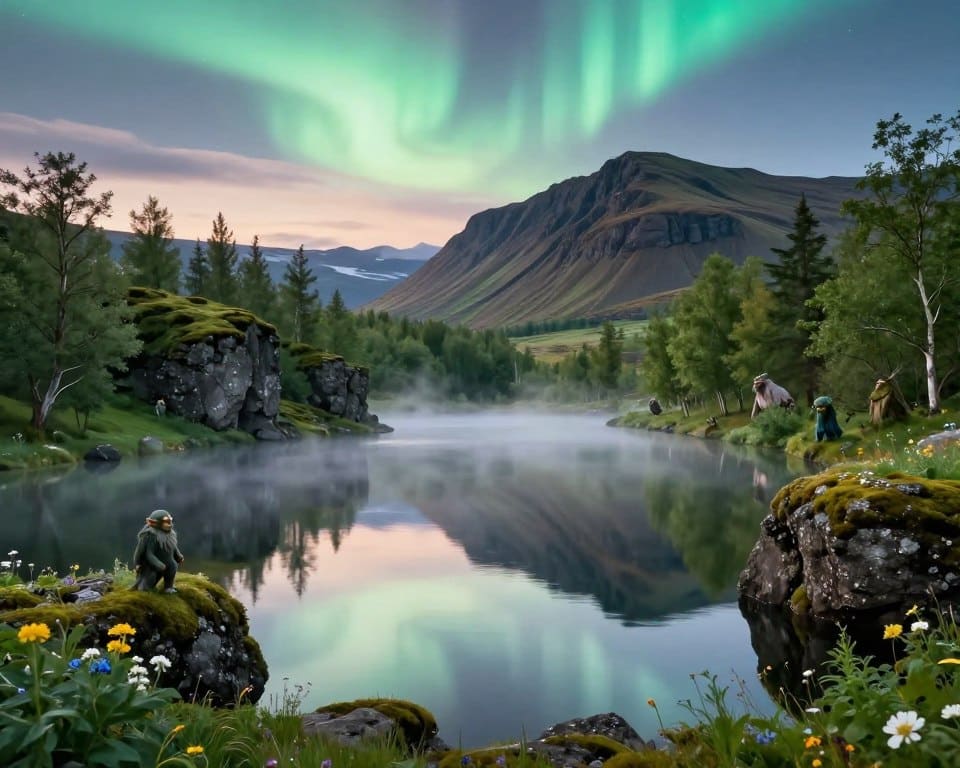
Lake Mývatn: Úlfhildur’s bridge and the ring of proof
Jón Árnason recorded Úlfhildur’s story of a Christmas bridge that allowed a man to follow her across the water. A golden ring served as tangible proof when the spell ended.
Dimmuborgir near Mývatn: Grýla and the Yule Lads
The “Dark Castles” are tall lava pillars and arches. The rock forms suggest halls. Grýla and her 13 sons feature in seasonal tales that teach winter manners to families.
Lake Lagarfljót: the serpent of the murky depths
The Lagarfljótsormur stems from a tale about a growing snake in a chest. Murky water, long fetch, and stratified temperatures create surface effects that fuel monster reports.
- Connect each story to the lava fields, vents, or shorelines on site.
- Remember the ring motif as a common Norse proof device.
- Use legends as cues for cold-water risk, submerged hazards, and local etiquette.
| Site | Visible landform | Visitor cue |
|---|---|---|
| Mývatn | Geothermal vents, lava | Winter footing; guided viewpoints |
| Dimmuborgir | Lava pillars | Stay on trails; family-friendly stories |
| Lagarfljót | Long fetch, murky water | Respect wind; heed local signs |
Greece’s mythic lakes: dragons, heroes, nymphs, and underworld gates
From alpine tarns to cave lakes, Greek sites pair clear topography with compact mythic narratives. Each spot gives hikers visible cues. Rocks, shoreline coils, and cave skylights translate story into place.
Dragon Lakes of Epirus (Tymfi & Smolikas)
Local legend says two dragons hurled rocks at one another. The result appears in contrasting stone bands on black and white lakebeds. Hikers can read shore color and scattered boulders as a narrative map.
These high‑elevation lake basins are nutrient poor. Cold water and low productivity make them sensitive ecological indicators.
Gistova & Flegga
Folk tales speak of dragon tears forming isolated tarns along ridgelines. The images explain small pools on hard bedrock.
These tarns sit above tree line. Vegetation is sparse. Visitors should note how fragile plant life recovers slowly from trampling.
Verliga
Verliga’s coiled shoreline suggests a hidden snake beneath dark water. The serpentine shape is visible from nearby summits or viewpoints.
Stymphalia
The Heracles tale here involves man‑eating birds. The site is a wetland with endemic fish and many migratory birds. It is protected under Natura 2000.
Melissani, Kefalonia
A cave lake called the Cave of the Nymphs marks Pan’s sanctuary. Light shafts, stalactites, and blue water make the tragic tale of unrequited love legible on site.
Pamvotis, Ioannina
Pamvotis holds an inhabited island and a recorded act: the drowning of Kyra Frosini in 1800. The story blends legend with documented politics and echoes through town memory.
Vanished places: Acherousia, Kopais, Lerna
Some waters have vanished by drainage or climate while their stories persist. Acherousia kept a gate to Hades. Kopais hosted a feared swamp bird. Lerna links to Amymone and the Hydra.
- Read shorelines, cave lights, and island settlements as physical anchors for stories.
- Note endemic species, river outlets, and nutrient levels as ecological cues.
- Respect fragile alpine vegetation and protected wetlands when visiting.
| Site | Visible cue | Visitor note |
|---|---|---|
| Tymfi & Smolikas | Contrasting stone bands | High elevation; fragile ecology |
| Stymphalia | Wetland marshes | Natura 2000; birdwatching |
| Melissani | Cave skylight, blue water | Boat access; fragile cave features |
How sacred lakes and their myths shape culture, belief, and place
Narratives tied to particular sites translate landscape cues into routines that protect life and resources.
At many sites the story is social technology. It compresses seasonal hazards, feeding cycles, and access rules into a memorable form. That makes compliance easier and rules stick across generations.
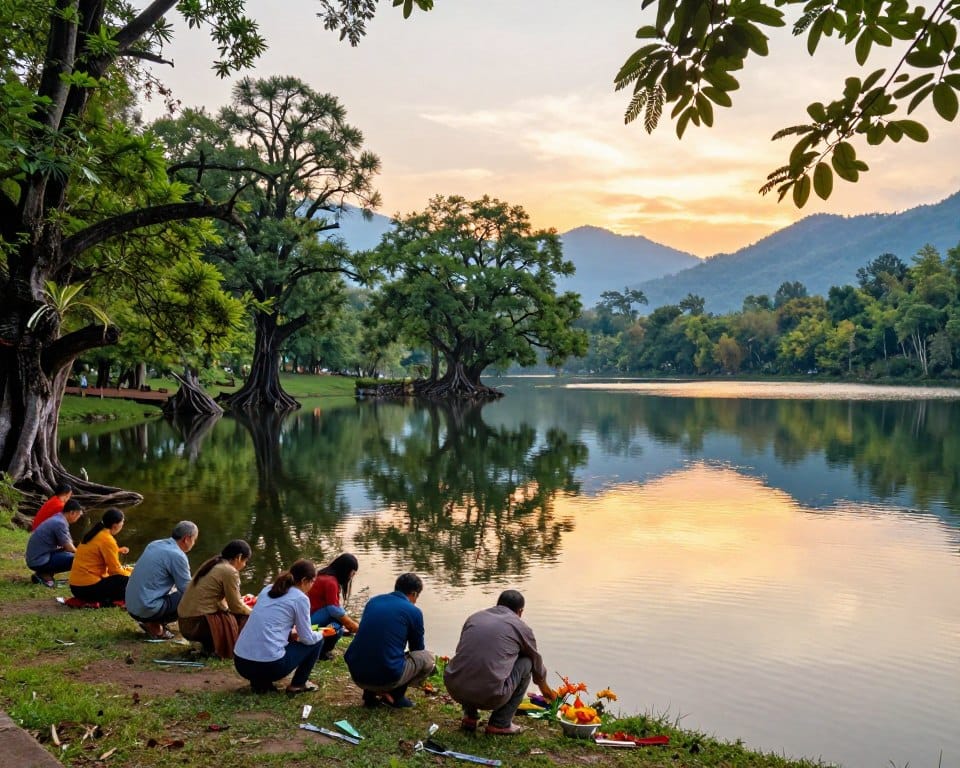
Practical outcomes follow. Rituals organize volunteer work. Quiet seasons protect nesting birds. Local prestige limits extraction and reframes a water source as heritage rather than commodity.
- Myths convert risk signals into simple guidance for visitors and residents.
- Feature‑based legends—an island, rock, or cave—channel foot traffic and reduce erosion.
- Co‑created signage and citizen monitoring align storytelling with scientific transects.
| Mechanism | Effect | Design tip |
|---|---|---|
| Ritual schedules | Seasonal protection for species | Coordinate with local custodians |
| Legendary features | Distributed visitor routes | Map trails to disperse impact |
| Community narratives | Funding and stewardship | Link heritage grants to habitat goals |
Planners should integrate narrative routes with monitoring. Clear, respectful interpretation helps visitors see why a site matters. Co‑created programs keep economic benefits local while strengthening long‑term protection.
For cultural context on water imagery and public engagement see water symbolism in art.
Planning your journey today: respectful ways to experience these storied waters
A well‑planned journey balances curiosity with steps that protect people, species, and water quality. Travelers should learn local rules, check seasonal access, and choose low‑impact gear before arrival.
Balance wonder with care: local customs, sacred sites, and nature protection
Confirm codes of conduct for each site. Ask about ritual timetables and restricted zones. Hire local guides to interpret place names and stories. This supports livelihoods and preserves accuracy.
Reading the landscape: spotting mythic “signs” in rocks, islands, and rivers
Look for landmark cues that double as navigation aids. Rock spires, a single outlet river, or a cave skylight often mark turning points on a route. Observe wind and wave patterns before launching boats.
- Use established paths and limit shoreline trampling to protect emergent plants.
- Treat islands as living communities; ask permission and keep noise low.
- Pack in, pack out; avoid soap near any river or water body.
- Keep drones grounded near bird colonies and avoid geotagging fragile spots.
- Contribute to monitoring if invited, and credit local tellers when sharing stories.
| Action | Why it matters | Quick tip |
|---|---|---|
| Confirm access rules | Respects ritual use and seasonal needs | Contact local custodians ahead |
| Use guides | Protects culture and supports economy | Hire licensed local guides |
| Minimize boat wake | Protects nesting birds and plants | Use slow, shallow drafts |
For broader cultural context on water symbolism see water symbolism in art.
Conclusion
Place‑based narratives turn visible features into clear rules for safe use and long‑term care. This story links rock, inlet, and seasonal pattern to a field method readers can use in planning visits.
Examples show how waters act as both a hydrologic system and a cultural archive. Legends guide behavior, protect life, and keep local knowledge in active use. Respect the woman at the center of a tale, the love that remade a shore, and small acts that stitch people to place.
Practical steps close the loop. Move gently near water. Follow local guidance. Read the landscape, learn the tale, and make stewardship part of your visit so the lake and its folklore remain vibrant for the next part of the story.