
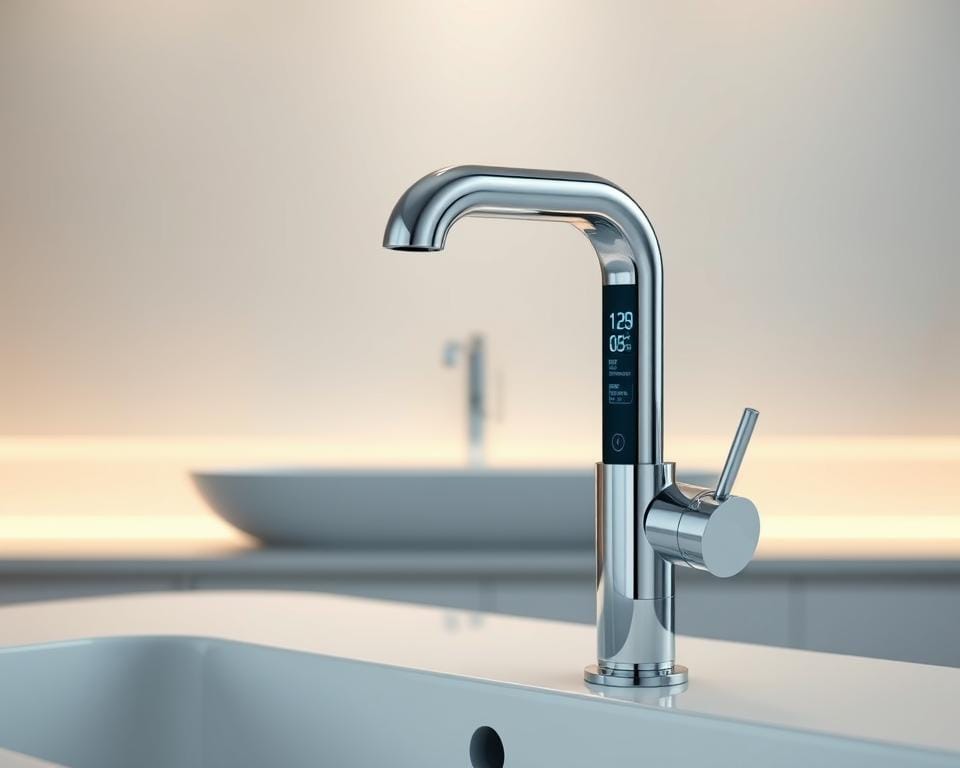
Water waste silently drains our wallets and harms our planet’s precious resources. Smart faucets are the unexpected heroes in this daily battle. I discovered these intelligent systems could slash household water use by up to 45%.
These devices transform simple tasks like handwashing into eco-friendly, money-saving experiences. The technology behind smart faucets isn’t just a gadget. It’s a revolutionary approach to reimagining our relationship with this essential resource.
Every drop counts with these sensor-driven fixtures. They eliminate the mindless water flow during brushing teeth, washing dishes, or preparing meals. Imagine cutting your water bill dramatically without sacrificing convenience.
Key Takeaways
- Smart faucets can reduce water consumption up to 45%
- Sensor technologies prevent unnecessary water waste
- Immediate financial savings on utility bills
- Environmental impact reduction through intelligent design
- Easy integration with existing home infrastructure
What Makes Smart Faucets Different from Traditional Fixtures
Smart faucets are changing how we use water at home. These touchless water conservation fixtures blend advanced technology with everyday plumbing needs. They offer features that standard fixtures simply cannot match.
Touch and Touchless Activation Technology
Motion sensor water saving fixtures use infrared technology to detect your hand. The faucet knows exactly when you need water, stopping unnecessary flow and reducing waste. Touchless activation means no germ-covered handles or messy fingerprints.
- Infrared sensors detect hand movement precisely
- Automatic water flow starts and stops instantly
- Reduces cross-contamination risks
Built-in Flow Regulation and Sensors
Water-efficient smart taps use sophisticated sensors that optimize water delivery. These systems mix air with water, creating a strong stream. They dramatically reduce overall water consumption.
| Feature | Traditional Fixture | Smart Faucet |
|---|---|---|
| Water Flow Rate | 2.5 GPM | 1.5 GPM |
| Water Savings | Standard | Up to 40% Reduction |
Integration with Smart Home Systems
Modern smart faucets connect with your entire home ecosystem. Voice commands, precise measurements, and automated controls make water management easy. They work seamlessly with your other smart devices.
- Compatible with Alexa and Google Assistant
- Precise volume dispensing
- Real-time water consumption tracking
Smart Faucets for Water Saving: Real-World Conservation Results
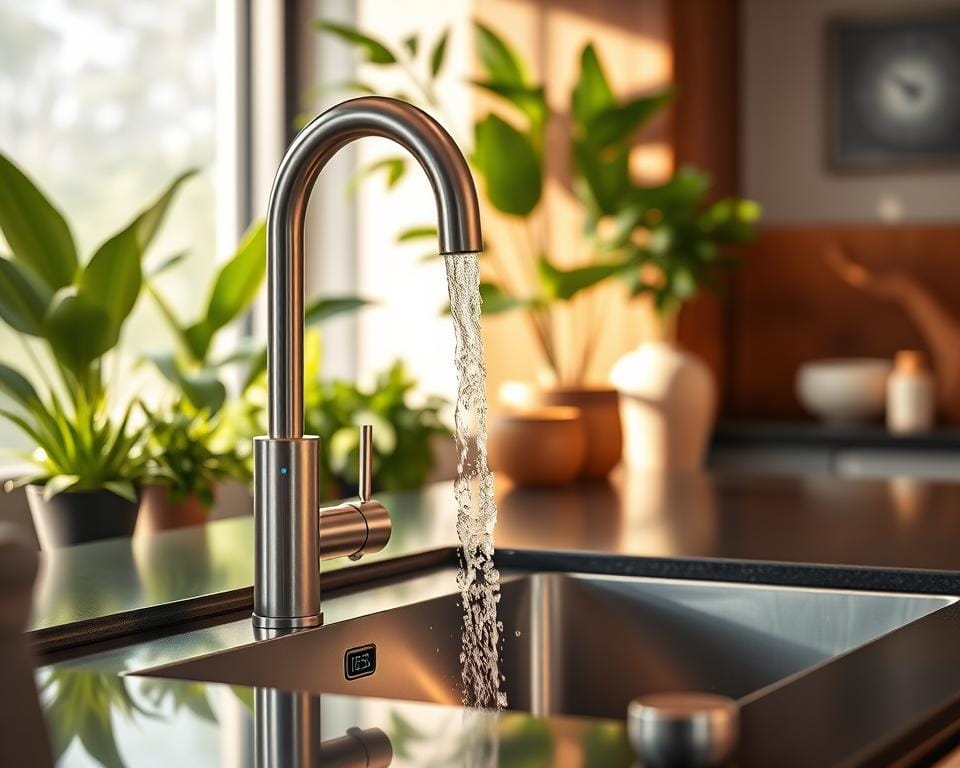
Smart faucets have changed how households manage water consumption. Recent studies show impressive conservation results that surpass traditional water-saving methods. Low-flow aerators in smart faucet technology can dramatically reduce water usage without compromising performance.
Here’s the real-world impact of smart faucets:
- Bathroom faucets with smart technology can cut water consumption by up to 45%
- Public restrooms see water reduction rates as high as 85% with sensor-activated fixtures
- Flow regulation technology enables precise water delivery
The financial benefits are equally compelling. A typical household can save approximately $200 annually by implementing smart water-saving technologies. Most retrofit solutions pay for themselves within 3-6 months.
| Water Saving Technology | Water Reduction | Annual Cost Savings |
|---|---|---|
| Low-Flow Aerators | 45% | $150-$250 |
| Sensor-Activated Fixtures | 85% | $300-$450 |
Smart faucets contribute significantly to water conservation efforts. Individual households can prevent thousands of gallons of water waste annually. The cumulative impact represents a meaningful step towards sustainable water management.
How Motion Sensors and Automatic Shutoff Prevent Water Waste
Water conservation starts with smart technology that understands our daily habits. Motion sensor water saving fixtures revolutionize how we interact with household plumbing. They transform seemingly small moments into significant water-saving opportunities.
Eco-friendly automatic faucets leverage cutting-edge infrared detection to eliminate unnecessary water consumption. These intelligent fixtures create an invisible detection zone around the spout, typically 4-6 inches wide. The zone activates only when hands or objects interrupt the infrared beam.
Eliminating Accidental Water Flow
Imagine these scenarios where water waste becomes a thing of the past:
- Washing dishes and stepping away momentarily
- Children forgetting to turn off faucets
- Unintentional water running during multitasking
Advanced motion sensor water saving fixtures automatically shut off water after a short period of inactivity. This typically happens within 4 minutes. This feature prevents gallons of water from unnecessarily flowing down the drain.
Precise Water Delivery for Everyday Tasks
Voice-activated faucets take water conservation to the next level by enabling precise measurements. Users can request exact water quantities for:
- Cooking measurements
- Pet water bowl filling
- Coffee and beverage preparation
| Feature | Water Savings Potential |
|---|---|
| Motion Sensor Activation | Up to 70% reduction in water waste |
| Precise Measurement Control | Eliminates 90% of accidental overflow |
| Auto Shutoff Mechanism | Prevents continuous unintended water flow |
Eco-friendly automatic faucets help homeowners significantly reduce water consumption. They offer convenient, intelligent technology that adapts to your lifestyle.
The Financial Benefits of Installing Water-Efficient Smart Taps
Investing in digital water efficiency solutions can transform your home’s financial landscape. Smart home water saving technology offers more than just environmental benefits. It delivers significant economic advantages that make these innovations a smart financial choice.
The immediate impact of installing smart faucets is substantial utility cost reduction. An average household can save up to $220 annually by implementing digital water efficiency solutions. These savings stem from precise water control and advanced sensing technologies.
- Reduce water bills by 40% through intelligent flow management
- Potential energy savings of $100-$150 per year from reduced hot water usage
- Increase property value by 2-3% with water-efficient fixtures
Smart home water saving technology provides additional financial incentives beyond direct monetary savings. Many water districts offer rebates ranging from $50 to $100 for installing water-efficient fixtures. Some insurance companies even provide discounts for homes with advanced water management systems.
The initial investment in smart faucets typically pays for itself within 1-2 years. Retrofit options are available at affordable prices. Homeowners can quickly realize long-term financial benefits while contributing to water conservation efforts.
Choosing digital water efficiency solutions means saving money and making a strategic investment. You’re improving your home’s future sustainability and economic value.
Choosing the Right Smart Faucet Technology for Your Home
Selecting the perfect water-efficient smart taps can feel like navigating a complex maze. The right flow-limiting smart faucets can transform your home’s water consumption. These devices add cutting-edge convenience to your daily routine.
Consider key factors that will help you make an informed decision. The market offers solutions designed to meet different household needs. Options range across various budgets.
Flow-Limiting Features and Aerator Options
Modern smart faucets come with impressive water-saving capabilities. Low-flow aerators can dramatically reduce water consumption:
- Standard aerators: 2.2 gallons per minute (GPM)
- Low-flow versions: 1.5 GPM
- Ultra-low options: 0.5 GPM for minimal water use
Voice-Activated and App-Connected Models
Smart technology has revolutionized faucet functionality. Advanced water-saving techniques now include voice and app-controlled options. These provide unprecedented water management.
| Brand | Voice Control | App Features | Price Range |
|---|---|---|---|
| Delta VoiceIQ | Alexa/Google | Precise measurement | $400-$500 |
| Moen U Shower | Multiple controls | Temperature presets | $500-$600 |
Retrofit Solutions vs. Complete Replacements
Your choice depends on budget and existing infrastructure. Retrofit options offer cost-effective solutions:
- Aerator replacement: $15-$50 per fixture
- Supply line adapters: Universal fit for older fixtures
- Complete faucet replacement: $200-$600
Smart faucet technology continues to evolve with sophisticated water-saving solutions. Evaluate your specific needs, budget, and home infrastructure. Find the perfect flow-limiting smart faucets for your space.
Conclusion
Smart home water saving technology opens exciting doors for household conservation. These innovations transform how we use water every day. They blend convenience with environmental responsibility perfectly.
The financial benefits stand out clearly. Most households save between $200-$400 each year with smart water-saving solutions. These technologies pay for themselves within 1-2 years.
Many local utilities help with upfront costs. Rebate programs can cover 25-50% of installation expenses. This makes the investment even smarter.
Getting started is simpler than you might think. Basic upgrades like water-efficient technologies begin with affordable aerators. These cost just $15-30 per faucet.
Homeowners can upgrade gradually over time. Start with kitchen faucets and expand as your budget allows. Even small changes create meaningful impact.
Smart home water saving technology offers more than just upgrades. It provides a practical path to responsible resource management. By making informed choices, we reduce waste and cut utility costs while helping the environment.