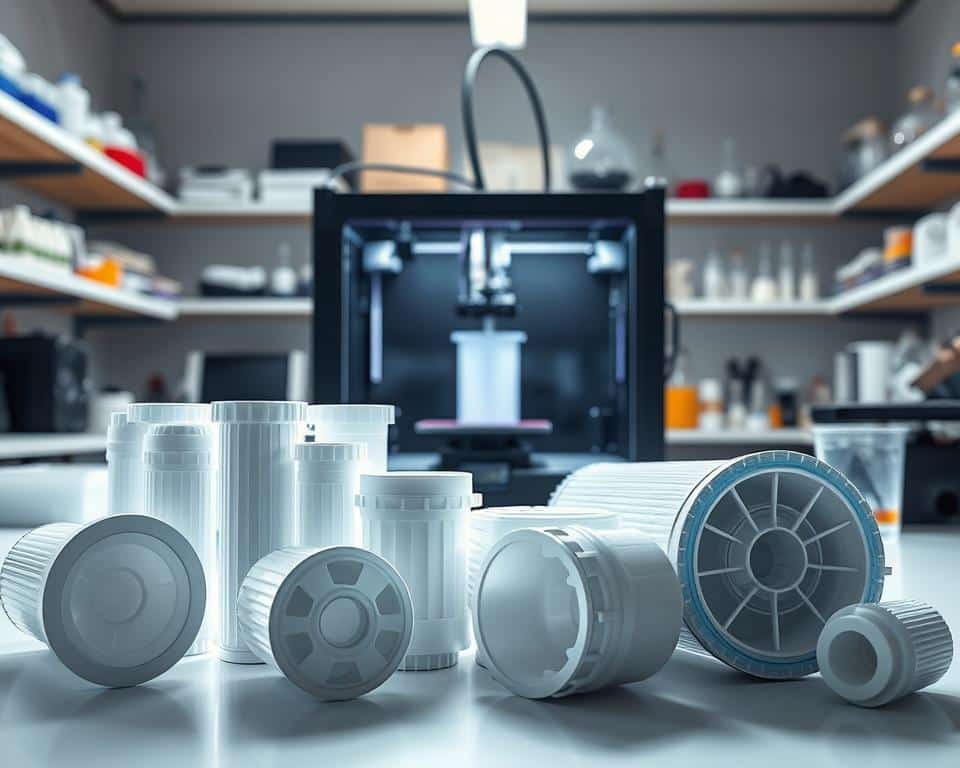
I discovered something mind-blowing: the air we breathe could be our next incredible water source. 3D-printed water filtration devices are revolutionizing sustainable water purification systems. We could literally pull drinking water out of thin air—transforming environmental technology into an immediate solution.
Our global water crisis is staggering. Over 2 billion people worldwide lack access to clean drinking water. In the United States alone, approximately 2.2 million people live without basic plumbing.
This emerging technology isn’t just theoretical—it’s happening right now. Researchers at FH Münster University have developed a Water from Air device that produces 6 liters of drinking water daily. The device uses cutting-edge metal-organic frameworks and 3D printing techniques.
Key Takeaways
- 3D-printed water filtration devices can generate drinking water from atmospheric moisture
- Over 2 billion people globally lack clean water access
- Innovative environmental technology offers promising water solutions
- Sustainable water purification systems are moving from concept to reality
- Technological innovations can address critical water insecurity challenges
How Metal-Organic Frameworks Transform Air Into Drinking Water
Water filtration innovation is changing how we access clean drinking water. Metal-organic frameworks (MOFs) offer a breakthrough approach to atmospheric water harvesting. This technology is rapidly becoming reality.
A device can now pull water directly from air. MOFs are microscopic sponges made from metal ions with extraordinary absorption capabilities. These materials act as precision water collectors.
They transform humid air into drinkable liquid through a two-hour cycle.
The Science Behind Atmospheric Water Harvesting
Atmospheric water harvesting relies on sophisticated additive manufacturing water filters. These filters leverage MOFs’ unique properties. The process works through several critical steps:
- Capture water molecules from surrounding air
- Selectively filter out potential contaminants
- Condense moisture into liquid form
- Produce clean, potable water
Why Traditional Water Collection Systems Fall Short
Traditional water collection methods struggle with complexity and high costs. MOF-based systems offer a more elegant solution. They require minimal infrastructure and can operate in diverse environmental conditions.
This makes water filtration innovation accessible to communities worldwide.
| Traditional Systems | MOF Water Harvesting |
|---|---|
| Expensive infrastructure | Low-cost modular design |
| Limited geographic applicability | Adaptable to multiple environments |
| High technical expertise required | Simple operational mechanism |
These microscopic technological marvels are rewriting the future of water access. MOFs represent more than just a filtration method. They’re a beacon of hope for regions struggling with water scarcity.
3D-Printed Water Filtration Devices: Breaking Down the Water from Air Prototype
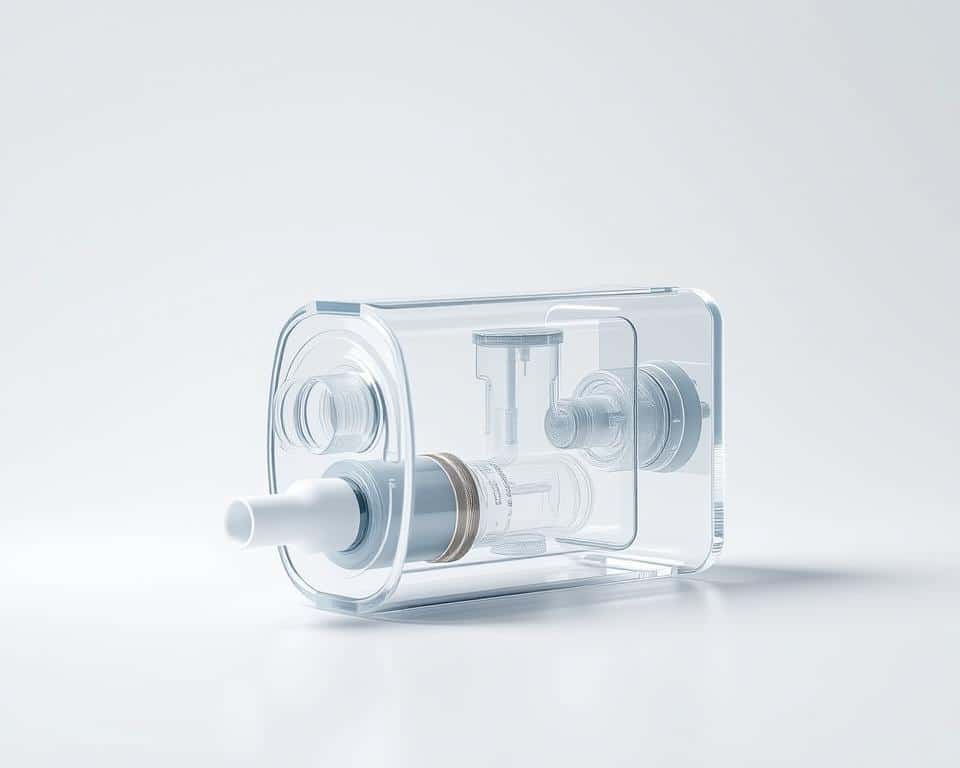
I’ve been fascinated by the innovative approach to portable water filtration devices. These devices transform atmospheric moisture into drinkable water. The 3D-printed clean water solutions represent groundbreaking technology.
This technology could revolutionize water access for communities worldwide.
The Water from Air device showcases remarkable engineering through its modular design. Let me break down its key components:
- Base water tank (transparent PETG, FDM-printed)
- Intermediate condensation section
- Precision-engineered upper lid with MOF materials
- Integrated carrying handle for portability
What makes this prototype truly exceptional is its thoughtful design. The transparent water chamber allows users to track water collection progress. This builds trust in the technology.
Each component serves a specific purpose. This demonstrates how 3D printing enables intricate, purpose-built solutions.
| Device Specification | Performance Details |
|---|---|
| Water Production | 17 fluid ounces per 2-hour cycle |
| Daily Capacity | 1.6 gallons (6 liters) |
| User Capacity | Supports family of four (1.5 liters per person) |
The device’s modular nature means individual components can be replaced. This reduces waste and extends the product’s lifecycle. This approach shows how 3D-printed clean water solutions can be both advanced and environmentally responsible.
Portable water filtration devices like this prototype demonstrate the potential to democratize water access. By leveraging digital design and additive manufacturing, we’re developing a scalable solution. This addresses global water challenges effectively.
Additive Manufacturing Techniques That Make Portable Water Solutions Possible
DIY water filtration technology has changed how we create clean water solutions. 3D printing techniques now offer new ways to make portable water filtration systems. These systems can be customized and produced quickly.
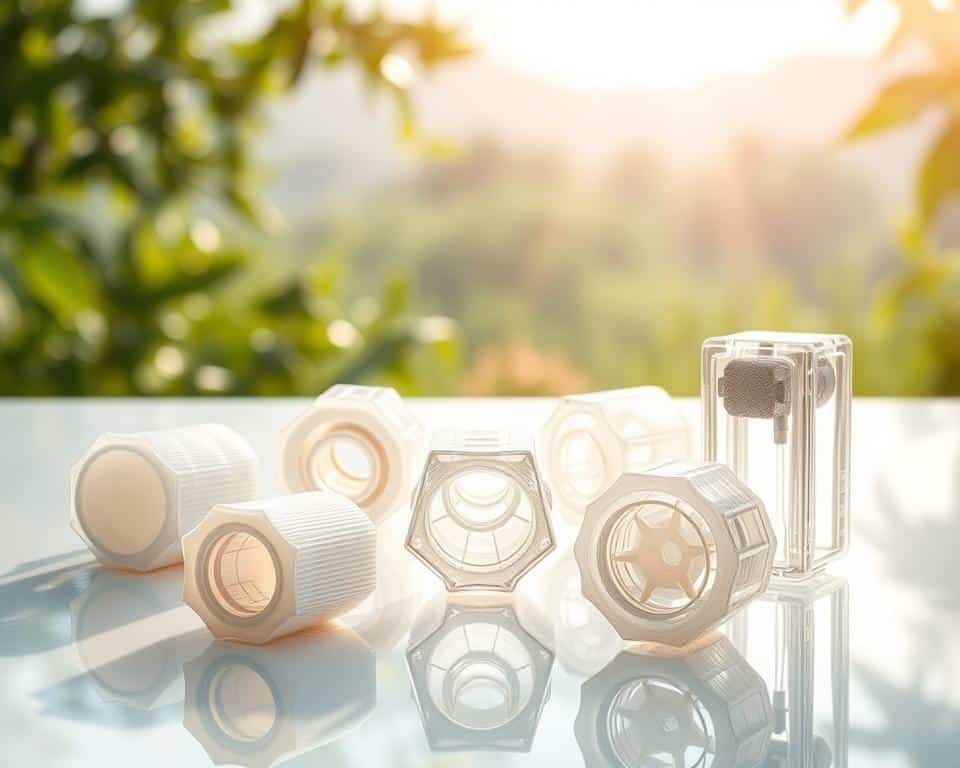
Additive manufacturing water filters mark a major breakthrough in water treatment technology. These methods allow quick prototyping and production of complex filtration parts. Traditional manufacturing methods could never achieve these results.
FDM and SLA Printing for Modular Water Systems
Two primary 3D printing techniques stand out in water filtration design:
- Fused Deposition Modeling (FDM): Builds layers using heated thermoplastic materials
- Stereolithography (SLA): Uses light to cure liquid resin into precise shapes
These techniques create detailed water filter components with remarkable precision. FDM works best for structural elements. SLA excels in creating complex geometrical designs.
Material Selection for Safe Drinking Water Production
| Material | Characteristics | Water Safety Rating |
|---|---|---|
| PETG | Food-safe, transparent, durable | High |
| Specialized Resin | Precision printing, chemical resistance | Medium-High |
Selecting the right material is crucial in DIY water filtration technology. Researchers carefully evaluate materials for their safety and durability. They also check if materials can withstand complex water treatment processes.
The future of water filtration lies in rapid custom solutions. Additive manufacturing water filters represent more than just technological innovation. They’re a pathway to addressing global water challenges with unprecedented flexibility and speed.
Real-World Applications and Scalability for Communities Facing Water Scarcity
I discovered something remarkable about 3D-printing for disaster relief: technology transforms water access. The Water from Air prototype breaks new ground in affordable water purification. This innovation could change millions of lives worldwide.
The current device produces 6 liters of water daily. This amount supports a small household’s drinking needs. Its lightweight design makes it easy to move and use anywhere.
- Individual household water supply
- Community center water support
- Emergency disaster relief operations
- Remote community water access
Global water insecurity impacts 2.2 billion people. About 72% experience some level of water scarcity. In the United States, 2.2 million people lack basic plumbing.
This problem hits Latino, Black, and Indigenous communities the hardest.
The modular design allows for easy repair and scaling. Digital design files enable local production worldwide. This approach cuts distribution costs and increases accessibility.
We’re creating more than just a water device. This is a scalable system that adapts to different environments. Communities can customize it to meet their specific water needs.
Conclusion
Researchers Louisa Graupe and Julika Schwarz created an innovative prototype. Their work could change how we solve water scarcity problems. Metal-organic frameworks and 3D printing merge to create revolutionary clean water solutions.
This technology offers more than scientific advancement. It provides a new way to access clean water. The system works through scalable, practical design.
Modular water harvesting devices can be digitally distributed worldwide. This approach makes drinking water accessible to more people. The technology serves both individual homes and large communities.
Atmospheric water harvesting has moved from concept to reality. Advanced science now creates practical, easy-to-use designs. Innovators can reimagine essential resources through technology-driven solutions.
The water crisis now presents opportunities for innovation rather than just challenges. 3D printing and material science keep advancing together. These technologies could transform global water access one engineered device at a time.