

Water scarcity is pushing engineers toward revolutionary low-energy desalination systems. These systems challenge everything we know about sustainable water purification technology. Recent breakthroughs are transforming how we extract fresh water from salty sources.
Traditional desalination has been an energy-hungry process, consuming massive amounts of electricity. This made fresh water prohibitively expensive for many communities. Three groundbreaking innovations are reshaping this landscape.
Scientists at UC Riverside are pioneering techniques that could dramatically reduce energy requirements. Facilities in California’s Delta region and deep-sea engineering teams are also making progress. These sustainable water purification technology advances aren’t just laboratory experiments—they’re real-world solutions.
Key Takeaways
- Low-energy desalination is revolutionizing water production methods
- Innovative technologies are reducing energy consumption significantly
- California is emerging as a leader in sustainable water purification
- New methods promise more affordable clean water solutions
- Technological breakthroughs address global water scarcity challenges
Why Water Scarcity Demands Energy-Efficient Solutions
California’s water landscape reveals a critical challenge that demands innovative solutions. The state has 800 miles of Pacific coastline. Yet communities face severe water shortages that traditional methods cannot resolve.
The state’s water crisis shows the urgent need for renewable desalination solutions. These solutions must balance environmental sustainability with water production.
The current water management strategy presents significant obstacles. Southern California relies on water pumped from hundreds of miles away. This creates an unsustainable and energy-intensive system.
During the 2020-2022 drought, the Las Virgenes Municipal Water District faced a crisis. The district experienced a staggering 73% reduction in its normal water supply. This highlighted the fragility of existing water infrastructure.
- Traditional desalination processes consume excessive electricity
- Reverse osmosis systems require high-pressure pumps
- Energy costs make desalinated water more expensive than imported supplies
Conventional desalination technologies create a problematic cycle. They address water scarcity through methods that contribute to climate change. The energy demands of water treatment processes make current solutions unsustainable.
| Water Management Challenge | Current Impact | Potential Solution |
|---|---|---|
| Energy Consumption | High Electricity Demand | Renewable Desalination Technologies |
| Water Supply Reduction | 73% Decrease | Advanced Extraction Methods |
| Geographic Dependency | Long-Distance Water Transport | Local Water Independence |
The future of water management requires transformative technologies. These technologies must prioritize energy efficiency and local water production. Innovative renewable desalination solutions promise to revolutionize how communities address water scarcity.
Breaking Salt-Water Bonds with Deep UV Light Technology
Scientists are revolutionizing solar-powered desalination with groundbreaking light-based technologies. These new methods promise to transform how we remove salt from water. Recent research from UC Riverside has unveiled an innovative approach to energy-efficient salt removal.
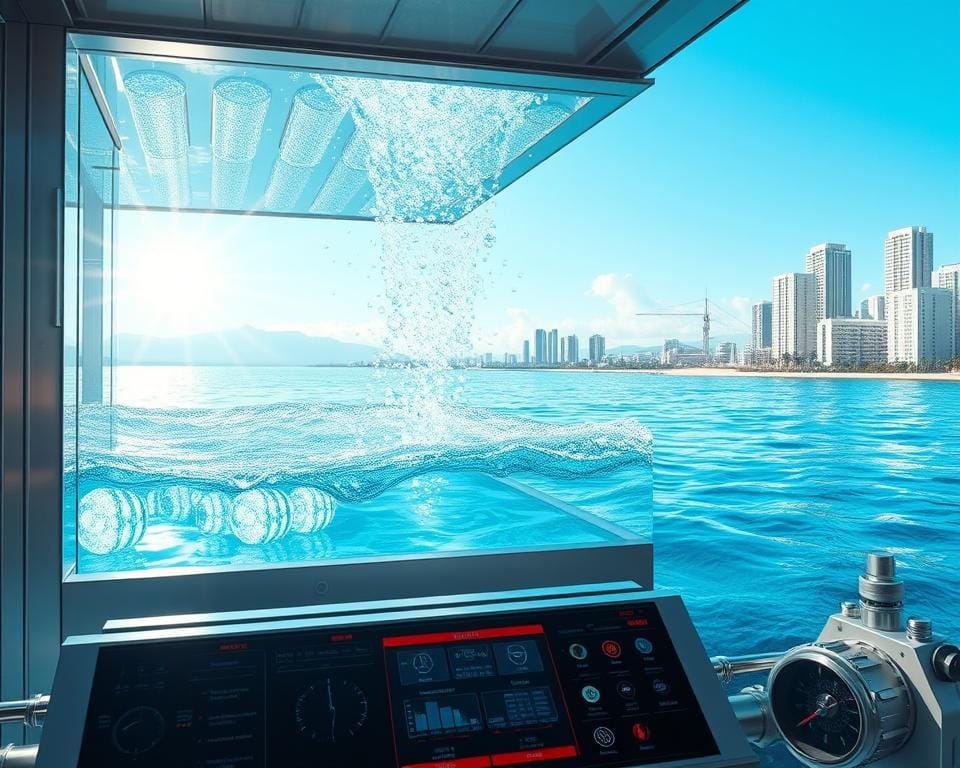
The research, led by Associate Professor Luat Vuong, explores a fascinating breakthrough in water treatment. Researchers use deep UV light at a precise 200-nanometer wavelength. This unique method separates salt from water without massive thermal energy inputs.
Aluminum Nitride Ceramic Wicks: A Game-Changing Solution
The innovative technique leverages aluminum nitride ceramic wicks. These specialized wicks demonstrate remarkable capabilities in thermal desalination efficiency. They interact with specific light frequencies to enhance water purification processes.
- Utilizes deep UV light around 200 nanometers
- Bypasses traditional heating methods
- Works at molecular-level salt separation
Photon Upconversion: A Non-Thermal Alternative
Photon upconversion represents a cutting-edge approach to solar-powered desalination. This technique allows water treatment without bulk heating. It dramatically reduces energy consumption and operational costs.
The research reveals that controlled light exposure can increase evaporation rates significantly. This opens new pathways for sustainable water purification technologies. Scientists are developing more efficient and environmentally friendly desalination methods by targeting specific molecular bonds.
Brackish Water Desalination in California’s Delta Region
The City of Antioch has pioneered a groundbreaking approach to water management. Its innovative membrane distillation systems in the California Delta represent a major breakthrough. This cutting-edge facility advances low-carbon desalination technology while addressing critical water scarcity challenges.
The desalination plant demonstrates strategic water resource management with impressive capabilities:
- Produces up to 6 million gallons of drinking water daily
- Serves approximately 112,000 residents
- Projected to supply 40% of Antioch’s water by 2025
Funding for this transformative project came through a strategic combination of financial resources:
| Funding Source | Amount |
|---|---|
| Proposition 1 Grant | $10 Million |
| California Water Boards Loan | $60 Million |
The facility’s unique approach to brackish water treatment sets it apart from traditional desalination methods. Processing water with lower salt concentrations requires significantly less energy than seawater treatment techniques. This breakthrough addresses saltwater intrusion in the Delta region caused by prolonged drought conditions.
Mayor Ron Bernal highlighted the project’s significance as the first desalination facility in the California Delta. It’s only the second in the Bay Area. The plant provides a sustainable water solution while demonstrating a forward-thinking approach to regional water independence.
Low-Energy Desalination Systems Using Ocean Depth Pressure
Water scarcity challenges demand innovative solutions that reimagine how we extract freshwater from our oceans. Cutting-edge low-energy desalination systems are transforming water treatment technologies by leveraging natural ocean environments.
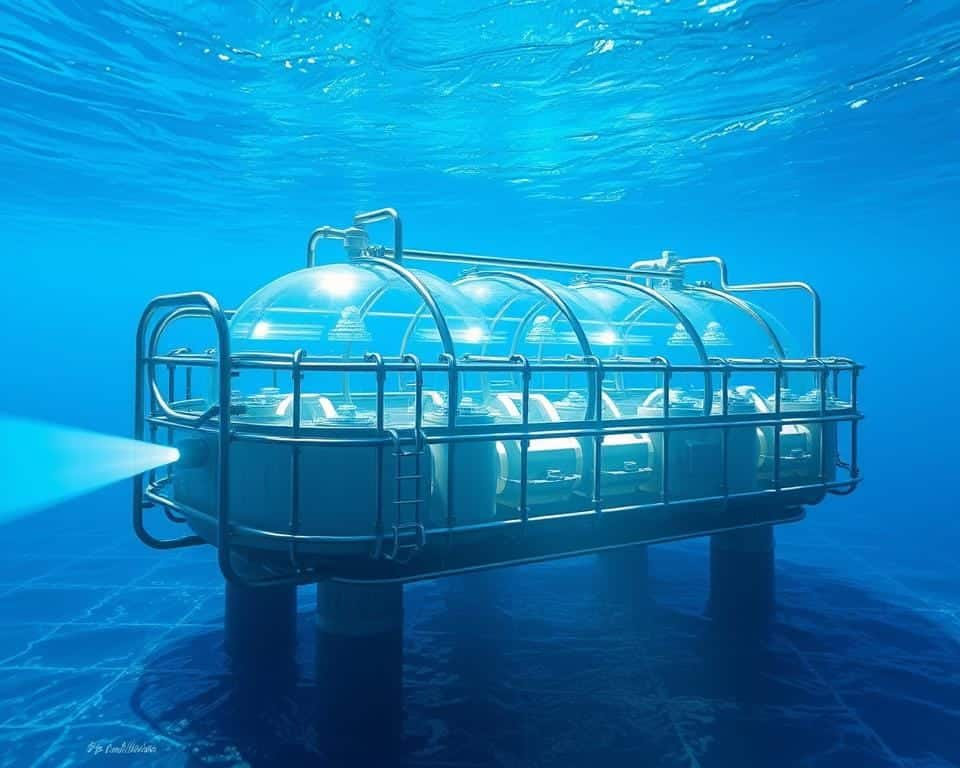
Technological breakthroughs in zero-emission water treatment are pushing the boundaries of traditional desalination methods. Engineers have developed revolutionary approaches to generating fresh drinking water. They harness the immense pressure found at deep ocean depths.
OceanWell’s Deep-Sea Pod Breakthrough
OceanWell’s innovative technology represents a game-changing approach to water production. Their cylindrical pods sit 400 meters beneath sea level. They utilize natural hydrostatic pressure to drive the desalination process.
- Depth of deployment: 400 meters below sea level
- Water generation capacity: 1 million gallons per day
- Contaminant removal: Salts, bacteria, viruses, pesticides, microplastics
Reducing Energy Consumption Dramatically
The breakthrough technology significantly reduces energy requirements compared to traditional land-based systems. Low-energy desalination systems make water treatment more sustainable and cost-effective.
| Technology Metric | OceanWell Performance |
|---|---|
| Energy Reduction | 40% compared to land systems |
| Capital Raised | $11 million |
| Investor | Kubota Infrastructure |
The modular design allows water districts to scale production incrementally. This creates a flexible solution for growing water demands. Pairing these zero-emission water treatment technologies with renewable energy sources could revolutionize sustainable water production.
Environmental Benefits of Sustainable Desalination Methods
Innovative sustainable water purification technology is changing how we approach water desalination. It helps protect marine ecosystems while providing clean water. Traditional desalination methods have created major environmental challenges for underwater habitats.
The key environmental concerns with conventional desalination include:
- Concentrated brine discharge disrupting marine ecosystems
- High-temperature waste water creating underwater dead zones
- Microscopic marine organism filtration causing food web disruptions
Renewable desalination solutions are fixing these problems through new technological approaches. Advanced screening techniques like those from OceanWell protect marine life. They use gradual filtration processes that keep underwater organisms safe.
Deep UV light technology offers another promising sustainable water purification technology. This approach allows for better brine waste processing. It reduces negative impacts on marine environments.
Water districts like Las Virgenes Municipal Water District seek methods that produce quality water. They want to maintain ecological balance. These new technologies show a strong commitment to protecting ecosystems while securing water resources.
Real-World Applications and Infrastructure Integration
Water scarcity mitigation is moving from theory to practice. California communities are pioneering energy-efficient salt removal technologies. These innovations promise to transform local water infrastructure.
The Las Virgenes Municipal Water District shows a cutting-edge approach to water challenges. It serves affluent communities like Calabasas and Westlake Village. This district has zero local groundwater resources.
The district depends entirely on imported water supplies.
Community-Driven Innovation
The district experienced a dramatic 73% water supply reduction. Local residents demanded sustainable solutions. Their advocacy sparked a comprehensive examination of water infrastructure strategies.
- Formed a dedicated working group to explore desalination options
- Targeted energy-efficient salt removal technologies
- Developed plans for local water independence
Infrastructure Challenges and Solutions
The district’s primary challenge involves reimagining existing infrastructure. Most current pipe systems were designed differently. They moved water from inland areas toward the coast—not the reverse.
| Project Milestone | Target Date | Key Focus |
|---|---|---|
| Demonstration Installation | Current | Las Virgenes Reservoir |
| Full Operational Installation | 2030 | Comprehensive Water Supply Solution |
Strategic planning includes maximizing existing infrastructure. It also focuses on developing cost-effective water transportation methods. The Antioch brackish water facility will become operational by late 2025.
Conclusion
Water treatment is changing in big ways. New methods for thermal desalination are changing how we view water resources. These breakthroughs are more than technical wins—they’re reshaping water security.
UC Riverside’s deep UV technology shows real promise. OceanWell’s deep-sea extraction methods offer another path forward. Together, these innovations point toward a better future.
California leads the way in low-carbon desalination innovation. The state’s water problems have sparked amazing technological solutions. These methods could serve as models for the world.
Researchers are developing methods that work with natural systems. They’re creating sustainable ways to address water scarcity. These approaches don’t harm the environment.
These technologies could transform water management completely. Brackish water treatments show we have options. Photon-based desalination proves we’re not stuck with old energy-heavy processes.
We’re seeing a shift toward smarter water extraction methods. These approaches use less energy. They also reduce harm to nature.
The future isn’t about finding one perfect solution. It’s about using many innovative approaches together. These technologies will keep getting better.
They promise hope for communities facing water scarcity. Technological innovation can solve our toughest environmental challenges. That’s the real power of these advances.